Latécoère 28
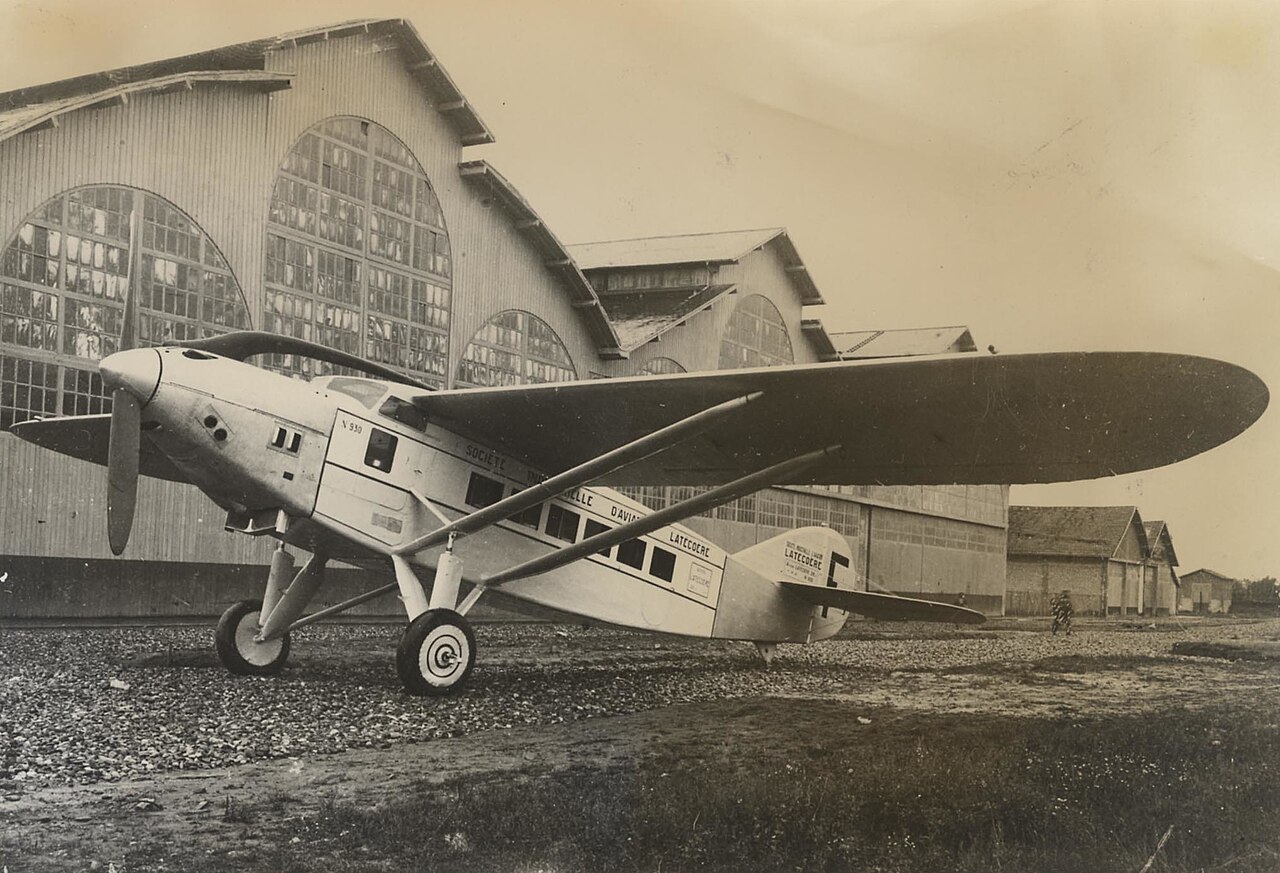
The Latécoère 28 served Aéropostale routes and made an airmail crossing between Senegal and Brazil in 1930.
History
In the late 1920s Aéropostale sought to shorten mail delivery between Europe and South America. Its network combined overland stages, coastal stops and a South Atlantic crossing still undertaken by ship. Latécoère, whose Toulouse workshops had supplied several generations of aircraft for these routes, developed the Type 28 to improve transport operations. The design office led by Marcel Moine worked on a machine suitable for regular journeys rather than solely for a record attempt. It needed to carry mail, and potentially passengers, while remaining usable with dispersed airfields and maintenance facilities. The project therefore belongs as much to the organisation of an international postal service as to the history of aircraft manufacturing, linking technical choices to the practical requirements of an extended route network.
The Latécoère 28 was a single-engine high-wing monoplane with an enclosed cabin and, on landplane versions, a fixed undercarriage. Its construction combined metal elements with a wing incorporating wood and fabric covering. The cabin could accommodate passengers, while mail and baggage required careful management of the load. This arrangement distinguished the aircraft from machines with largely open accommodation still operating on the routes. It removed neither dependence on a single engine nor the limitations imposed by weather. Engine choices changed between versions. Equipping an aircraft for long distances required a particular compromise between fuel, payload and equipment. The capabilities of an ordinary transport should therefore not be confused with those of an aircraft specially prepared to undertake a lengthy ocean crossing.
The type flew in 1929 and entered Aéropostale operations. A float-equipped version, the Laté 28-3 registered F-AJNQ and named Comte-de-la-Vaulx, was prepared for the South Atlantic crossing. On 12–13 May 1930 Jean Mermoz, navigator Jean Dabry and radio operator Léopold Gimié flew from Saint-Louis in Senegal to Natal in Brazil carrying mail. The presence of both a navigator and a radio operator reflected the demands of a prolonged flight beyond sight of the coast. This was not the first aerial crossing of the South Atlantic, which had been crossed before. Its specific importance was postal: for this journey, it replaced the carriage of mail by sea on the oceanic section of the network between the two continents.
The career of the Laté 28 extended beyond that crossing. Landplanes participated in Aéropostale services in Africa and South America, where continuity depended on a chain of stops and ground teams. Pilots carried mailbags and, depending on the route and cabin arrangement, passengers. Mechanics, airfield staff and radio operators contributed as much to regularity as the aircraft's qualities. Long distances, local conditions and fuel availability framed every stage. The model formed part of a network developed through successive connections rather than a system of direct intercontinental flights comparable with those of later generations. Its everyday activity needs to be understood through those linked stages, rather than treating each aircraft as an independent means of flying the whole route from end to end.
Designations within the family distinguished several engines and land or water adaptations. Mermoz's floatplane received the floats and fittings required for its particular task; it did not represent the whole production. Its return towards Africa demonstrated the limits of the May achievement: engine trouble forced a landing at sea, followed by the rescue of the crew and mail by a ship. The aircraft was lost. The successful crossing had therefore not immediately established a regular oceanic air service in both directions. This distinction is essential when reading commemorative accounts. Demonstrating a technical possibility, actually transporting mail and sustaining repeated operations represent three different levels of achievement, even when they concern the same route and the same basic aircraft design.
As networks changed and more suitable aircraft appeared, the Latécoère 28 gradually left the services for which it had been designed. The incorporation of Aéropostale's activities into the history of Air France places its career within a broader transformation of French transport. Its memory remains particularly associated with Mermoz and the 1930 connection, but studying the type also leads towards postal economics and the daily work of the routes. Museum representations and reconstructions should not be treated as original aircraft without verification. No exhibition location for a production example is listed here. The type's legacy lies in the relationship between a machine, its crews and a postal network, and in the distinction between a demonstration crossing and a lasting, repeatable transport service.
Why it mattered
- The Laté 28 participated in the everyday operation of Aéropostale's network.
- The May 1930 crossing carried mail by air between Senegal and Brazil.
- The interrupted return demonstrates the difference between an achievement and a regular service.
Where to see it
No example is known with certainty to be on display
Sources
- L'Envol des Pionniers — L'aventure de l'Aéropostale
- Musée de l'Air et de l'Espace — Collections
- Gallica — BnF — Presse et revues aéronautiques numérisées