1783 — 2026
Timeline
The main stages of aviation, grouped by era. Dates given as a year only are deliberately kept general.
21 November 1783
First free manned balloon flight
The Montgolfier brothers' demonstrations pave the way for human flight in a hot-air balloon. In Paris, Pilâtre de Rozier and the Marquis d'Arlandes make the first documented free flight with people aboard. Their balloon cannot be steered and drifts with the wind. The experiment establishes that a crew can leave the ground and return safely in an aerostat.
The Montgolfier brothers →1890
Clément Ader's Éole
Clément Ader seeks to lift a heavier-than-air machine using a steam engine. A brief lift-off by his Éole is reported at Armainvilliers, although the significance of the trial remains disputed. It does not demonstrate sustained, controlled flight. The machine nevertheless illustrates the work on propulsion and lightweight construction that precedes the practical aeroplane.
Ader Éole →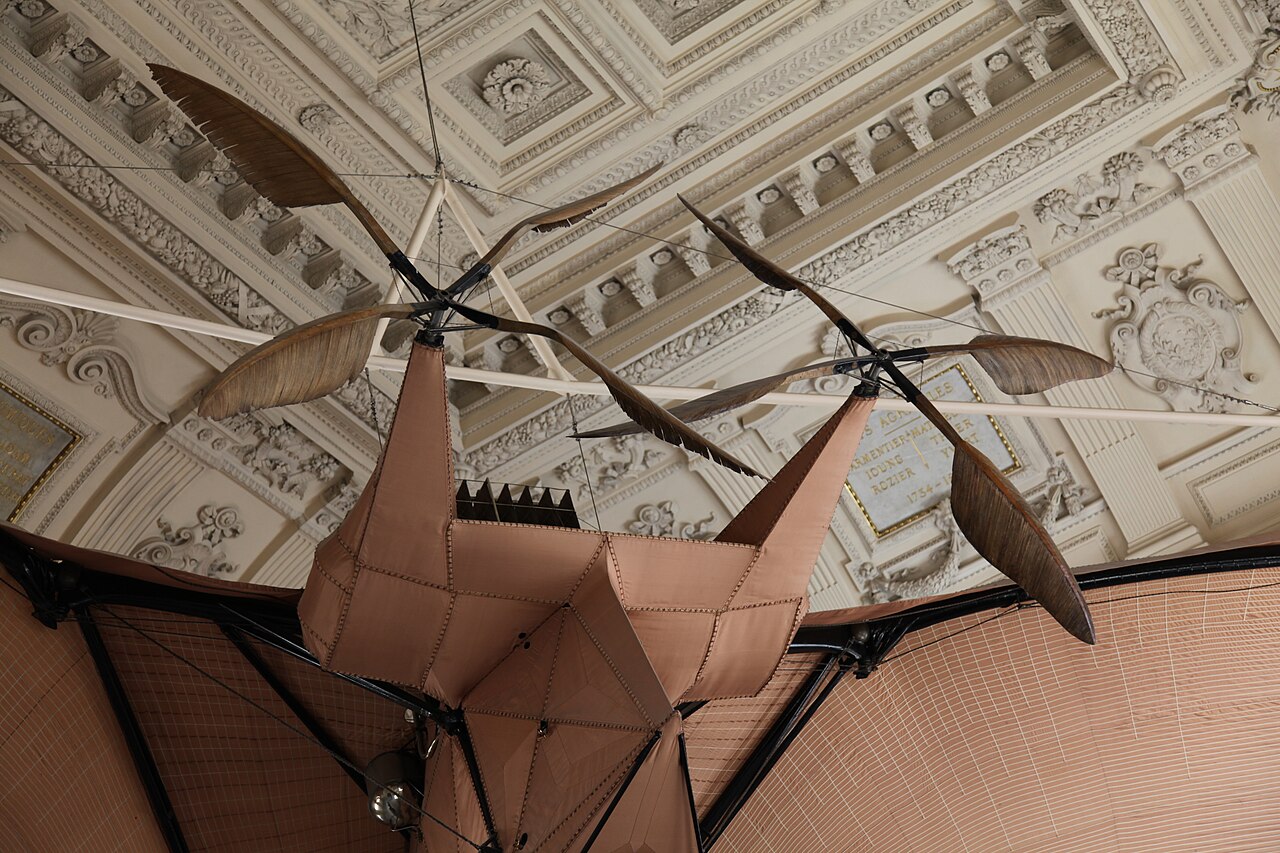
Clément Ader's Avion III, Musée des Arts et Métiers, Paris · Photo : Rama · CC BY-SA 3.0 FR · Source : Wikimedia Commons 17 December 1903
The Wright Flyer flies at Kitty Hawk
Following their glider trials, the Wright brothers bring together an engine, propellers and effective flight controls. Near Kitty Hawk, they achieve the first powered, sustained and controlled flights of a piloted aeroplane. They make four flights that day. Their success establishes control as a central requirement in the development of aviation.
Wright Flyer →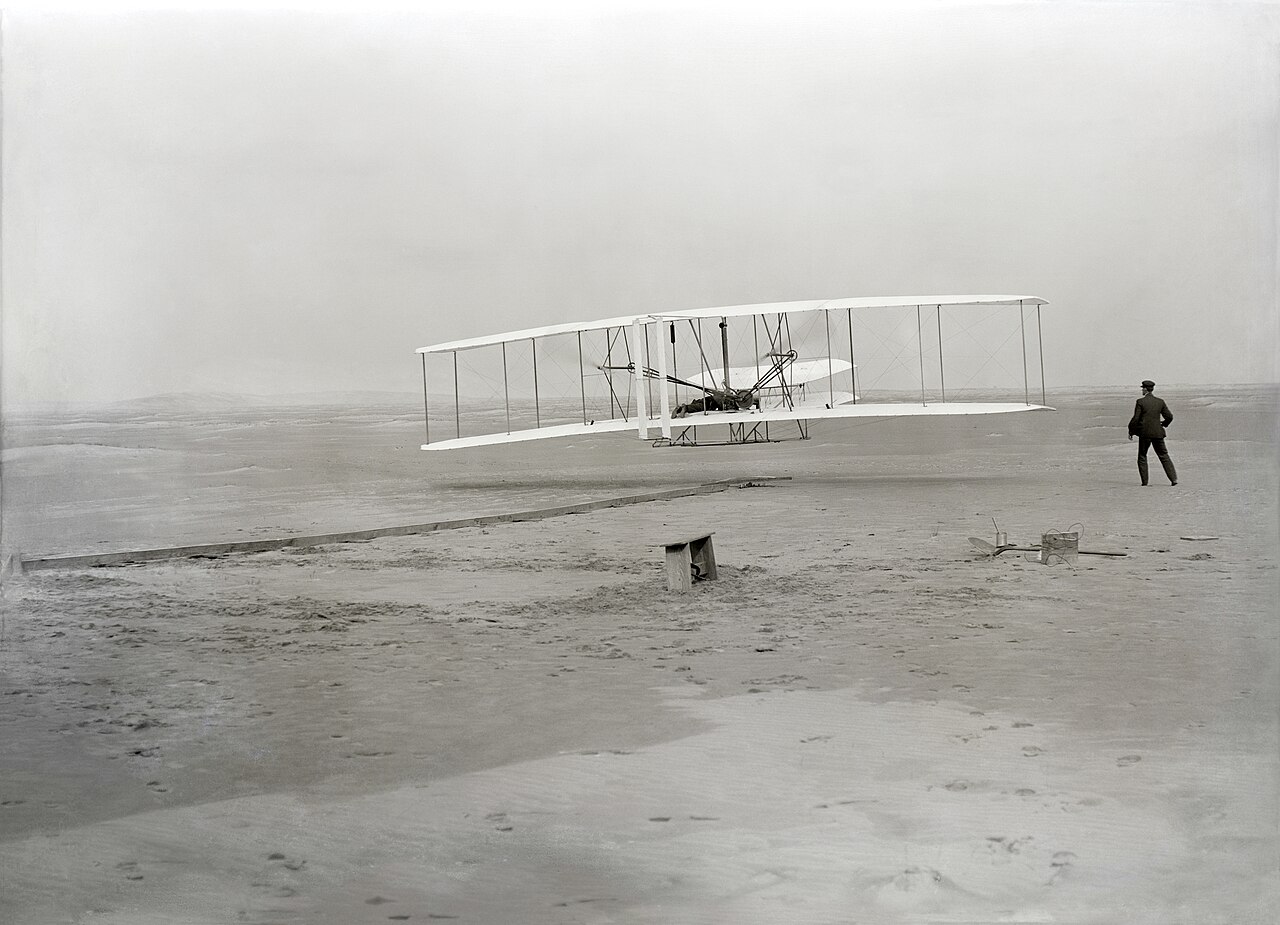
Kitty Hawk, 17 December 1903: Orville Wright makes the first powered, sustained and controlled flight of a piloted aeroplane. · Photo : John T. Daniels · Public domain · Source : Wikimedia Commons 23 October and 12 November 1906
Santos-Dumont flies the 14-bis at Bagatelle
In the Bagatelle park in Paris, Alberto Santos-Dumont takes off in the 14-bis under its own power before official witnesses. The flight of 12 November, of about 220 metres, is ratified by the Aéro-Club de France. These public demonstrations help to establish powered flight in Europe.
Alberto Santos-Dumont →25 July 1909
Blériot crosses the Channel
Early aeroplanes are gradually venturing beyond their testing grounds. Louis Blériot crosses the Channel from the Calais area to Dover in his Blériot XI. He makes the first Channel crossing by aeroplane. The flight demonstrates the possibility of spanning a stretch of sea and brings aviation wider public attention.
Blériot XI →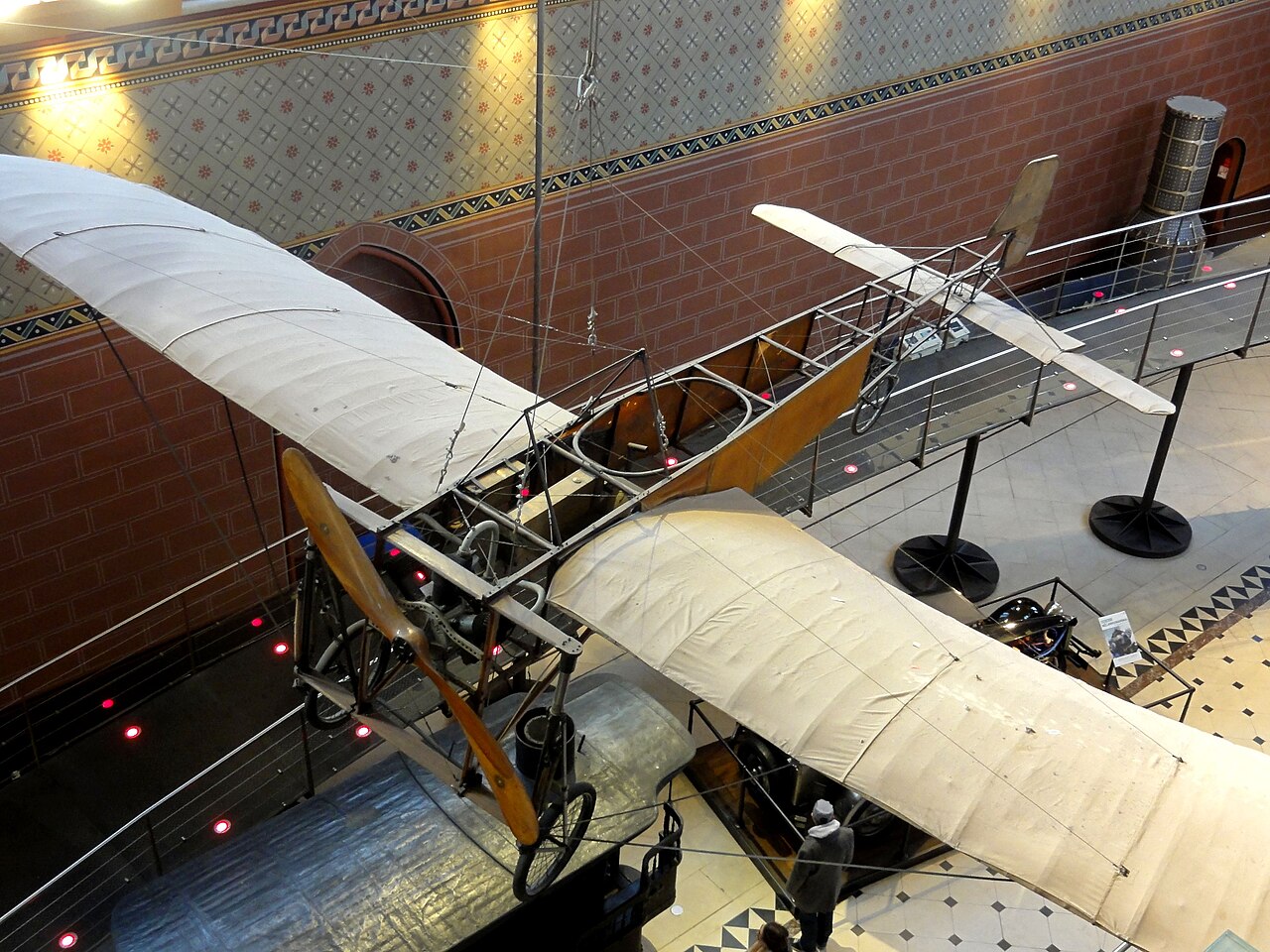
The Blériot XI on display at the Musée des Arts et Métiers in Paris, the type that crossed the Channel (1909). · Photo : Pierre Poschadel · CC BY-SA 3.0 · Source : Wikimedia Commons August 1909
Reims Aviation Week
Early aviation is attracting growing interest from the public and industry. The Grande Semaine d'aviation de la Champagne brings pilots and manufacturers from several countries to Bétheny. Contests compare aircraft in speed, distance and endurance. This major international meeting helps establish aviation as both a public spectacle and a field of technical competition.
The pioneers (1783–1914) →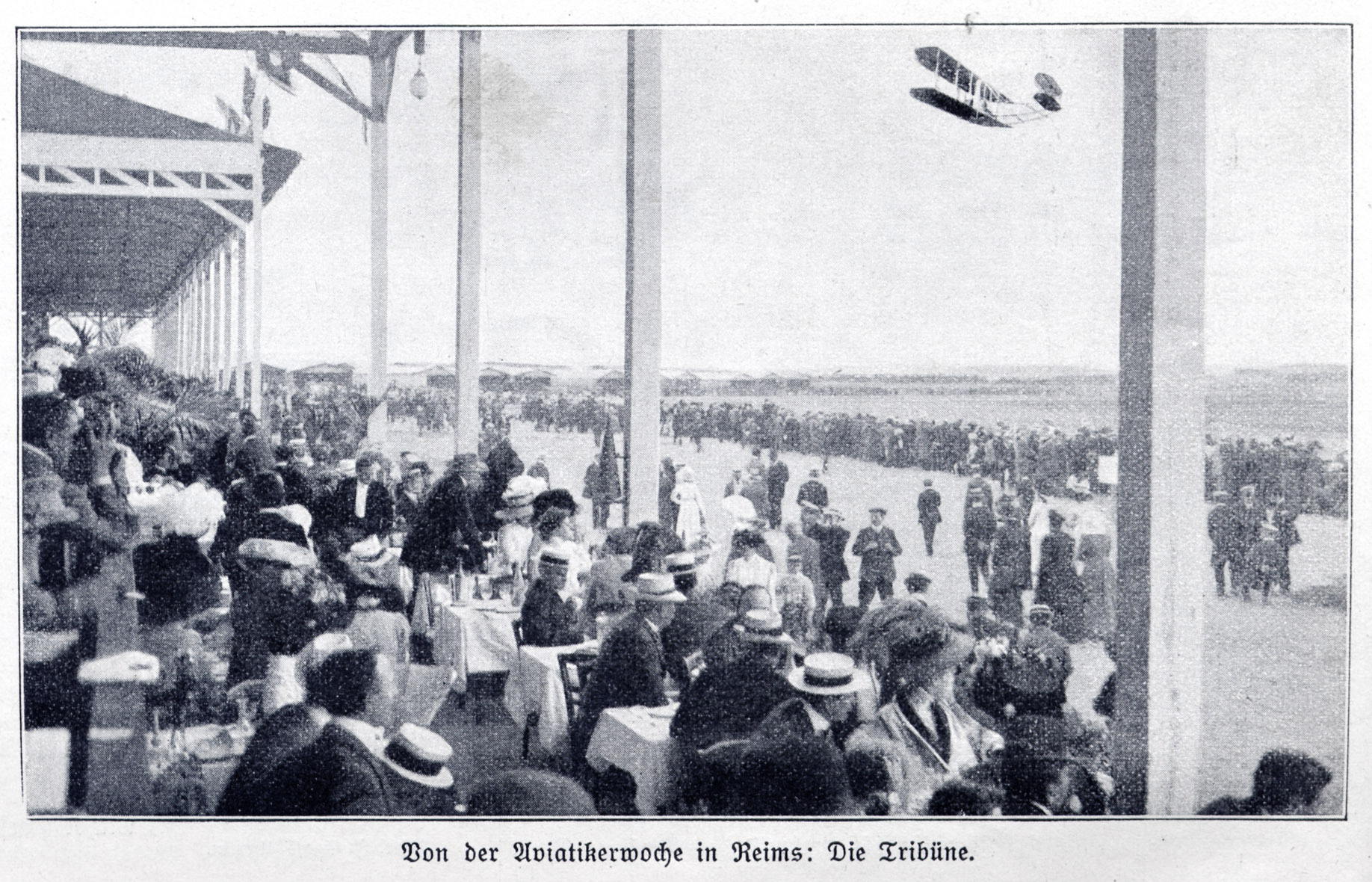
Reims Aviation Week, August 1909: crowds in the grandstands and aeroplanes in the sky. · Photo : Auteur inconnu · Public domain · Source : Wikimedia Commons 8 March 1910
Raymonde de Laroche, first woman to hold a pilot's licence
The Aéro-Club de France issues Raymonde de Laroche with pilot's licence no. 36. She is the first woman in the world to hold one. This recognition comes at a time when women remain a small minority in flying schools.
Women in aviation →28 March 1910
Henri Fabre flies the first seaplane
On the Étang de Berre at La Mède, Henri Fabre takes off from the water in his 'Hydro-aéroplane'. It is the first attested take-off of a powered seaplane. The experiment opens a new path for aircraft able to use stretches of water for take-off and landing.
The pioneers (1783–1914) →23 September 1913
Roland Garros crosses the Mediterranean
Leaving Fréjus in a Morane-Saulnier monoplane, Roland Garros lands at Bizerte, Tunisia, after nearly eight hours in the air. It is the first crossing of the Mediterranean by air. The crossing demonstrates the potential of overwater flight, but also its risks in the event of engine failure.
Roland Garros →
1914–1918
The aircraft in the Great War
First used for observation, the aircraft becomes within four years a fighter and bomber. The belligerents build tens of thousands of machines, and the aircraft industry changes scale. Aerial reconnaissance and artillery observation become essential missions at the front.
The Great War and the interwar years (1914–1939) →15 July 1916
William Boeing founds Pacific Aero Products
In Seattle, William E. Boeing incorporates Pacific Aero Products Co. to build seaplanes. It is renamed Boeing Airplane Company in 1917. The firm is the origin of today's Boeing group.
Boeing →1918
Lignes aériennes Latécoère founded
At the end of the war, Pierre-Georges Latécoère prepares to use aircraft commercially to carry mail. A reconnaissance flight links Toulouse and Barcelona, setting his route project in motion. The network later extends towards Africa and then South America under the Aéropostale name. The undertaking makes mail a driving force in the development of long-distance air services.
Pierre-Georges Latécoère →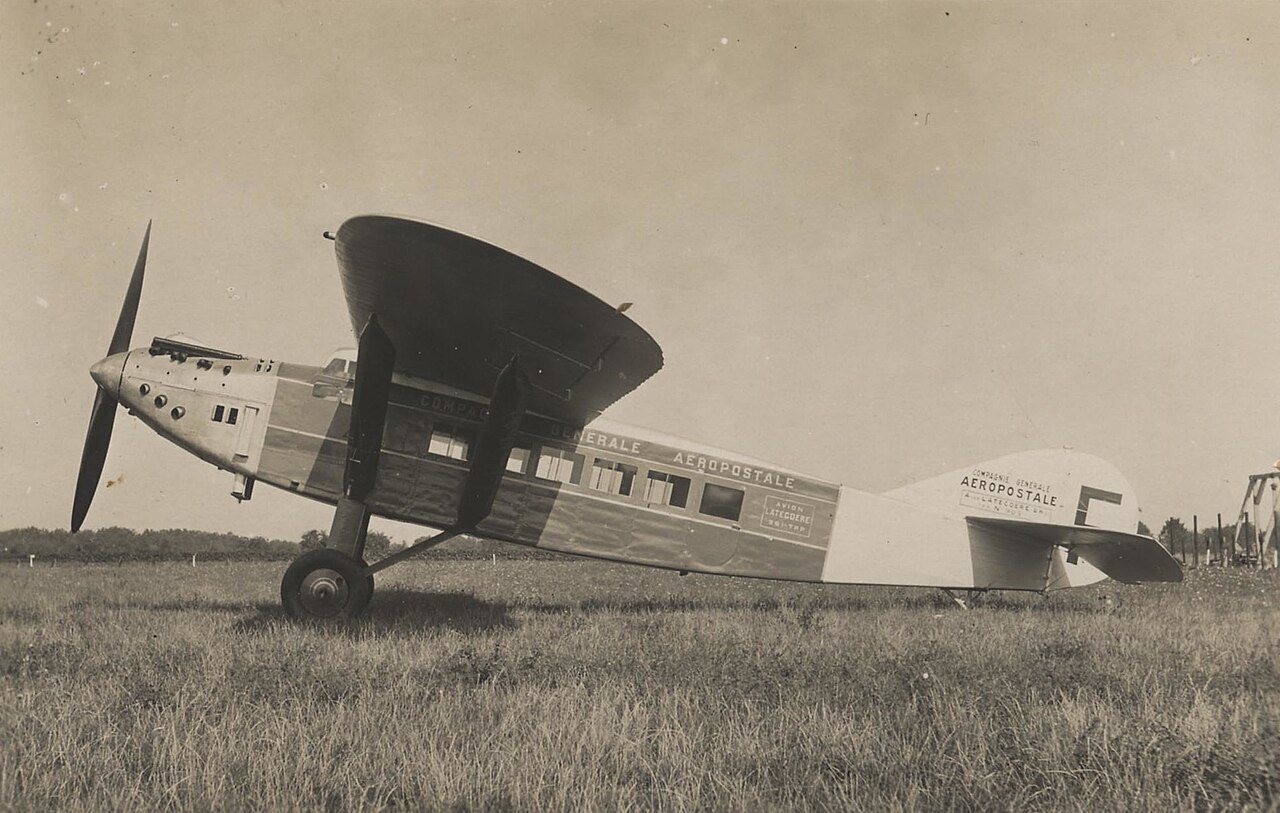
Aéropostale Latécoère 28-1 at Montaudran · Photo : Archives municipales de Toulouse · Public domain · Source : Wikimedia Commons June 1919
Alcock and Brown cross the Atlantic
After the war, military aircraft are adapted for long-distance flights. John Alcock and Arthur Whitten Brown cross the Atlantic from Newfoundland to Ireland in a modified Vickers Vimy. They complete the first non-stop crossing of the ocean by aeroplane. The flight demonstrates the feasibility of the route long before regular services are established.
The Great War and the interwar years (1914–1939) →1919
First regular commercial air services
In the aftermath of the war, several European companies open regular passenger and mail services, notably between Paris, London and Brussels. The aircraft are often converted former bombers. These openings help to shape European air transport networks.
The Great War and the interwar years (1914–1939) →May 1927
Lindbergh flies New York to Paris
Crossing the Atlantic remains a demanding undertaking for aircraft and crews. Charles Lindbergh flies solo and non-stop from New York to Le Bourget in the Spirit of St. Louis. He thus completes the first non-stop flight between New York and Paris. The reception on his arrival helps popularise aviation on both sides of the ocean.
Ryan NYP Spirit of St. Louis →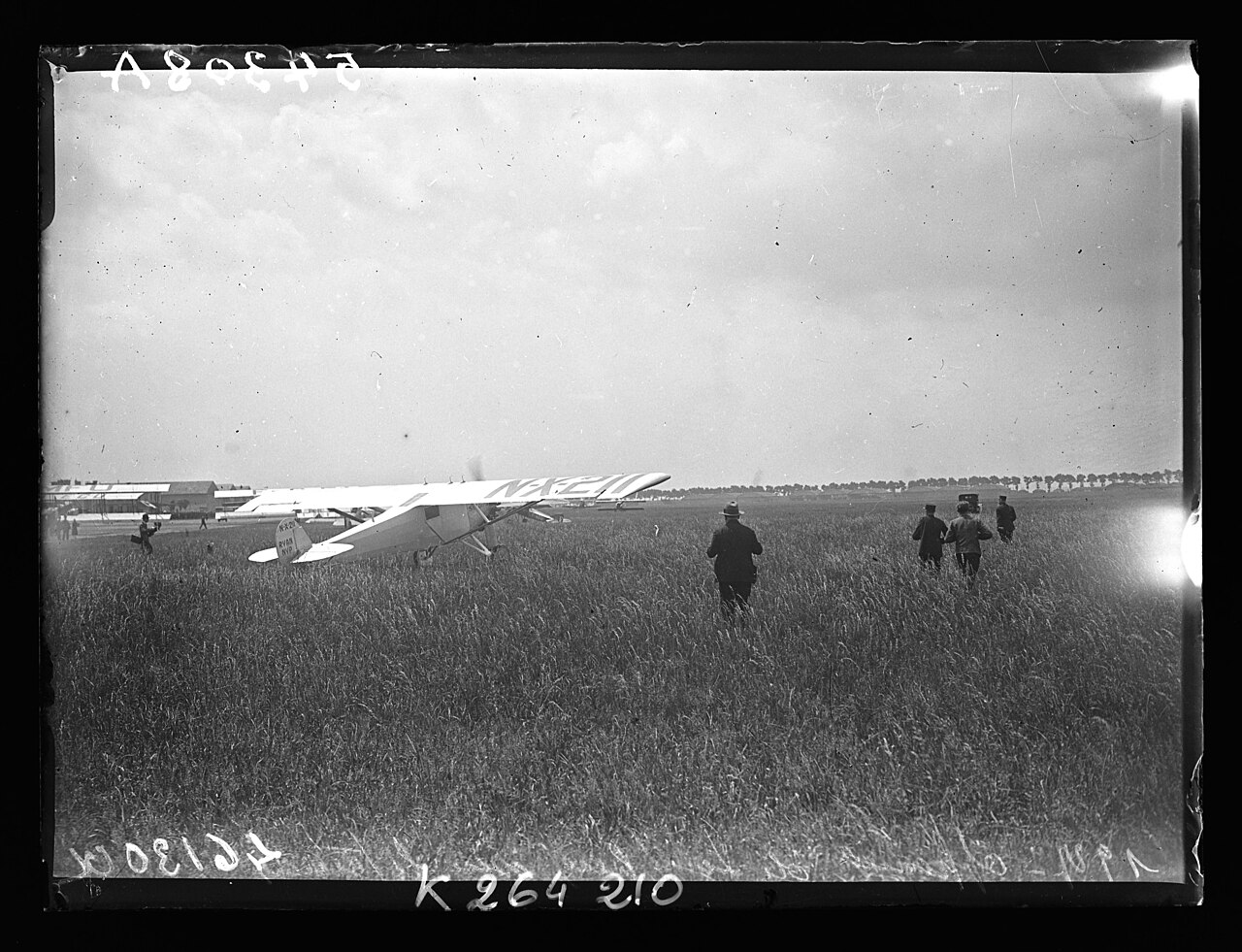
Lindbergh's Spirit of St. Louis at Le Bourget, 1927 · Photo : Agence de presse Meurisse · Public domain · Source : Wikimedia Commons May 1930
Mermoz crosses the South Atlantic
Aéropostale seeks to speed up mail between Europe and South America. Jean Mermoz, Jean Dabry and Léopold Gimié fly from Saint-Louis in Senegal to Natal in the float-equipped Laté 28 Comte-de-la-Vaulx. They carry mail across the South Atlantic by air. Their success marks a step towards an all-air postal route, still difficult to operate regularly.
Latécoère 28 →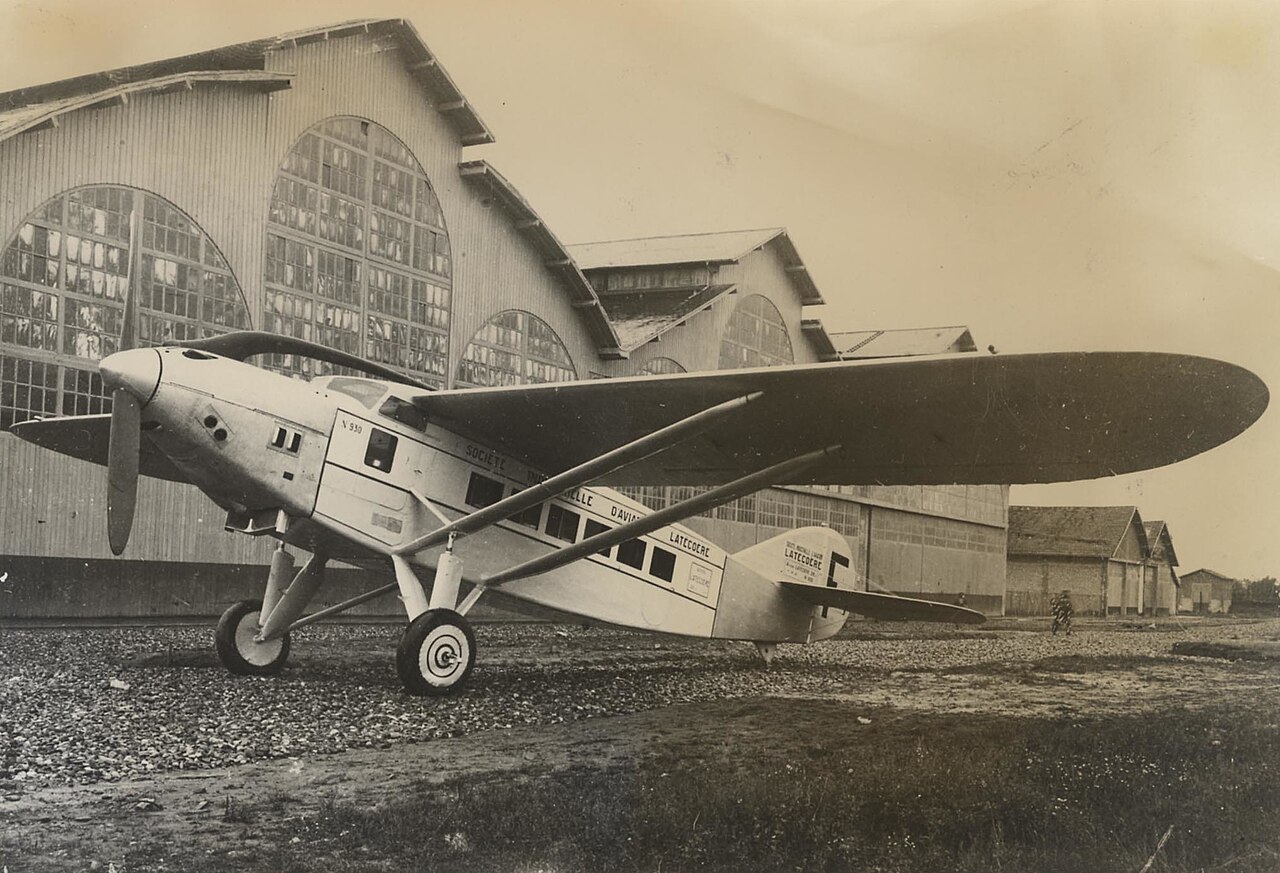
A Latécoère 28 at Montaudran airfield (Toulouse), cradle of the Aéropostale. · Photo : Archives municipales de Toulouse · Public domain · Source : Wikimedia Commons 20–21 May 1932
Amelia Earhart flies the Atlantic solo
Taking off from Newfoundland in a Lockheed Vega, Amelia Earhart lands in Northern Ireland. She is the first woman to fly the Atlantic solo. The non-stop flight strengthens her international reputation and raises the profile of women in aviation.
Amelia Earhart →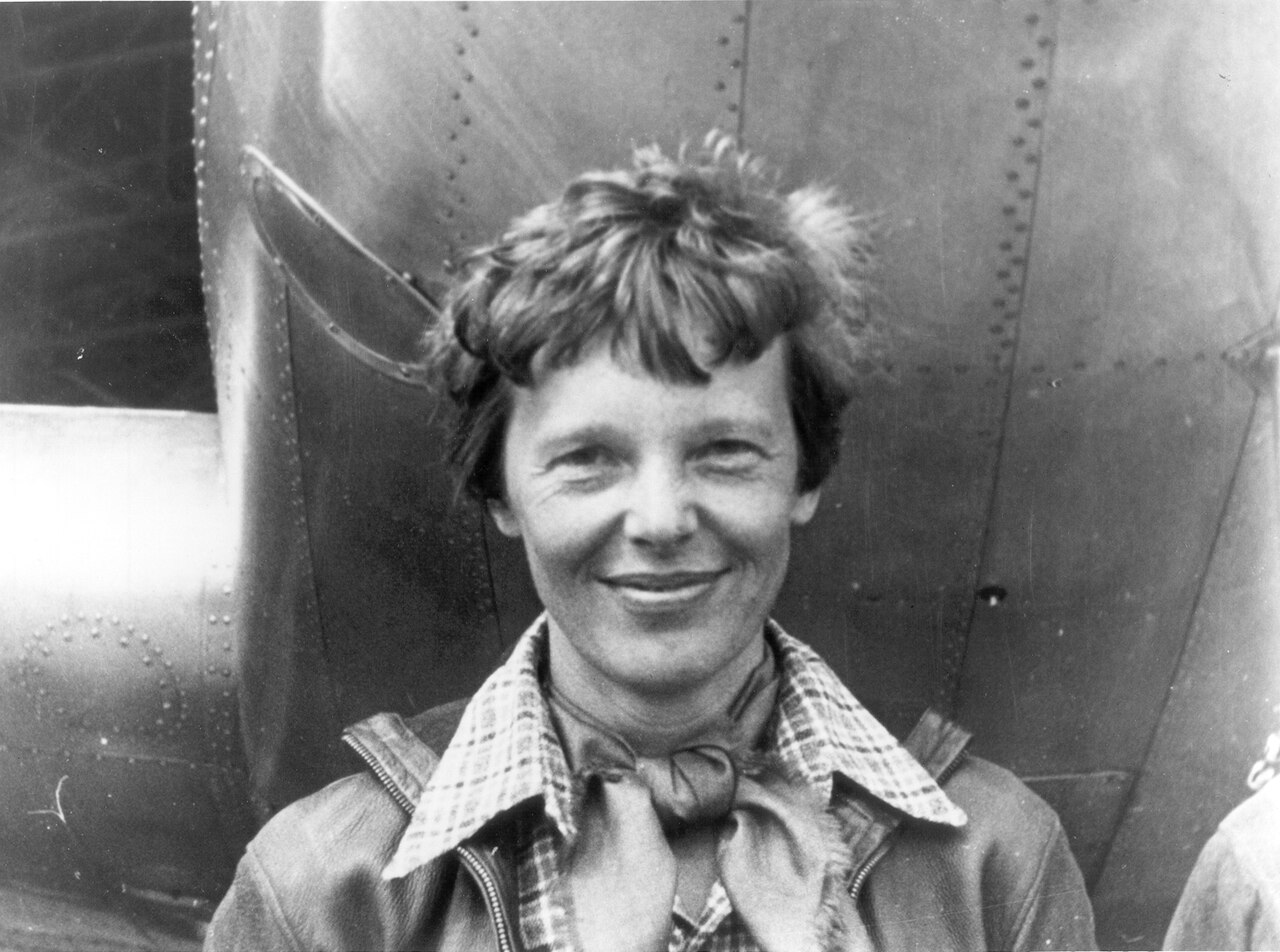
Amelia Earhart under the nose of her Lockheed Electra 10-E, 1937 · Photo : Underwood & Underwood · Public domain · Source : Wikimedia Commons 7 October 1933
Air France is founded
Air France is formed by merging several French airlines, including Air Orient, Air Union, CIDNA, SGTA and the Compagnie générale aéropostale, whose network it takes over. The new airline brings together European and intercontinental routes. This consolidation places previously separate networks under a common organisation.
The Aéropostale (1918–1933) →1934
Hélène Boucher and women's speed records
Hélène Boucher sets several women’s speed records in Caudron aircraft. She dies in November of the same year during a training flight at Guyancourt. Her achievements draw attention to French racing aircraft and to women’s role in competitive flying.
Hélène Boucher →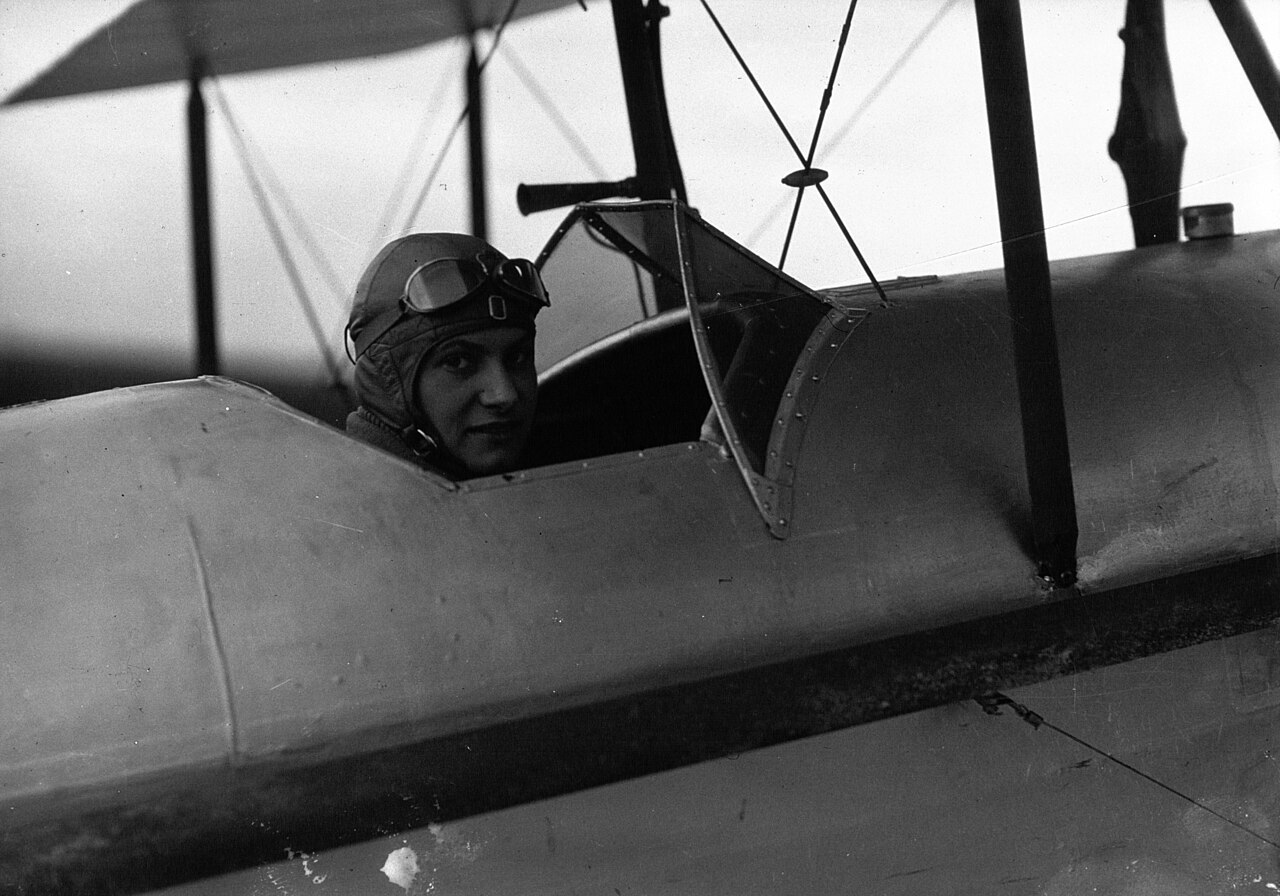
Hélène Boucher with her aircraft at Le Bourget, 1933 · Photo : Agence de presse Mondial Photo-Presse · Public domain · Source : Wikimedia Commons 17 December 1935
First flight of the Douglas DC-3
Airlines are seeking aircraft that can make passenger services profitable. The Douglas DST prototype, the sleeper version from which the DC-3 develops, makes its first flight. The family's rugged construction and operating economics encourage its adoption on civil networks. The DC-3 becomes a benchmark in air transport and also gives rise to numerous military versions.
Douglas DC-3 →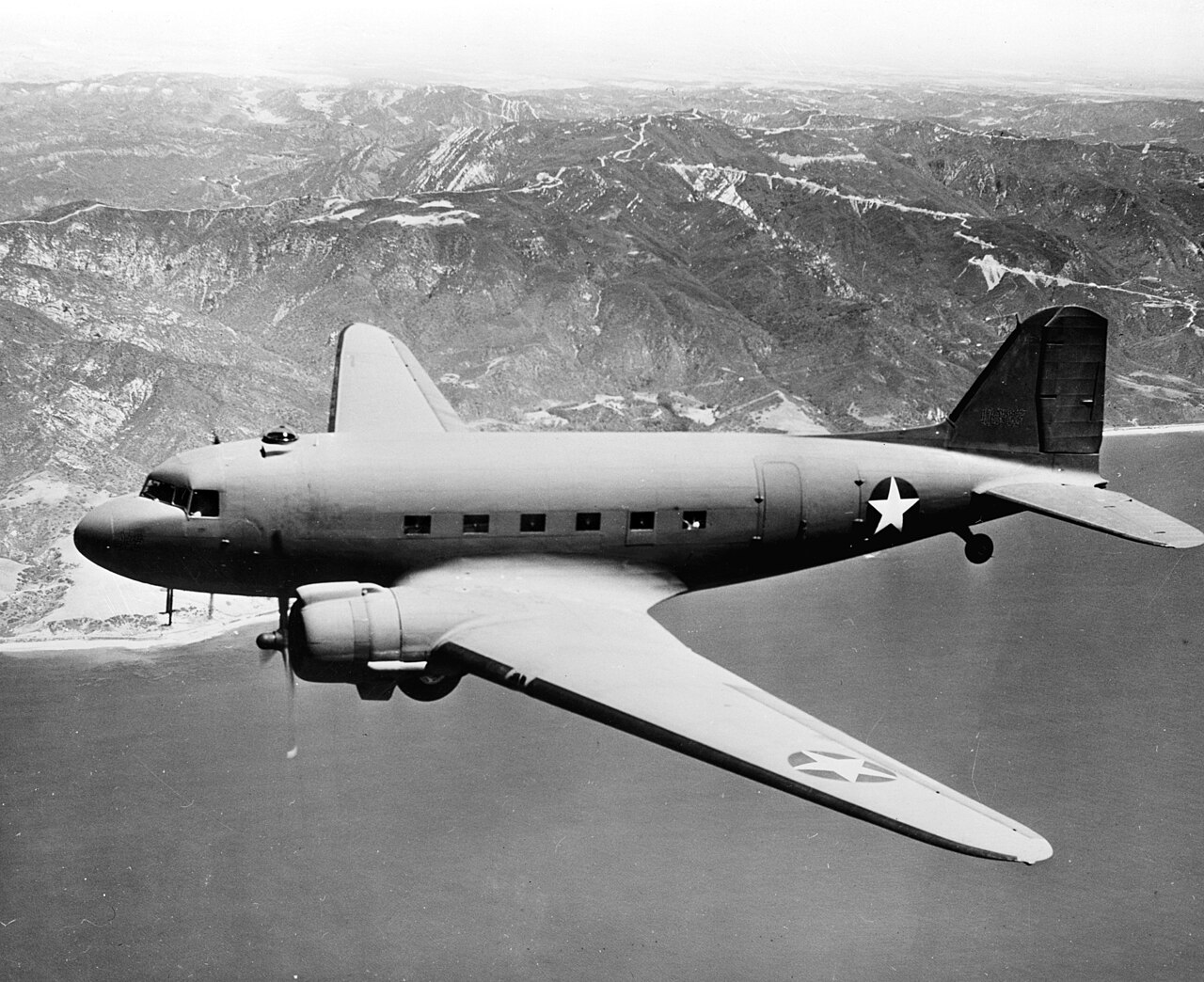
A Douglas C-47, the military version of the DC-3, in flight around 1943. · Photo : USAAF · Public domain · Source : Wikimedia Commons 5 March 1936
First flight of the Supermarine Spitfire
The prototype of the fighter designed by R. J. Mitchell's team flies at Eastleigh, England. The Spitfire will be built in very large numbers during the Second World War. Successive versions adapt the design for fighter, reconnaissance and other duties.
Supermarine Spitfire →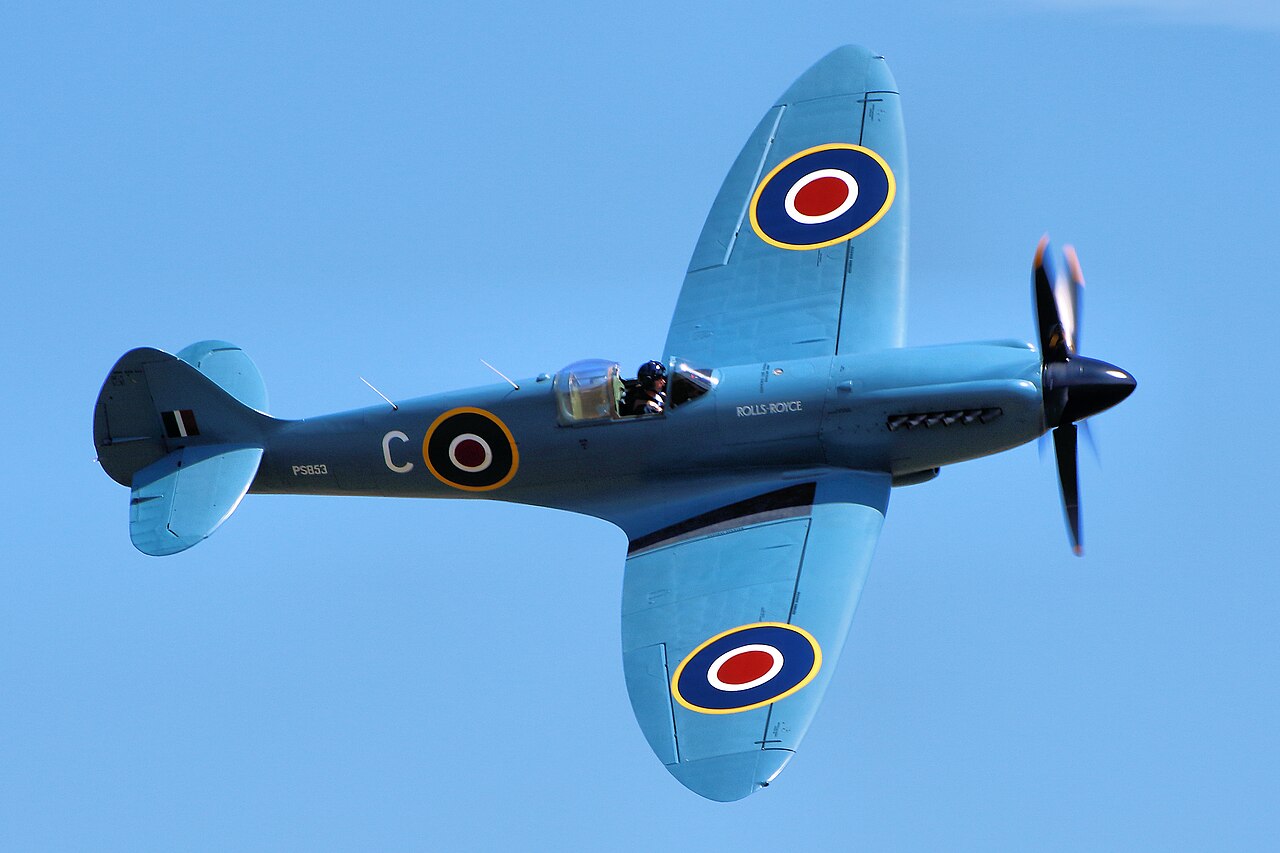
Spitfire on display at Duxford, 2015 · Photo : Airwolfhound · CC BY-SA 2.0 · Source : Wikimedia Commons
27 August 1939
First flight of a jet aircraft
Research into gas turbines offers an alternative to the piston engine and propeller. In Germany, the Heinkel He 178 makes the first flight of a turbojet-powered aeroplane. This experimental aircraft is not intended for commercial transport. It demonstrates in flight a propulsion principle that will later transform military and civil aviation.
From piston engine to turbofan →1944
The Me 262, first jet fighter in service
The Messerschmitt Me 262 enters operational service with the Luftwaffe. It is the first jet fighter used in combat, with engines whose service life is still very short. Its arrival demonstrates the potential of jet propulsion without changing the course of the war.
Messerschmitt Me 262 →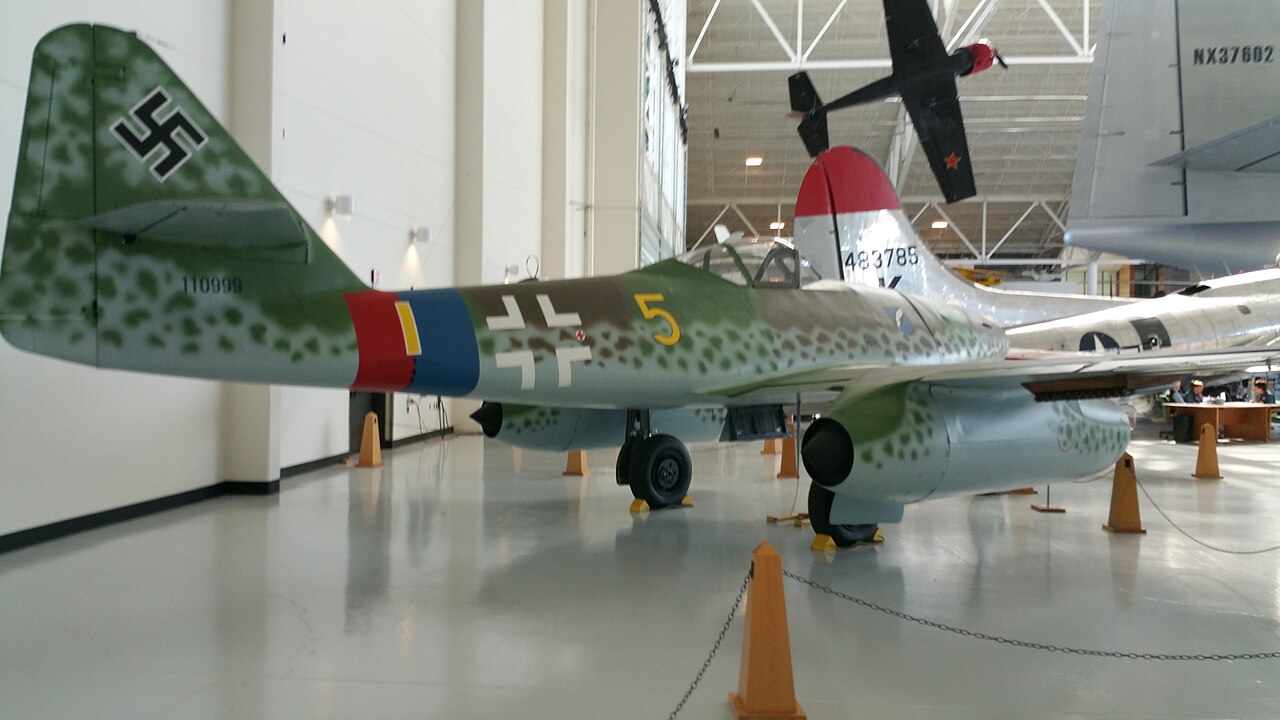
Messerschmitt Me 262 at the Evergreen Aviation & Space Museum · Photo : Articseahorse · CC BY-SA 4.0 · Source : Wikimedia Commons 7 December 1944
Chicago Convention, birth of ICAO
The Convention on International Civil Aviation is signed in Chicago. It establishes the International Civil Aviation Organization (ICAO), which begins operating in 1947 and has since issued standards shared by states. The convention provides a lasting framework for international co-operation and the organisation of civil air transport.
Aviation safety →14 October 1947
The sound barrier is broken
The difficulties of transonic flight lead to the development of specialised research aircraft. After release from a bomber, Chuck Yeager exceeds the speed of sound in level flight in the rocket-powered Bell X-1. The test establishes that a piloted aircraft can cross this threshold under control. It provides knowledge that supports the development of supersonic aircraft.
Bell X-1 →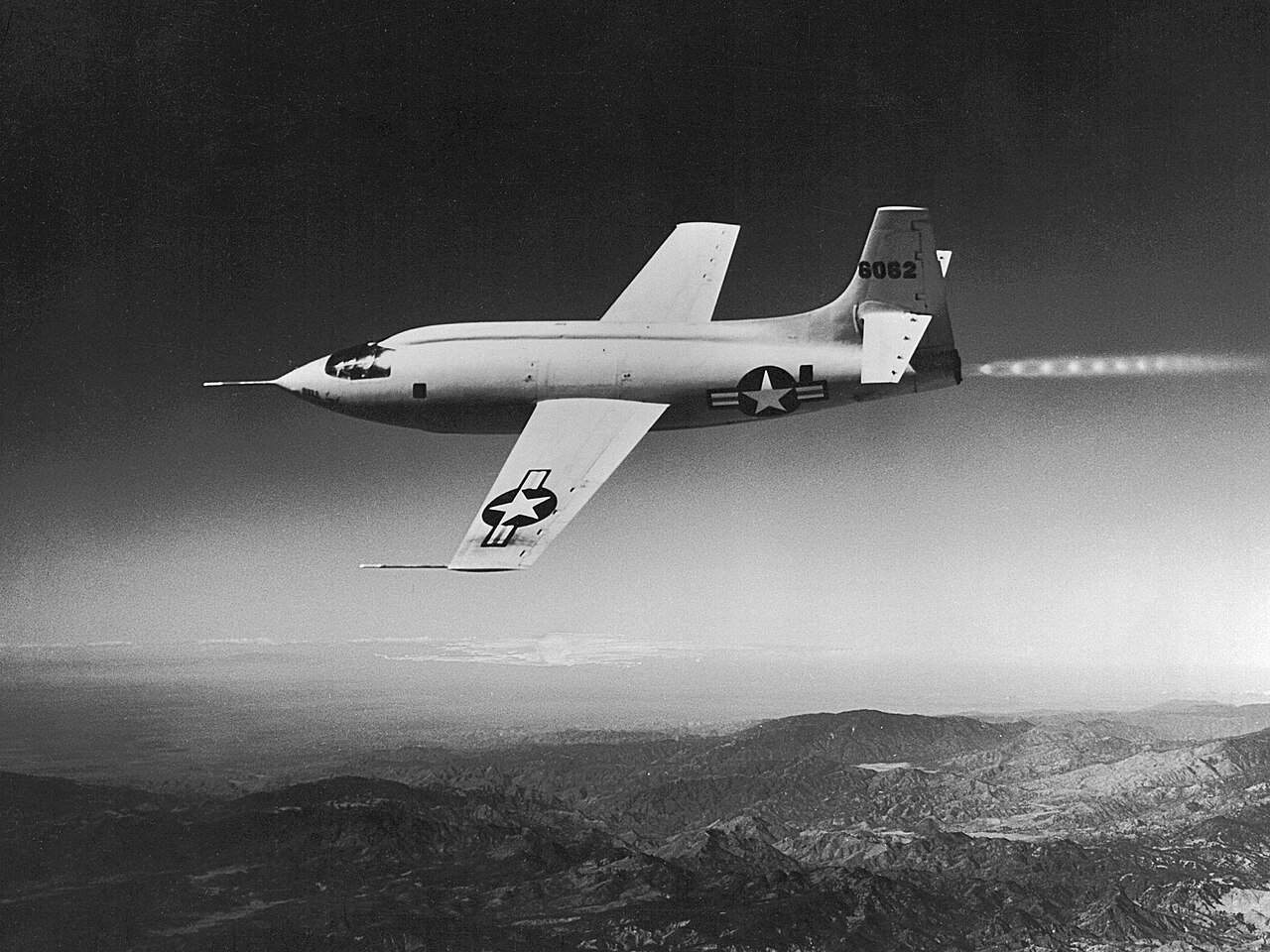
The Bell X-1 in flight · Photo : NASA · Public domain · Source : Wikimedia Commons 27 July 1949
First flight of the Comet
Following the first military jets, manufacturers prepare to use turbojets on civil routes. The de Havilland Comet makes its first flight in Britain. It becomes the first jet airliner to enter commercial service in 1952. Structural failures that later affect the programme lead to a deeper understanding of fatigue in pressurised cabins.
de Havilland Comet →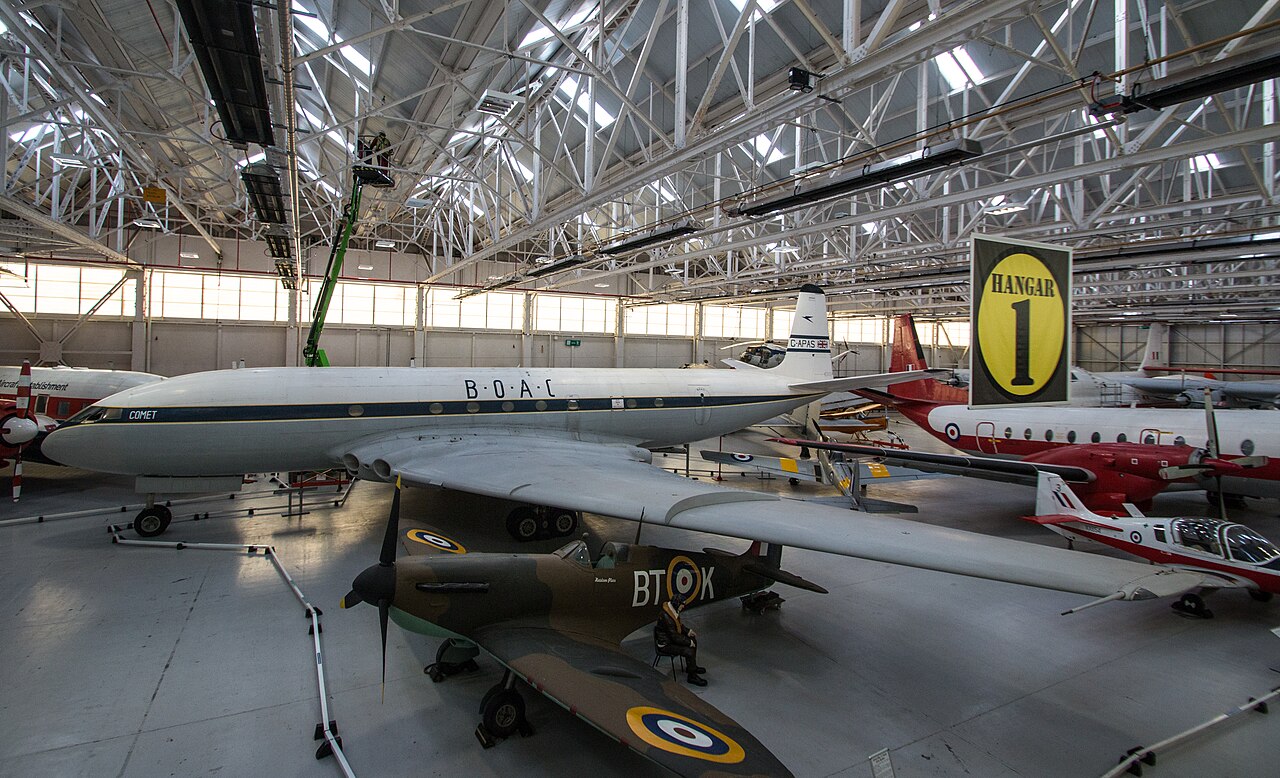
De Havilland Comet 1XB G-APAS in BOAC colours, preserved at the RAF Museum Cosford. · Photo : Steve Lynes · CC BY 2.0 · Source : Wikimedia Commons 2 May 1952
First jet airliner passenger service
BOAC opens a London–Johannesburg passenger service with the de Havilland Comet. The 1954 accidents lead to investigations that advance knowledge of structural fatigue. The programme thus marks both the start of scheduled jet transport and a major step in the safety of pressurised aircraft.
de Havilland Comet →August 1953
Jacqueline Auriol breaks the sound barrier
Flying a Dassault Mystère II, Jacqueline Auriol exceeds the speed of sound. She is one of the very first women to do so, a few months after the American Jacqueline Cochran. As a test pilot, she helps to explore the flight envelope of French jet aircraft.
Jacqueline Auriol →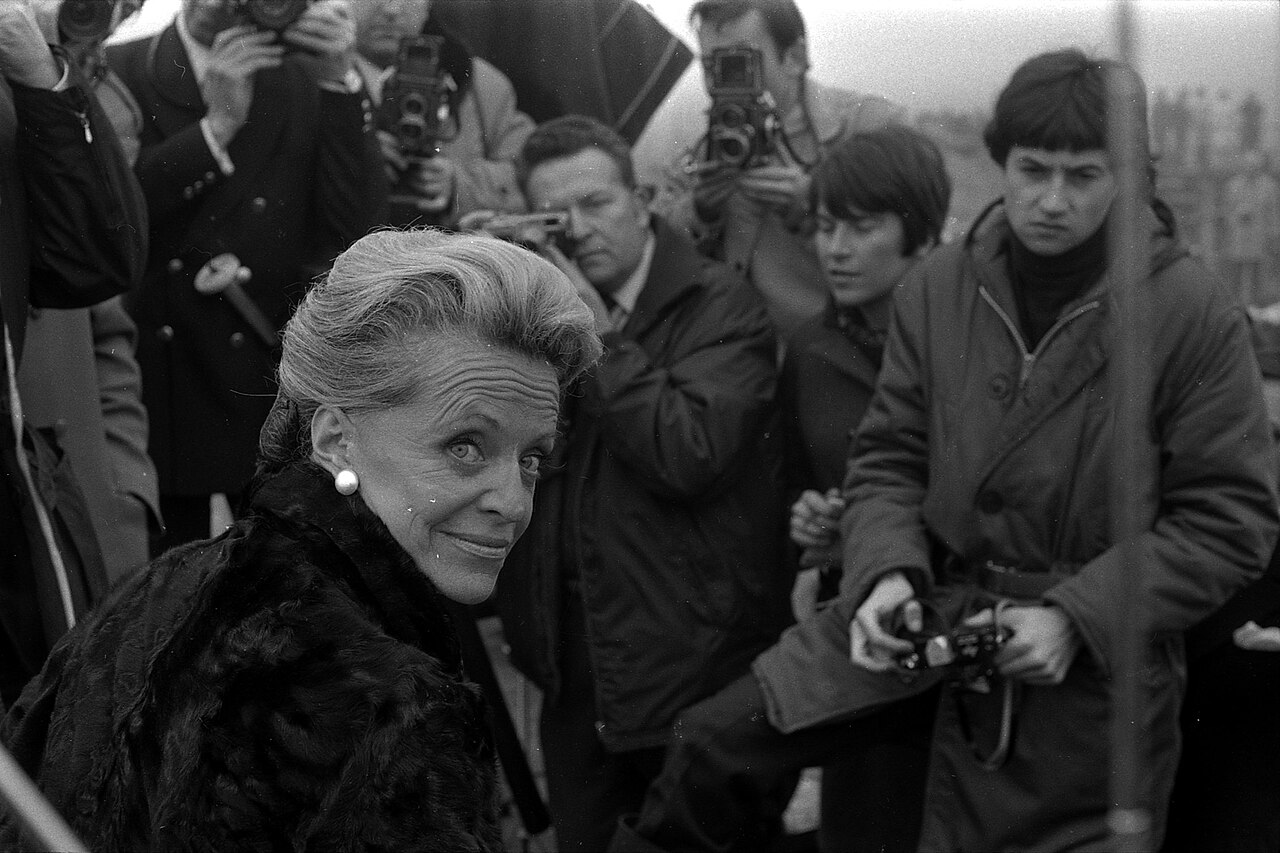
Jacqueline Auriol at Toulouse-Blagnac for Concorde's first flight, 2 March 1969 · Photo : André Cros · CC BY-SA 4.0 · Source : Wikimedia Commons 27 May 1955
First flight of the Caravelle
Jet propulsion is being adopted for airliner projects intended for medium-distance routes. The Caravelle makes its first flight in Toulouse. Its two engines are mounted at the rear of the fuselage, away from the forward cabin. This layout becomes widely used on short- and medium-range transport aircraft.
Sud Aviation Caravelle →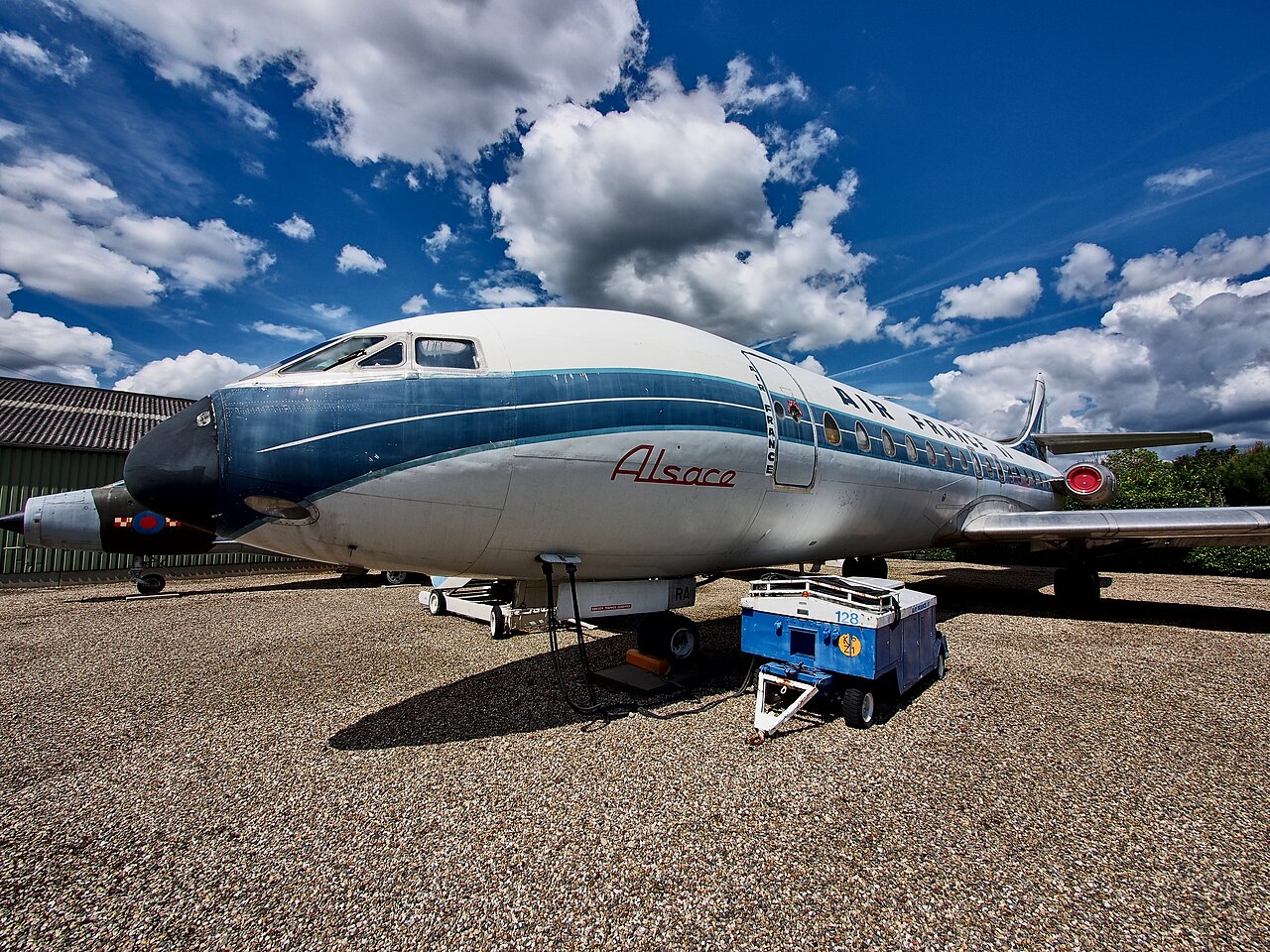
Air France Caravelle III F-BHRA 'Alsace', preserved in a museum. · Photo : Alf van Beem · Public domain · Source : Wikimedia Commons 17 November 1956
First flight of the Dassault Mirage III
The prototype of Dassault's delta-wing fighter flies at Melun-Villaroche. The Mirage III will be exported to many countries. Its delta configuration becomes a defining feature of the company’s fighters.
Dassault Mirage III →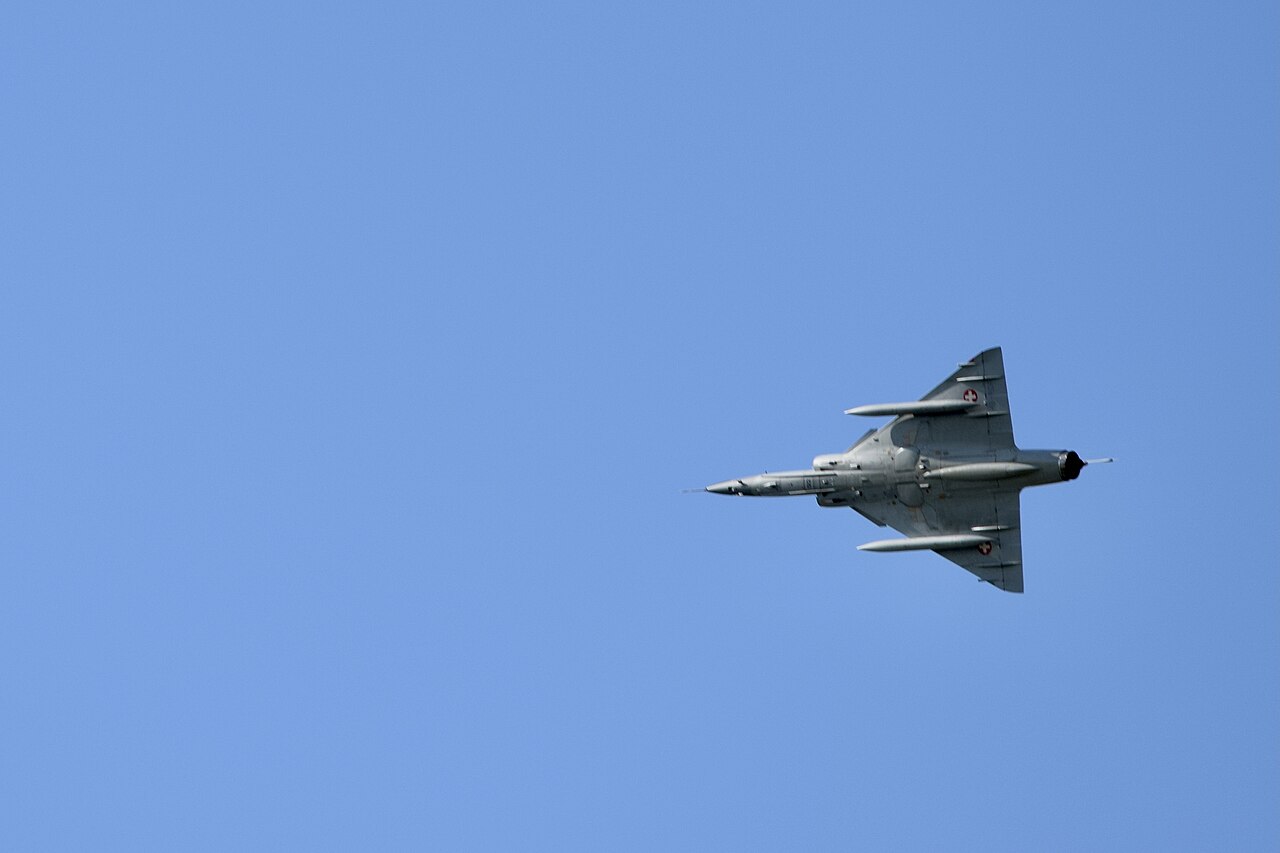
Ex-Swiss Air Force two-seat Mirage III in flight · Photo : Ank Kumar · CC BY-SA 4.0 · Source : Wikimedia Commons 1957
Sud Aviation is formed
The state-owned companies SNCASE and SNCASO merge to form Sud Aviation. The new public company takes over programmes including the Caravelle and the Alouette helicopters. It then leads the French share of Concorde development.
Sud Aviation →
1958
The Boeing 707 enters service
Airlines are preparing to replace part of their propeller-driven fleets with faster aircraft. Pan American introduces the Boeing 707 on the North Atlantic. The four-engine jet combines a swept wing with a cabin suited to major international routes. Its widespread adoption helps establish jet travel as a lasting feature of air transport.
Boeing 707 →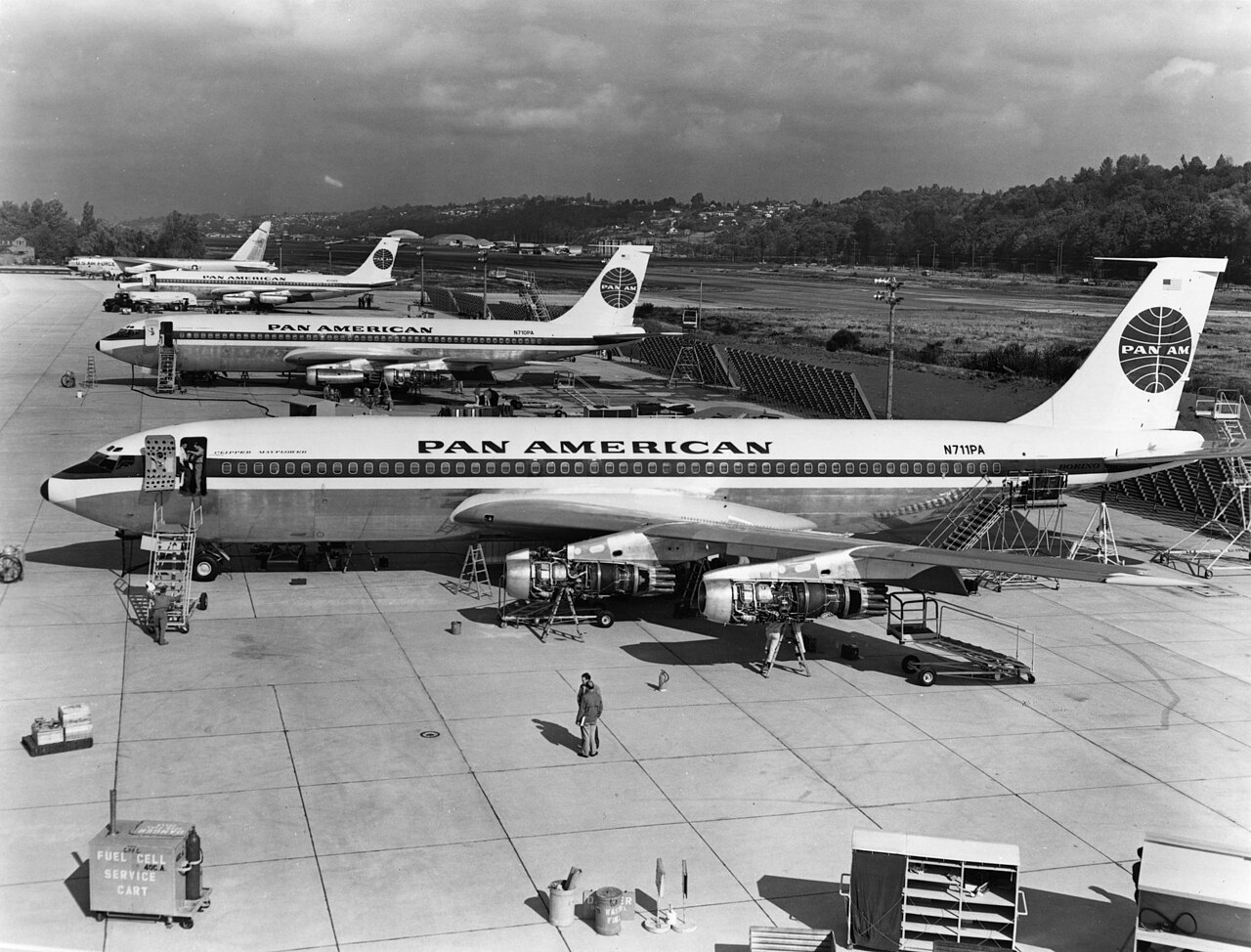
Pan Am's first Boeing 707-121s awaiting delivery, Seattle, 1958 · Photo : Auteur inconnu · Public domain · Source : Wikimedia Commons 22 December 1964
First flight of the Lockheed SR-71
The strategic reconnaissance aircraft designed by Lockheed's Skunk Works flies at Palmdale, California. It flies at more than three times the speed of sound, at very high altitude. Its design addresses the need to gather intelligence while limiting exposure to enemy defences.
Lockheed SR-71 Blackbird →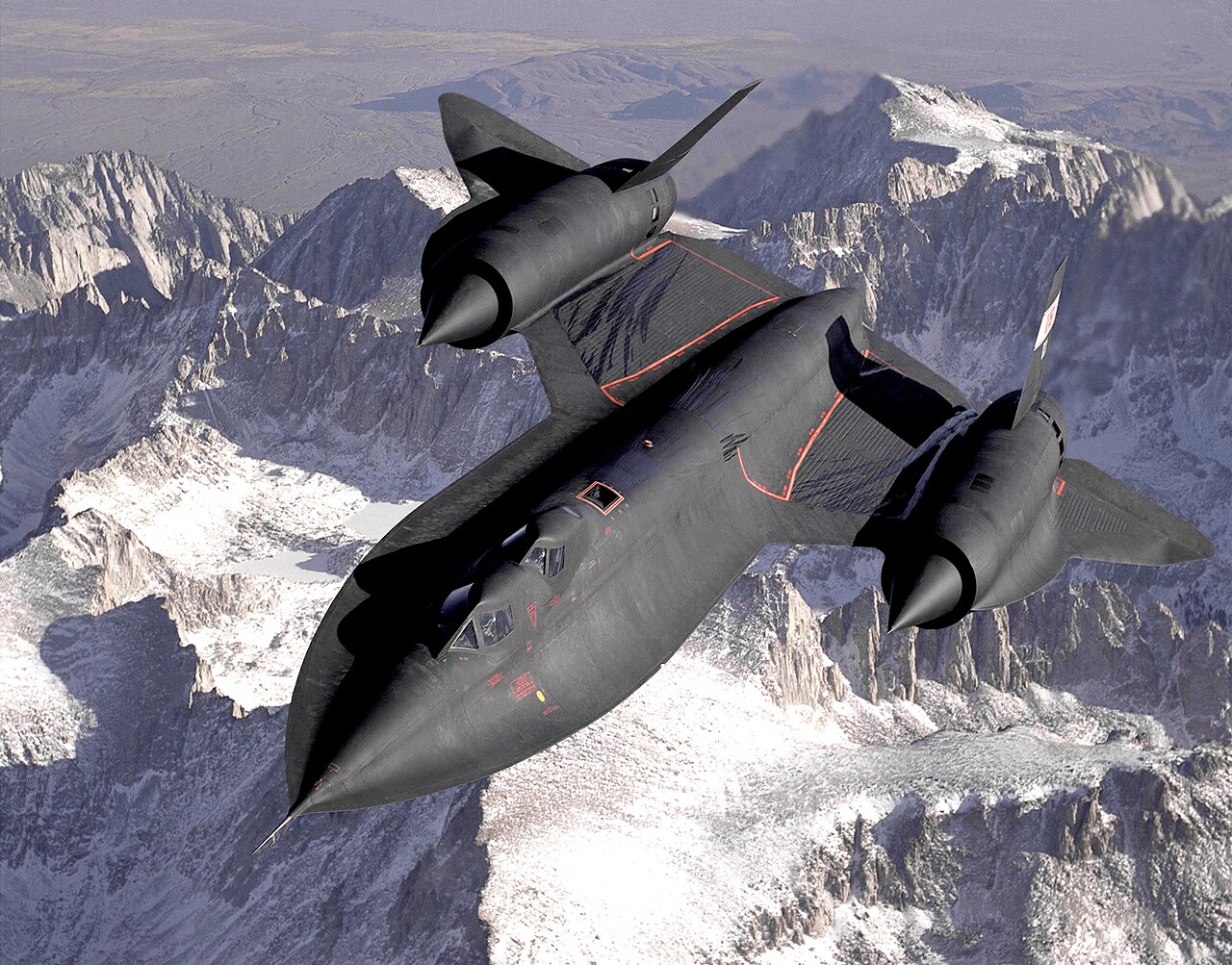
NASA SR-71B Blackbird over the Sierra Nevada · Photo : USAF / Judson Brohmer · Public domain · Source : Wikimedia Commons April 1967
McDonnell Douglas is formed
McDonnell Aircraft and Douglas Aircraft merge to form McDonnell Douglas, headquartered in St. Louis. Douglas, then in financial difficulty despite orders for the DC-8 and DC-9, gains a stronger partner. The new group combines combat aircraft, airliners and space activities.
Douglas / McDonnell Douglas →9 April 1967
First flight of the Boeing 737
Boeing's short-haul twinjet makes its first flight. Developed over several generations, it becomes one of the most-produced airliner families. The programme plays a central role in the development of short- and medium-haul networks.
Boeing 737 →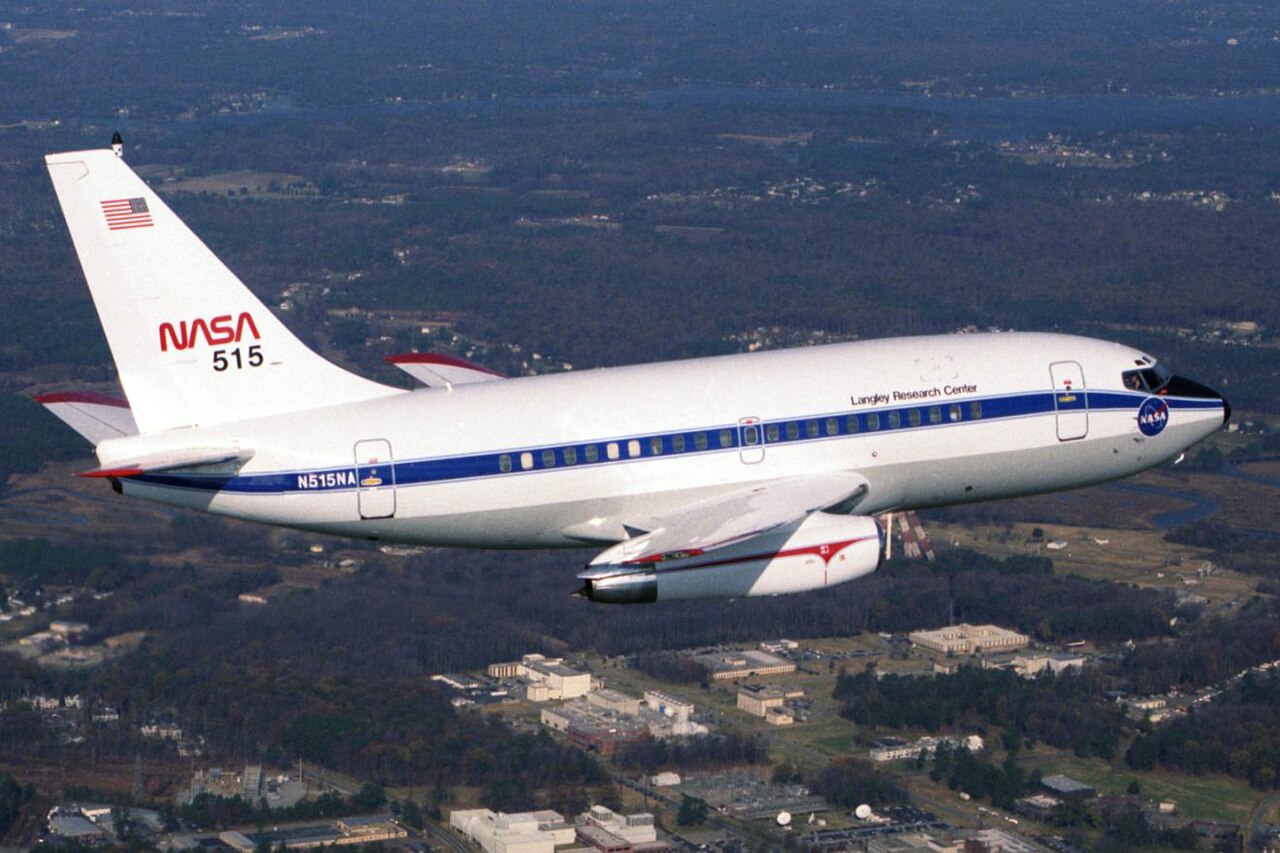
NASA 515, the first Boeing 737 built, in flight · Photo : NASA/LRC · Public domain · Source : Wikimedia Commons 9 February 1969
First flight of the Boeing 747
Traffic growth encourages manufacturers to increase airliner capacity substantially. The Boeing 747 makes its first flight near Seattle. Its wide fuselage accommodates two aisles, while the upper deck gives it a distinctive profile. Its capacity changes the economics of major routes while requiring airports to adapt their infrastructure.
Boeing 747 →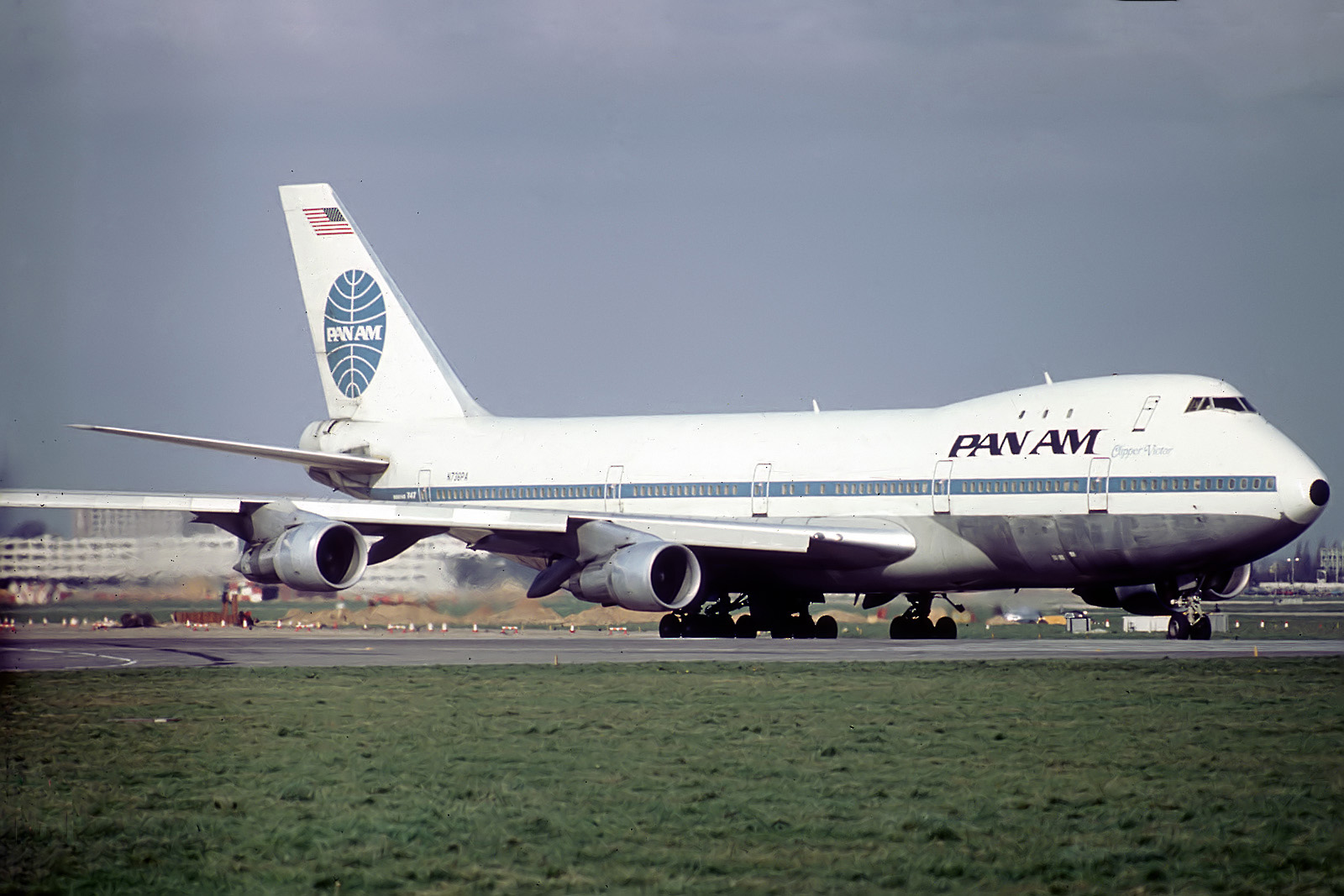
Pan Am Boeing 747-121 'Clipper Victor' at London Heathrow in 1977. · Photo : Paul Seymour · CC BY-SA 4.0 · Source : Wikimedia Commons 2 March 1969
First flight of Concorde
France and Britain are jointly developing a supersonic transport aircraft. The Concorde 001 prototype makes its first flight at Toulouse. This initial flight remains subsonic and begins a lengthy development test programme. The project aims to carry passengers at a cruising speed close to Mach 2.
Concorde →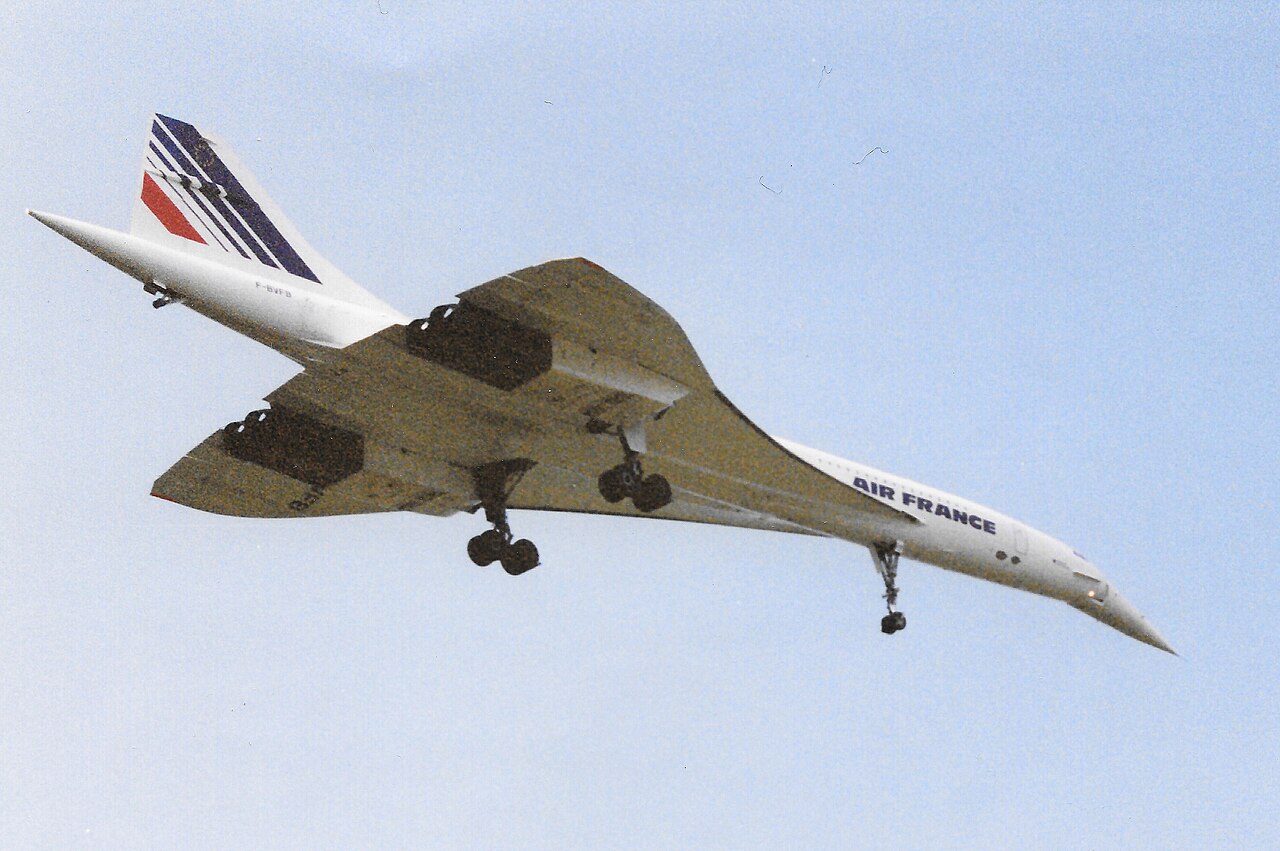
Air France Concorde F-BVFB on its last commercial flight, 31 May 2003. · Photo : Eric Salard · CC BY-SA 2.0 · Source : Wikimedia Commons 1 January 1970
Aérospatiale is created
Sud Aviation, Nord Aviation and SEREB merge to form the Société nationale industrielle aérospatiale (SNIAS). The group combines aircraft, helicopters, missiles and space activities. It becomes the French partner in Airbus.
Aérospatiale →January 1970
The Boeing 747 enters service
Pan Am puts the 747 into service between New York and London. The widebody lowers the cost per seat and accompanies the growth of mass air travel. Its twin-aisle cabin and partial upper deck make it a symbol of intercontinental travel.
Boeing 747 →18 December 1970
Airbus Industrie is formed
The Airbus Industrie economic interest grouping is formed by French and German manufacturers, later joined by Spain and the United Kingdom. Its headquarters are initially in Paris, before moving to Toulouse in 1974. The A300 programme gives this European partnership a concrete industrial purpose.
Airbus A300 →Airbus Encyclopedia network : A300-600
28 October 1972
First flight of the Airbus A300
European industrial cooperation produces a new family of airliners. The Airbus A300 makes its first flight at Toulouse. It is the first twin-engine widebody airliner. The programme lays the industrial and commercial foundations on which Airbus subsequently builds its range.
Airbus A300 →Airbus Encyclopedia network : A300-600
Airbus Encyclopedia network : A300F
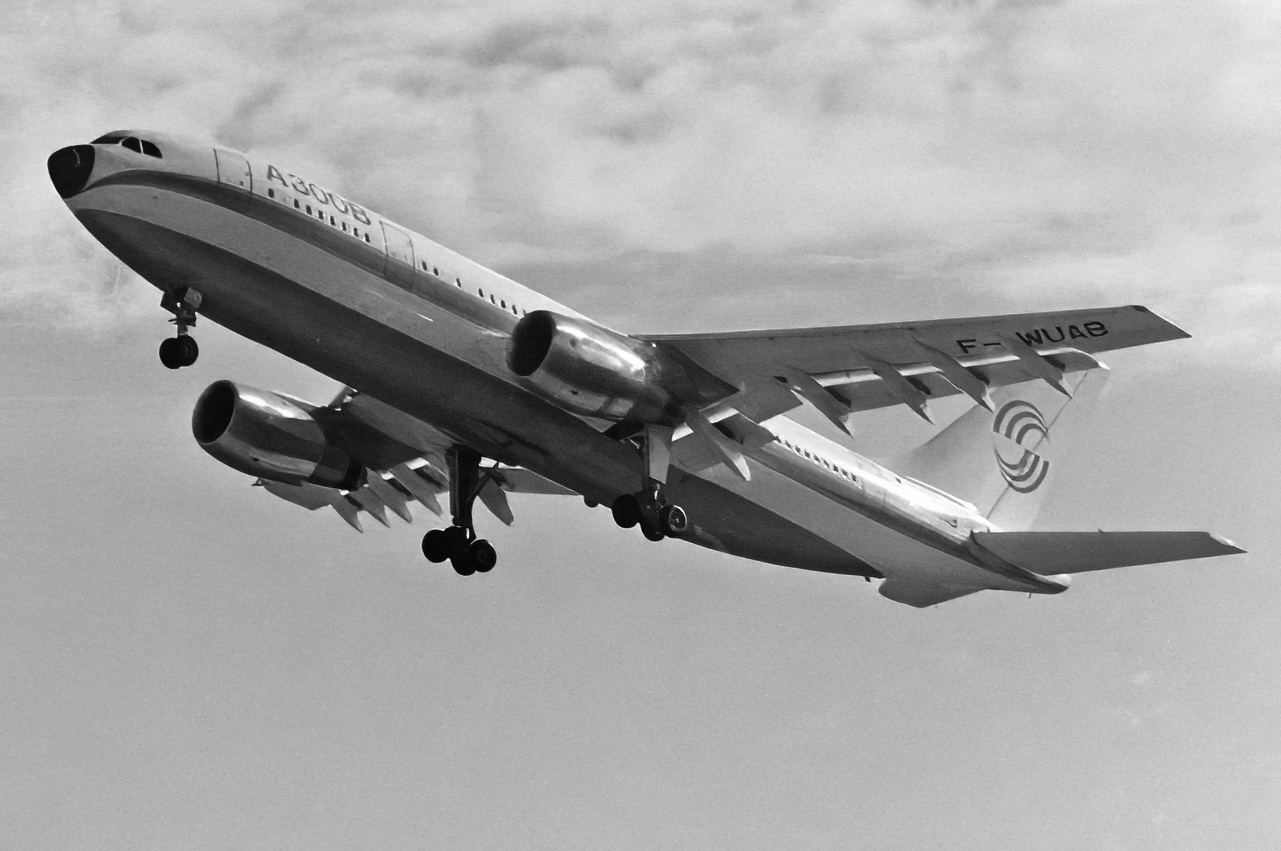
Toulouse, 28 October 1972: first flight of the Airbus A300B prototype. · Photo : André Cros · CC BY-SA 4.0 · Source : Wikimedia Commons May 1974
The A300 enters service with Air France
Air France puts the first Airbus A300 into service between Paris and London. Sales start slowly before picking up at the end of the 1970s. As the first twin-engined widebody airliner, the A300 offers an alternative to three- and four-engined aircraft on suitable routes.
Airbus A300 →Airbus Encyclopedia network : A300-600
Airbus Encyclopedia network : A300F
21 January 1976
Concorde enters commercial service
After a lengthy programme of testing and certification, Concorde begins carrying fare-paying passengers. Air France opens a route to Rio de Janeiro via Dakar, while British Airways serves Bahrain. These launches bring the Franco-British aircraft into scheduled service. Its speed cuts journey times, but its costs and restrictions related to the sonic boom limit its network.
Concorde →Air France Concorde F-BVFB on its last commercial flight, 31 May 2003. · Photo : Eric Salard · CC BY-SA 2.0 · Source : Wikimedia Commons 1977
British Aerospace is formed
The British Aircraft Corporation, Hawker Siddeley Aviation, Hawker Siddeley Dynamics and Scottish Aviation are nationalised and combined. The new group is named British Aerospace. It joins Airbus Industrie in 1979.
British Aerospace / BAE Systems →16 August 1984
First flight of the ATR 42
The regional twin-turboprop from ATR, a Franco-Italian joint venture based in Toulouse, makes its first flight. The stretched ATR 72 will follow. The family targets regional routes on which turboprop propulsion is well suited to short sectors.
ATR 42 / ATR 72 →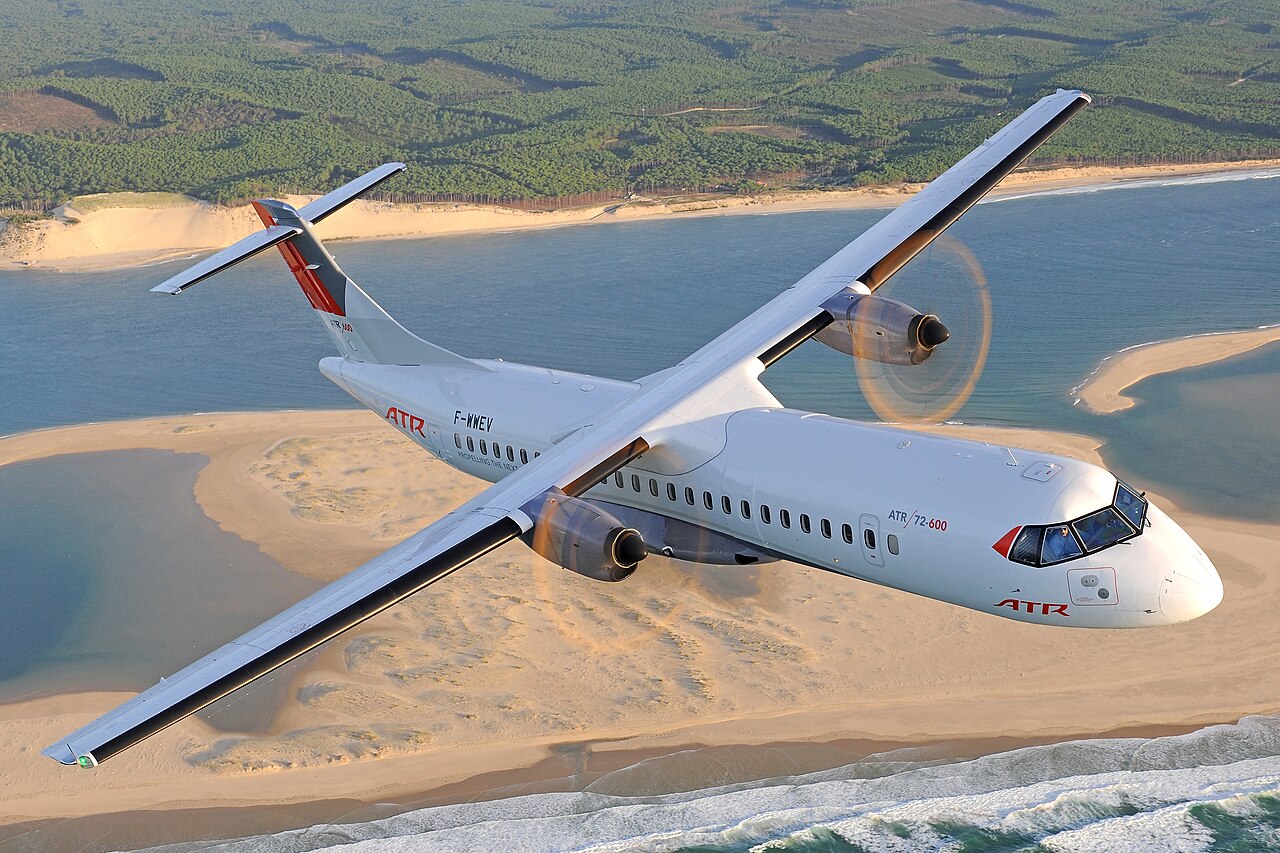
ATR 72-600 regional turboprop · Photo : ATR Aircraft · CC BY-SA 2.0 · Source : Wikimedia Commons 4 July 1986
First flight of the Rafale A
Dassault Aviation's Rafale A demonstrator flies at Istres. It paves the way for the production Rafale, which entered service with the French Navy and then the French Air Force. The programme combines a delta-canard configuration with fly-by-wire flight controls.
Dassault Rafale →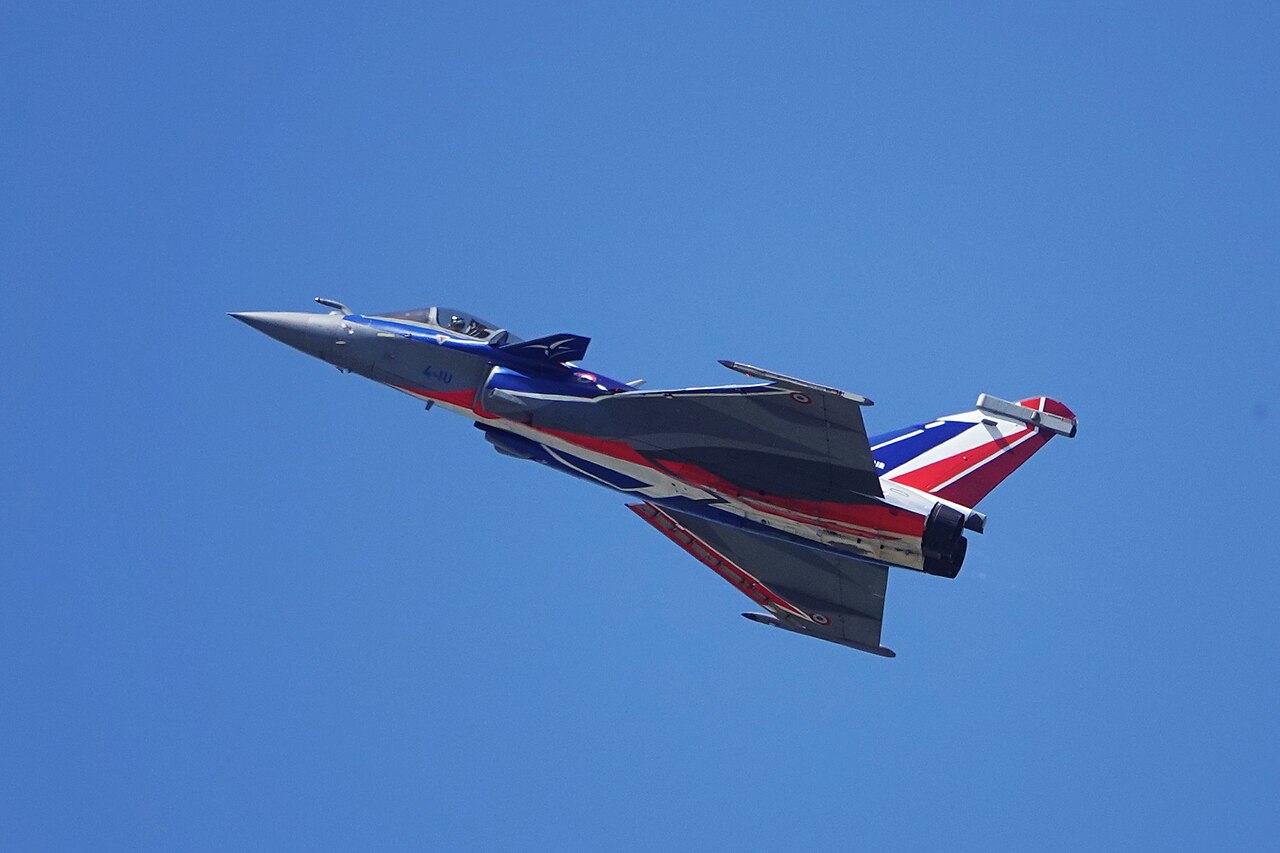
Rafale flying display, 2025 Paris Air Show · Photo : Ibex73 · CC BY 4.0 · Source : Wikimedia Commons 22 February 1987
First flight of the Airbus A320
Airbus expands its range with a single-aisle aircraft for short- and medium-haul routes. The A320 makes its first flight with digital fly-by-wire controls and sidesticks. Computers transmit the pilot's commands and provide flight-envelope protection in normal operation. This architecture becomes a defining feature of subsequent Airbus designs.
Airbus A320 →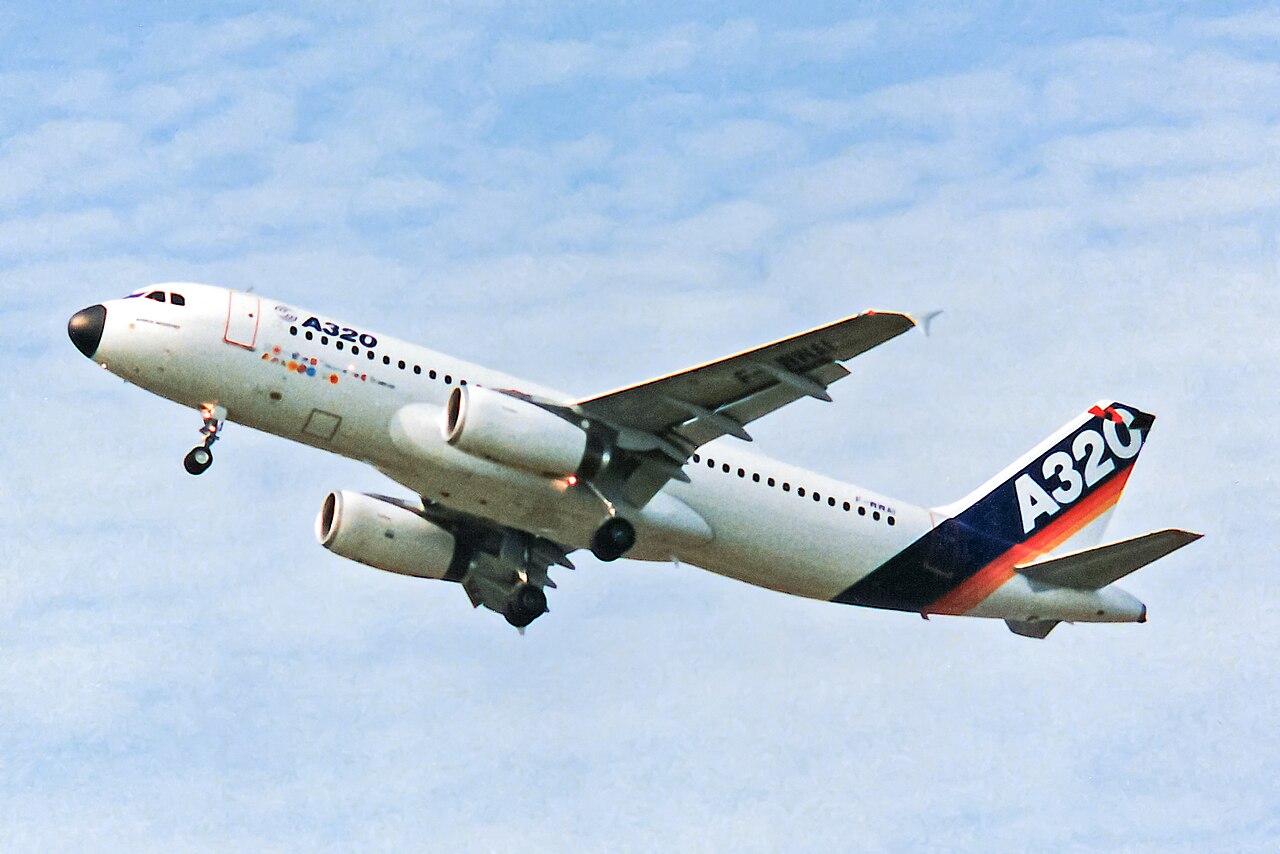
A320 prototype F-WWAI at Farnborough, 1988 · Photo : Ken Fielding, œuvre dérivée Lämpel · CC BY-SA 3.0 · Source : Wikimedia Commons
1992
Eurocopter is formed
Eurocopter is formed by the merger of the helicopter activities of Aérospatiale and DASA (formerly MBB), on a 70%/30% basis. The joint company brings together the French and German ranges. It becomes Airbus Helicopters on 2 January 2014.
Eurocopter / Airbus Helicopters →12 June 1994
First flight of the Boeing 777
Boeing's long-haul twinjet flies for the first time. It was largely designed with three-dimensional computer-aided design tools. The programme strengthens the position of twinjets on major intercontinental routes.
Globalisation and the digital age (1990–2019) →1 August 1997
Boeing and McDonnell Douglas merge
The merger of Boeing and McDonnell Douglas is completed after approval by US and European competition authorities. The resulting group keeps the Boeing name. The world market for large airliners is left with two manufacturers, Boeing and Airbus.
Boeing and Airbus: the making of a duopoly →1999
Aérospatiale-Matra
Aérospatiale combines with Matra Hautes Technologies to form Aérospatiale-Matra. The operation comes with the opening of the state company's capital. The new group takes part in creating EADS the following year.
Aérospatiale-Matra →10 July 2000
EADS is created
Aérospatiale-Matra, DaimlerChrysler Aerospace (DASA) and CASA combine to form EADS. The new group holds 80% of Airbus, with BAE Systems retaining 20%. In 2001 Airbus becomes an integrated company and ceases to be an economic interest grouping.
Airbus →July 2002
EASA is established
A European regulation creates the European Aviation Safety Agency (EASA), based in Cologne (current name: European Union Aviation Safety Agency, since 2018). It gradually takes over aircraft certification and the framework for maintenance (Part-145, Part-66, Part-147). The organisation seeks to harmonise aviation safety rules across Europe.
Aviation safety →2003
Concorde retired
Concorde operations depend on a small fleet and a specialised market. Air France and then British Airways end their supersonic services. Operating costs, weak demand and the demands of supporting the programme weigh on the decision. Preserved aircraft become reminders of this chapter in supersonic commercial transport.
Concorde →Air France Concorde F-BVFB on its last commercial flight, 31 May 2003. · Photo : Eric Salard · CC BY-SA 2.0 · Source : Wikimedia Commons 27 April 2005
First flight of the Airbus A380
Airbus designs the A380 to carry large numbers of passengers between major hubs. The aircraft makes its first flight at Toulouse. It has two passenger decks extending along the full length of the cabin. Its development requires an international industrial effort and changes at airports that will handle it.
Airbus A380 →Airbus Encyclopedia network : A380-800
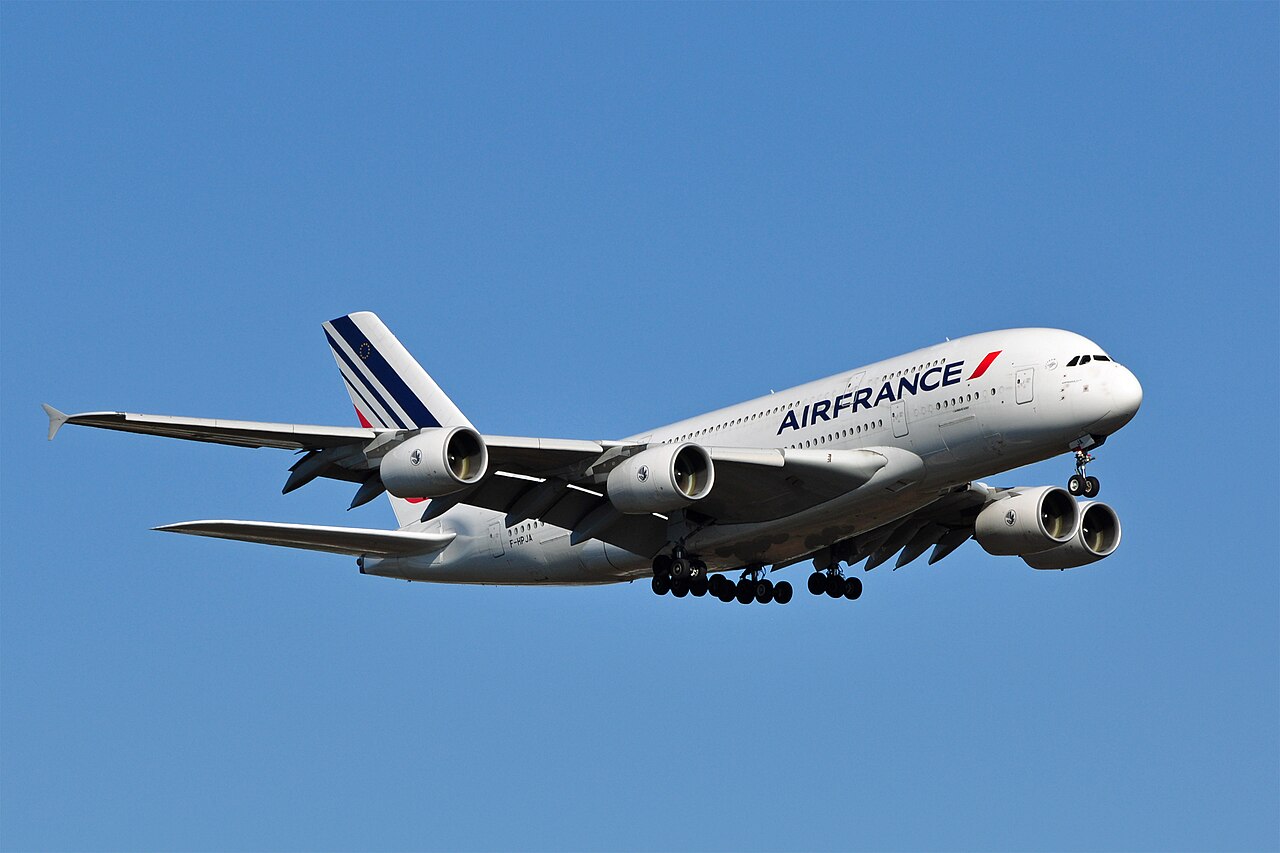
Air France Airbus A380 F-HPJA in flight. · Photo : Joe Ravi · CC BY-SA 3.0 · Source : Wikimedia Commons 2007
The A380 enters service
Following testing and certification, the A380 joins scheduled passenger service. Singapore Airlines operates its first commercial flight between Singapore and Sydney. Entry into service puts ground handling and boarding procedures for an aircraft of this size into everyday practice. It brings the very-high-capacity approach to routes linking major airports.
Airbus A380 →15 December 2009
First flight of the Boeing 787
The 787 flies at Everett. Its structure makes extensive use of composite materials, and its systems rely more on electrical power. It enters service with All Nippon Airways in 2011.
Boeing 787 Dreamliner →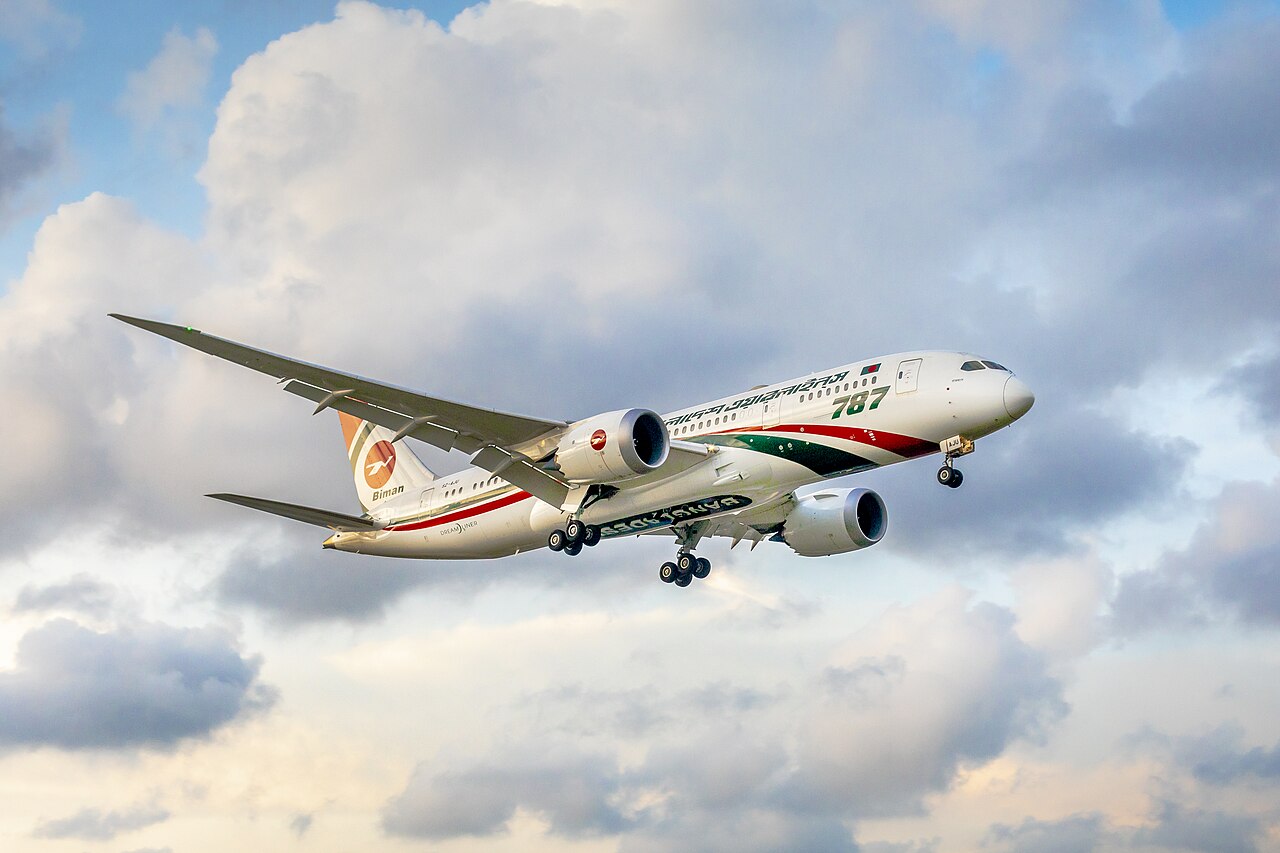
Biman Bangladesh Airlines Boeing 787 Dreamliner · Photo : Jubair Bin Iqbal · CC BY-SA 4.0 · Source : Wikimedia Commons 14 June 2013
First flight of the Airbus A350
The A350 XWB makes its first flight in Toulouse. A long-haul twinjet with a largely composite structure, it enters service with Qatar Airways in January 2015. The programme forms part of long-haul fleet renewal and efforts to reduce fuel consumption.
Airbus A350 XWB →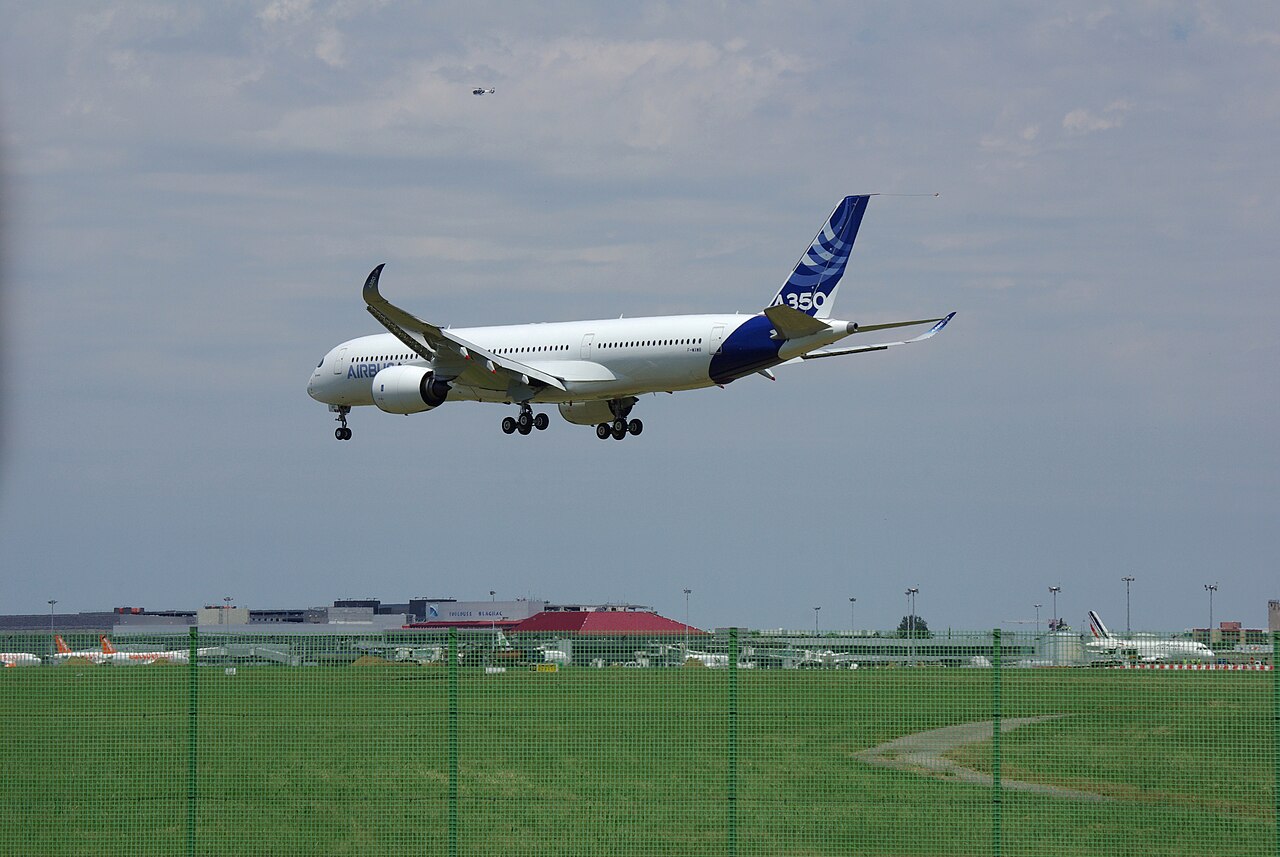
The A350 landing after its maiden flight in Toulouse, 14 June 2013 · Photo : Duch.seb · CC BY-SA 3.0 · Source : Wikimedia Commons 2014
EADS becomes Airbus Group
The EADS group adopts the name Airbus Group. Its activities are reorganised around commercial aircraft, helicopters, and defence and space. In the same year Eurocopter is renamed Airbus Helicopters.
EADS →2016
Solar Impulse 2 completes its round-the-world flight
Solar Impulse 2 explores the possibilities of an electric aircraft powered by sunlight. Bertrand Piccard and André Borschberg take turns at the controls to complete a staged round-the-world flight without fuel, finishing in Abu Dhabi. Batteries allow flight to continue at night after charging in sunlight. The demonstration highlights energy efficiency without providing a model directly transferable to commercial passenger transport.
Solar Impulse 2 →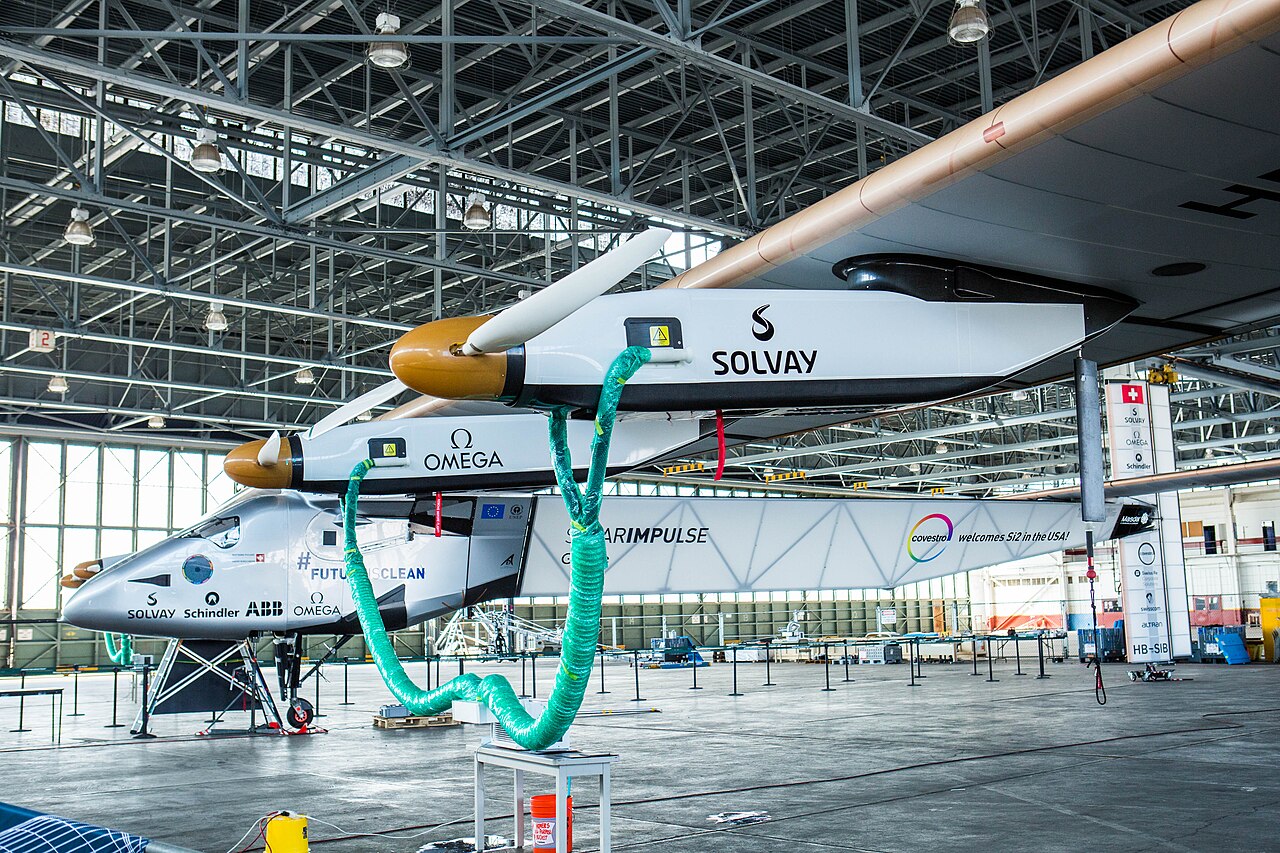
Solar Impulse 2 in Hawaii during its round-the-world flight, April 2016 · Photo : Anthony Quintano · CC BY 2.0 · Source : Wikimedia Commons 2017
Airbus SE
Airbus Group merges with its Airbus subsidiary and becomes Airbus SE. It had already become a European company (SE) in 2015. This step completes the sequence of name changes begun under EADS.
EADS →July 2018
The CSeries becomes the Airbus A220
On 1 July 2018 Airbus takes a majority stake in Bombardier's CSeries programme. On 10 July the aircraft is renamed the A220. It extends the Airbus range below the A320 family.
Bombardier / Canadair →
March 2019
Worldwide grounding of the Boeing 737 MAX
After two accidents, in Indonesia (October 2018) and Ethiopia (March 2019), authorities worldwide ground the 737 MAX. Investigations point to an automatic flight-control system and to the certification process; the aircraft returns to commercial service from late 2020. The crisis leads to technical modifications and new pilot training requirements.
Boeing 737 →2020
Traffic collapses with the Covid-19 pandemic
Border closures cut worldwide air passenger traffic to a fraction of its 2019 level. Airlines retire many widebodies, and recovery stretches over several years. The shock also affects airports, manufacturers and their suppliers.
Globalisation and the digital age (1990–2019) →19 April 2021
Ingenuity flies on Mars
NASA’s Ingenuity helicopter makes the first powered, controlled flight of an aircraft on another planet. Designed as a technology demonstrator, it completes 72 flights before its mission ends in January 2024. The experiment demonstrates the feasibility of aerial reconnaissance in the very thin Martian atmosphere.
Crises and transition (2019–today) →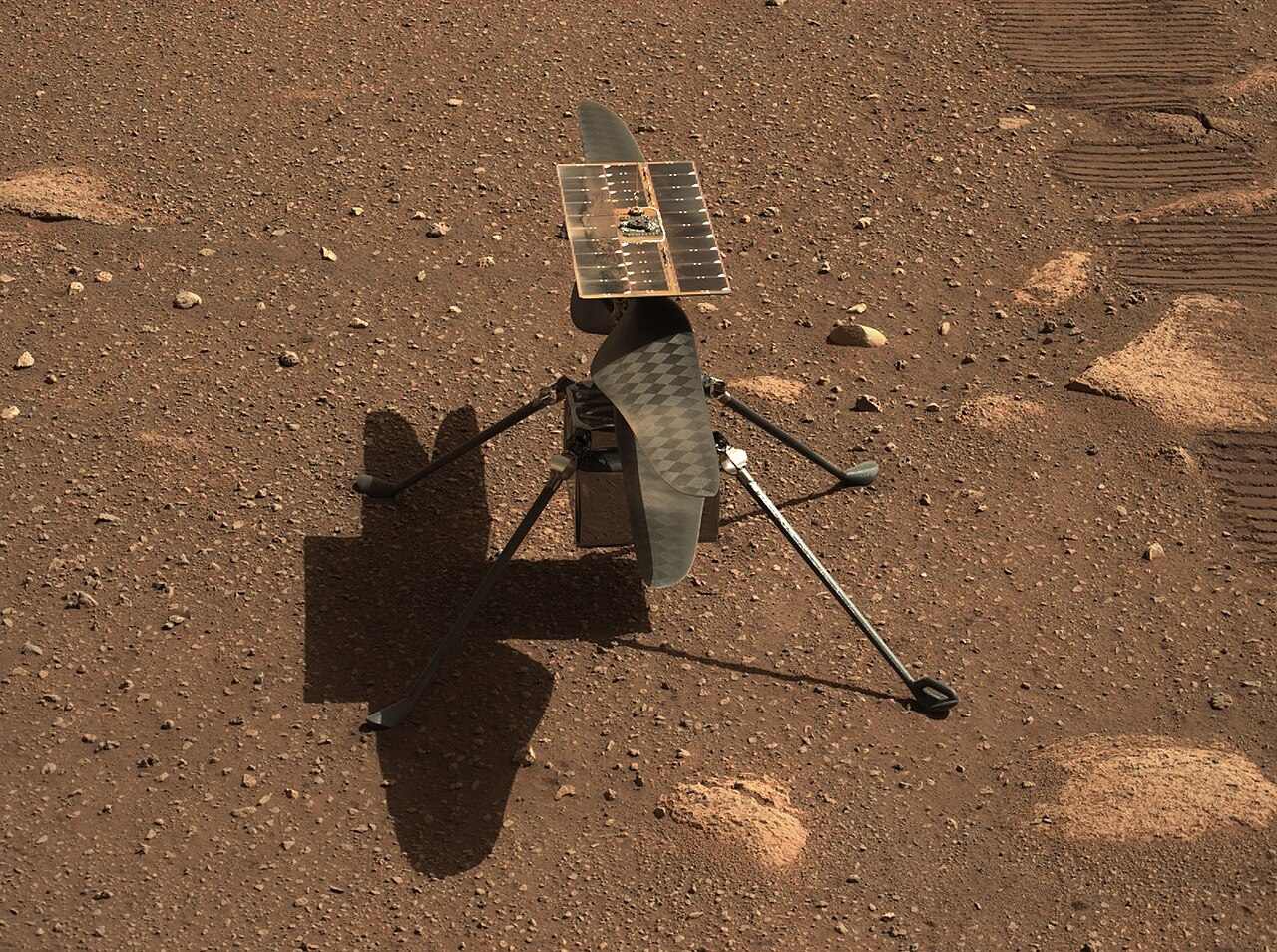
NASA's Ingenuity helicopter on Mars, seen by Perseverance, April 2021 · Photo : NASA/JPL-Caltech/ASU/MSSS · Public domain · Source : Wikimedia Commons December 2021
Last A380 delivered
Airbus delivers its last A380 to Emirates, the programme's largest customer. Production, whose end had been announced in 2019, comes to a close. Aircraft already delivered nevertheless continue to serve routes with strong demand.
Airbus A380 →Airbus Encyclopedia network : A380-800
15 June 2022
First flight of the A321XLR
The extra-long-range version of the A321neo flies in Hamburg. It enters service in late 2024 with Iberia, enabling transatlantic routes with a single-aisle aircraft. Its range expands the A320 family’s operating possibilities in long-haul markets.
Airbus A321XLR →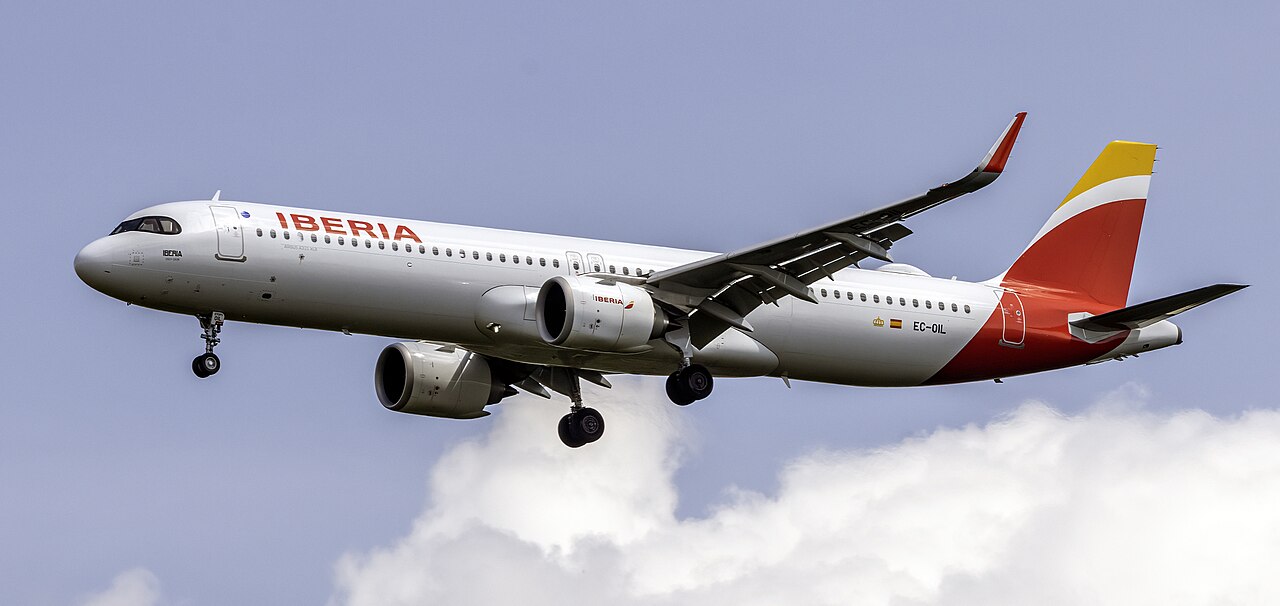
Iberia A321XLR on approach to Washington Dulles, 2025 · Photo : Acroterion · CC BY-SA 4.0 · Source : Wikimedia Commons 31 January 2023
Last Boeing 747 delivered
Boeing delivers the last 747 built, a 747-8 freighter, to Atlas Air at Everett. Production lasted more than fifty years. Freighter versions extend the type’s role in global goods transport.
Boeing 747 →28 May 2023
First commercial flight of the COMAC C919
China Eastern Airlines operates the first commercial C919 flight between Shanghai and Beijing. The Chinese single-aisle aircraft is certified by China's civil aviation authority. The launch marks an industrial milestone for China in the single-aisle airliner market.
COMAC C919 →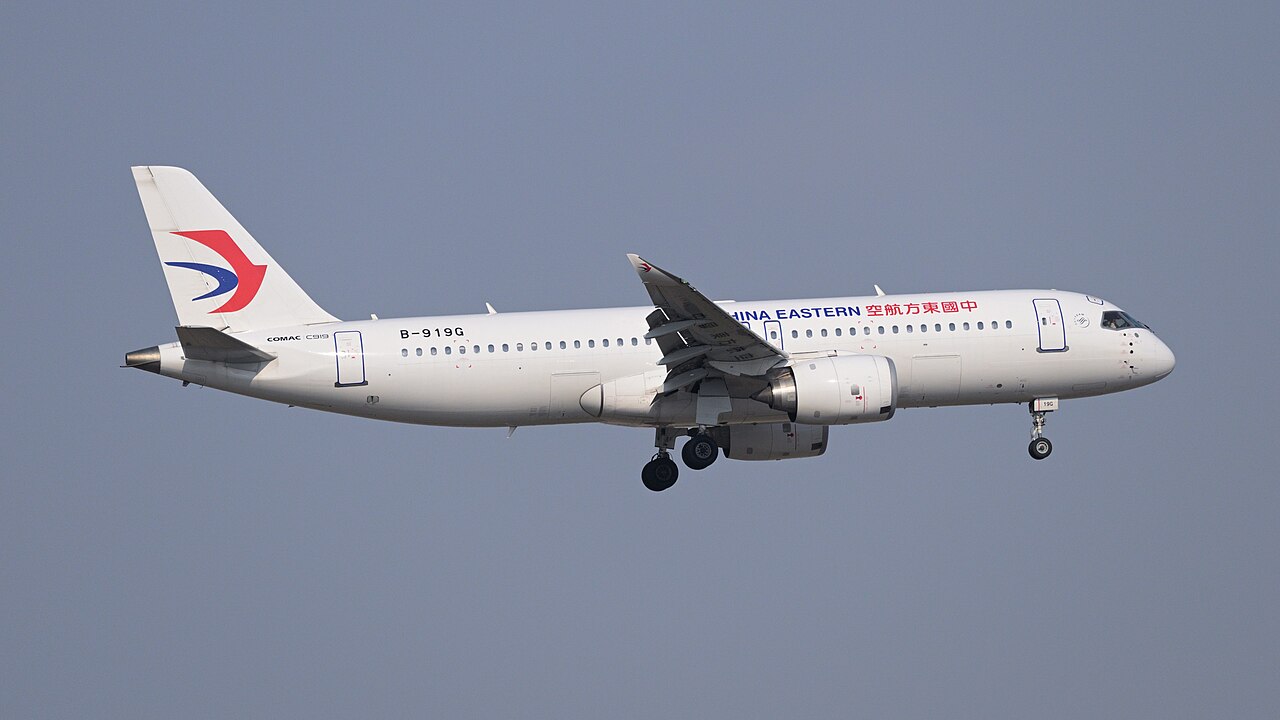
China Eastern COMAC C919 on approach to Shanghai Hongqiao, 2026 · Photo : 4300streetcar · CC BY 4.0 · Source : Wikimedia Commons 2024–2026
2024–2026: eVTOLs in certification and the scale-up of SAF
Electric vertical take-off and landing aircraft (eVTOL) projects follow certification paths specific to each design and authority. Testing and regulatory approvals are distinct from commercial operations. Meanwhile, the ReFuelEU Aviation regulation requires a minimum share of 2% sustainable aviation fuels (SAF) in fuel supplied at covered Union airports from 2025. Scaling up SAF depends notably on production capacity and the availability of feedstocks that meet sustainability criteria.
Towards low-carbon aviation →November 2024
The A321XLR enters service
Iberia introduces the A321XLR into commercial service in November 2024 before deploying it between Madrid and Boston. The aircraft extends the A320 family’s range, notably through increased fuel capacity. It enables long-haul routes where demand may not justify a widebody aircraft.
Airbus A321XLR →Iberia A321XLR on approach to Washington Dulles, 2025 · Photo : Acroterion · CC BY-SA 4.0 · Source : Wikimedia Commons 28 January 2025
The Boom XB-1 breaks the sound barrier
Over the Mojave Desert, Boom Supersonic's XB-1 demonstrator exceeds Mach 1. Boom describes it as the first independently developed supersonic aircraft. This test flight involves a demonstrator and does not constitute the certification or entry into service of an airliner.
Supersonic flight, from the Bell X-1 to the Boom XB-1 →February 2025
Airbus pushes back its ZEROe programme
Airbus announces a delay to its hydrogen airliner project, initially targeted for 2035, citing in particular the insufficient maturity of the hydrogen ecosystem. Onboard storage, fuel production and distribution remain major challenges. The delay underlines that decarbonisation also depends on energy infrastructure on the ground.
Towards low-carbon aviation →October 2025
The A320 family overtakes the 737 in total deliveries
The total number of A320-family aircraft delivered since 1988 exceeds that of Boeing 737s delivered since 1967. The A320 family becomes the most-delivered airliner. The shift reflects the importance of single-aisle aircraft in airline fleets.
Airbus A320 →