Feature
The Aéropostale (1918–1933)
From the Latécoère Lines to Air France: building a postal network to Africa and South America through collective organisation, difficult crossings and financial fragility.
5 min read
1918: imagining a civilian route
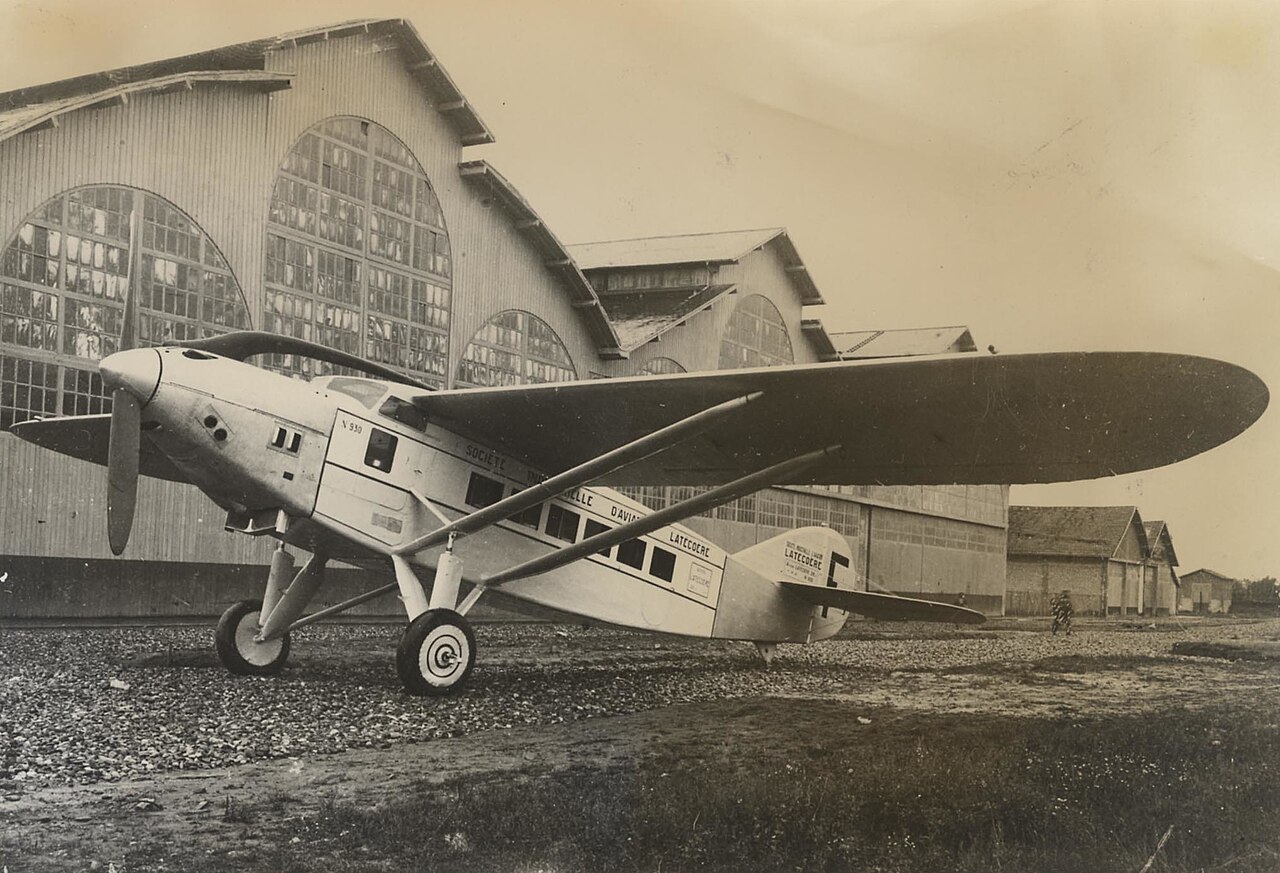
At the end of the First World War, Pierre-Georges Latécoère sought a civilian future for industrial aviation. His Montaudran factory in Toulouse had produced military aircraft; he now proposed carrying mail to Spain, Africa and South America. The objective was not simply to cover a distance. An occasional feat had to become a succession of services usable by postal administrations. Mail provided a relatively light load whose value depended on speed of delivery, but that value required organised departures and reliable connections rather than merely a succession of individual flying achievements.
On 25 December 1918, Latécoère travelled to Barcelona with René Cornemont at the controls. This reconnaissance journey was a starting point, not the immediate opening of a transatlantic connection. Regular Toulouse–Rabat service began in September 1919, via Spain and Casablanca. The early years belonged to the Latécoère Lines and their successive corporate structures, before Aéropostale became the name of a company established in 1927. Using that name for the whole period from 1918 to 1933 is convenient, provided the history of the route is distinguished from that of the business which later gave it its public identity.
Daurat: organising reliability
Didier Daurat, a former military pilot, became the operations manager associated with the discipline of the Line. His task was to make a whole system work: assigning crews, monitoring aircraft, organising stations and limiting interruptions. Mechanical preparation occupied a central place. Having an aircraft available in Toulouse was insufficient if a breakdown immobilised the mail several stages further on. Mechanics, station managers, ground staff and administrative employees therefore contributed to the same result. A narrative centred on the solitary pilot obscures this collective organisation, without which no timetable could be maintained over time.
Reliability nevertheless remained relative to the resources of the interwar period. Navigation depended on landmarks, maps and unevenly available weather information. Airfields did not all have the same equipment. Pressure to deliver the mail therefore does not mean that every flight departed regardless of circumstances. The history of aviation safety requires a distinction between a culture of duty and actual operating possibilities. Accidents and delays were as much a part of this experience as celebrated arrivals. The route was also built by learning its limits, not simply by repeatedly overcoming them through determination.
Towards Dakar: the desert stations
Extension to Dakar, reached by the route in 1925, gave the project its African depth. Beyond Morocco, coastal stages crossed areas where a forced landing could leave a crew far from assistance. Relations with local populations and authorities mattered as much as aircraft performance. This geography belonged to the colonial context and power relationships of the period; it was not an empty setting offered to European adventure. The mail crossed inhabited and governed territories connected by other forms of movement, where the company had to negotiate its presence rather than operate in isolation.
Having joined the Latécoère Lines in 1926, Antoine de Saint-Exupéry became station manager at Cape Juby in 1927. There he performed liaison duties, received crews and assisted them. This experience informed his writing, particularly Southern Mail, published in 1929. Literature conveys solitude, waiting and responsibility, but does not replace operational documents. Testimony, archives and narratives must be read together to understand the desert stations. Above all, Saint-Exupéry's duties show that a pilot could also be an organiser and intermediary, engaged in human relationships essential to the functioning of the network.
1927: one company, two continents
In 1927, Marcel Bouilloux-Lafont took over Latécoère's airline activity and established the Compagnie générale aéropostale. Latécoère remained associated with aircraft manufacturing, but the transport company now had different leadership. Bouilloux-Lafont developed the resources required in South America: airfields, facilities and agreements with governments. A postal connection between France and South America was organised in 1928 with a maritime relay across the South Atlantic. It therefore combined several forms of transport. Saying that the route connected Toulouse with Buenos Aires did not yet mean that every mailbag travelled its entire journey by air.
On the South American continent, routes notably followed the Brazilian coast towards Uruguay and Argentina. Other extensions served inland destinations and Patagonia. Night flights involving Jean Mermoz reduced waiting times but required specific station arrangements. Saint-Exupéry also worked in Argentina; Night Flight, published in 1931, transformed this experience into fiction. The network was neither a single road nor an unchanging service. It evolved with permissions, available aircraft and postal requirements, in a region where other companies and national interests also played important roles in shaping the development of air transport.
1930: crossing the ocean and the Andes
On 12–13 May 1930, Mermoz, navigator Jean Dabry and radio operator Léopold Gimié carried mail from Saint-Louis in Senegal to Natal in a float-equipped Latécoère 28, the Comte de La Vaulx. This commercial crossing of the South Atlantic was an important stage, but did not immediately turn the connection into a regular end-to-end air service. Difficulties on the return journey demonstrated the fragility of the arrangement. The ocean imposed fuel, navigation and mechanical reliability constraints different from those encountered on a land network with closely spaced intermediate stations and more accessible maintenance facilities.
Crossing the Andes between Argentina and Chile presented another difficulty. In June 1930, Henri Guillaumet was forced to land in the mountains during a mail flight. He survived and reached help after several days of walking. Saint-Exupéry gave the episode a lasting place in Wind, Sand and Stars, published in 1939. The event must be distinguished from its later literary treatment. Mermoz's ocean and Guillaumet's mountains reveal two limits of the same system: the route depended on exposed individuals, but also on machines, communications and rescue capabilities that remained inadequate for the conditions encountered.
1931–1933: crisis and inheritance
Expansion required substantial capital, while revenue did not easily cover facilities and operations. Postal agreements and public support were crucial. Against the background of the economic crisis, Aéropostale entered judicial liquidation in 1931; operations nevertheless continued during reorganisation. In 1933, its activities joined those of the companies brought together within Air France. This outcome meant neither abandonment of the South American connections nor disappearance of the accumulated skills. It changed the financial and institutional framework in which the routes operated, after growth whose economic foundations had proved fragile under the pressures of expansion and crisis.
The inheritance extended beyond famous biographies. It included workshops, procedures, postal relationships and accumulated knowledge of the routes. At Montaudran, in Toulouse, L'Envol des Pionniers now places these occupations within the spaces where they were practised. Aéropostale belongs to the history of commercial air transport, but should not be read as an inevitable march towards modern aircraft. Between 1918 and 1933, industrial, political and human choices made particular connections possible at considerable cost. Stories of courage acquire their meaning when they remain connected to this practical organisation of the mail and to the people who sustained it.
Sources
- L'Envol des Pionniers — L'aventure de l'Aéropostale
- Air France — Notre histoire
- Musée de l'Air et de l'Espace — Collections
- Gallica — BnF — Presse et revues aéronautiques numérisées
Related reading
Feature
Toulouse, aerospace capitalPioneer
Pierre-Georges LatécoèrePioneer
Jean MermozPioneer
Antoine de Saint-ExupéryAircraft
Latécoère 28