1883–1943
Pierre-Georges Latécoère
Toulouse industrialist, founder of the Latécoère air lines, from which the Aéropostale grew.
2 min read
Life
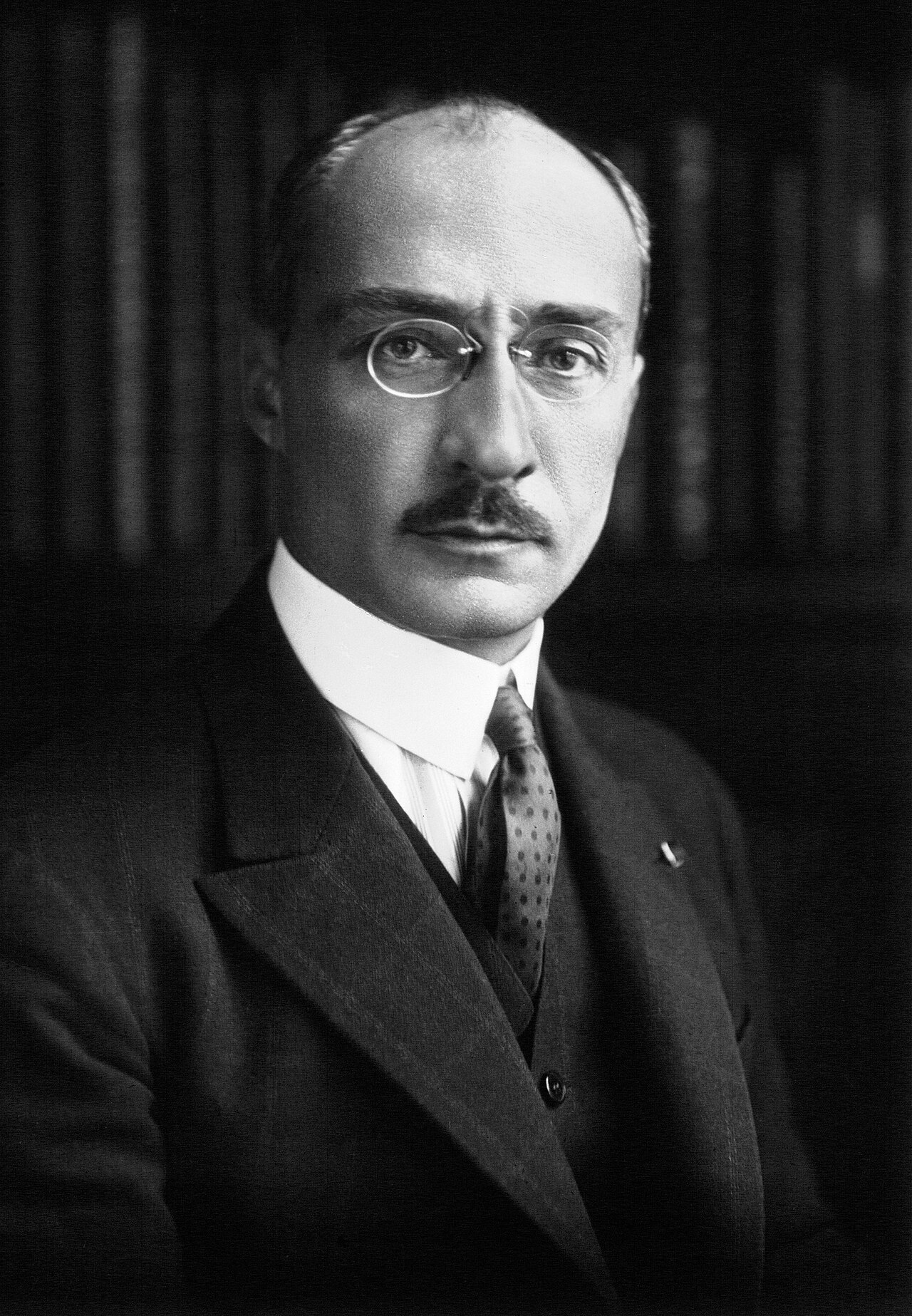
Born into an industrial family in Bagnères-de-Bigorre, Pierre-Georges Latécoère studied at the École Centrale in Paris. He took over the family business, whose activities extended to railway equipment manufacture. His move into aviation therefore grew not from a flying career but from experience in production, contracts and workshop management. This background sets his career apart from those of the airmen with whom his name would later become closely associated.
The First World War changed the scale of his business. At Montaudran in Toulouse, he organised the manufacture of Salmson aircraft for the army in 1917. Workers, machinery and a testing ground had to be brought together before aircraft could be delivered in quantity. As peace approached, these facilities raised a new question: how could the industrial resources and skills assembled for military contracts be turned towards a lasting civilian business?
Latécoère chose airmail. On 25 December 1918 he flew from Toulouse to Barcelona as a passenger with pilot René Cornemont. This reconnaissance flight prepared the way for a route to Morocco, where a regular service began in 1919. His plans already included an extension to West Africa and eventually South America. The challenge was not merely to cover a distance, but to establish a chain of staging posts that could carry mail to a timetable.
Achievements
The business combined aircraft manufacture with the operation of a route network. Didier Daurat played a central part in day-to-day management and the recruitment of pilots. Airfields, maintenance workshops and agreements with local authorities mattered as much as aircraft performance. Expansion towards Dakar, reached by the network in 1925, took place in difficult weather and political conditions, across territories where an engine failure could leave a crew stranded for a considerable time.
In 1927 Latécoère sold the operating company to Marcel Bouilloux-Lafont; it became the Compagnie Générale Aéropostale. This transfer must be distinguished from his continuing work as an aircraft manufacturer. The best-known South American developments and ocean crossings largely belong to the following period. Jean Mermoz and Antoine de Saint-Exupéry, both recruited before the sale, worked within an organisation whose resources and responsibilities were changing.
Aircraft bearing his name remained closely connected with long-distance transport. The Latécoère 28, a transport aircraft also adapted for floats, illustrates this approach. Mermoz used the floatplane version for the South Atlantic mail crossing in May 1930. The company also developed large flying boats. These seaplane programmes did not all embody the same technical solution: they addressed different routes and different operating requirements, rather than following a single model of ocean transport.
Legacy
Latécoère died in Paris in 1943, leaving both an industrial and a commercial legacy. His contribution lay in bringing factories, infrastructure and postal services together, a characteristic development of the interwar years. Yet the history of the route cannot be reduced to its founder: mechanics, crews, station managers and local partners kept it running. At Montaudran, the memory of the enterprise helps explain how wartime production contributed to the creation of an international civilian network linking several continents through a succession of connected services.
Sources
- L'Envol des Pionniers — L'aventure de l'Aéropostale
- Aeroscopia — Collections
- Gallica — BnF — Presse et revues aéronautiques numérisées
- Fondation Latécoère — Pierre-Georges Latécoère
- Larousse — Pierre Latécoère
Related reading
Feature
The Aéropostale (1918–1933)Feature
Toulouse, aerospace capitalAircraft
Latécoère 28Pioneer
Jean Mermoz