2019–2026
Crises and transition (2019–today)
From 2019 to October 2026: crises of confidence and mobility, industrial changes and energy research, without forecasts.
6 min read
Historical context
The era beginning in 2019 does not correspond to a single technical revolution. It brings together a crisis of confidence, an abrupt interruption of mobility and renewed debate about transport's environmental effects. In March 2019, the worldwide grounding of the Boeing 737 MAX followed accidents in Indonesia and Ethiopia. Investigations examined the automatic MCAS system, pilot information and certification. Technical modifications and training subsequently accompanied return-to-service approvals, issued by different authorities from late 2020. The episode showed that compliance had to be demonstrated rather than inferred from the age of an aircraft family or its previous record in airline service.
In 2020, restrictions associated with Covid-19 caused passenger traffic to collapse. Aircraft were parked on runways and specially prepared areas; preserving them still required inspections and maintenance. Freight followed a different trajectory, particularly for medical products. Recovery varied between countries and between domestic and international markets. It tested airports, crews and workshops after reductions in activity. Continuing the history of aviation globalisation, this crisis exposed the system's interdependence: closing a border or interrupting component deliveries could disrupt operations far away. The apparently motionless aircraft on the ground remained part of a complex technical system that could not simply be switched off and restarted.
Technical advances
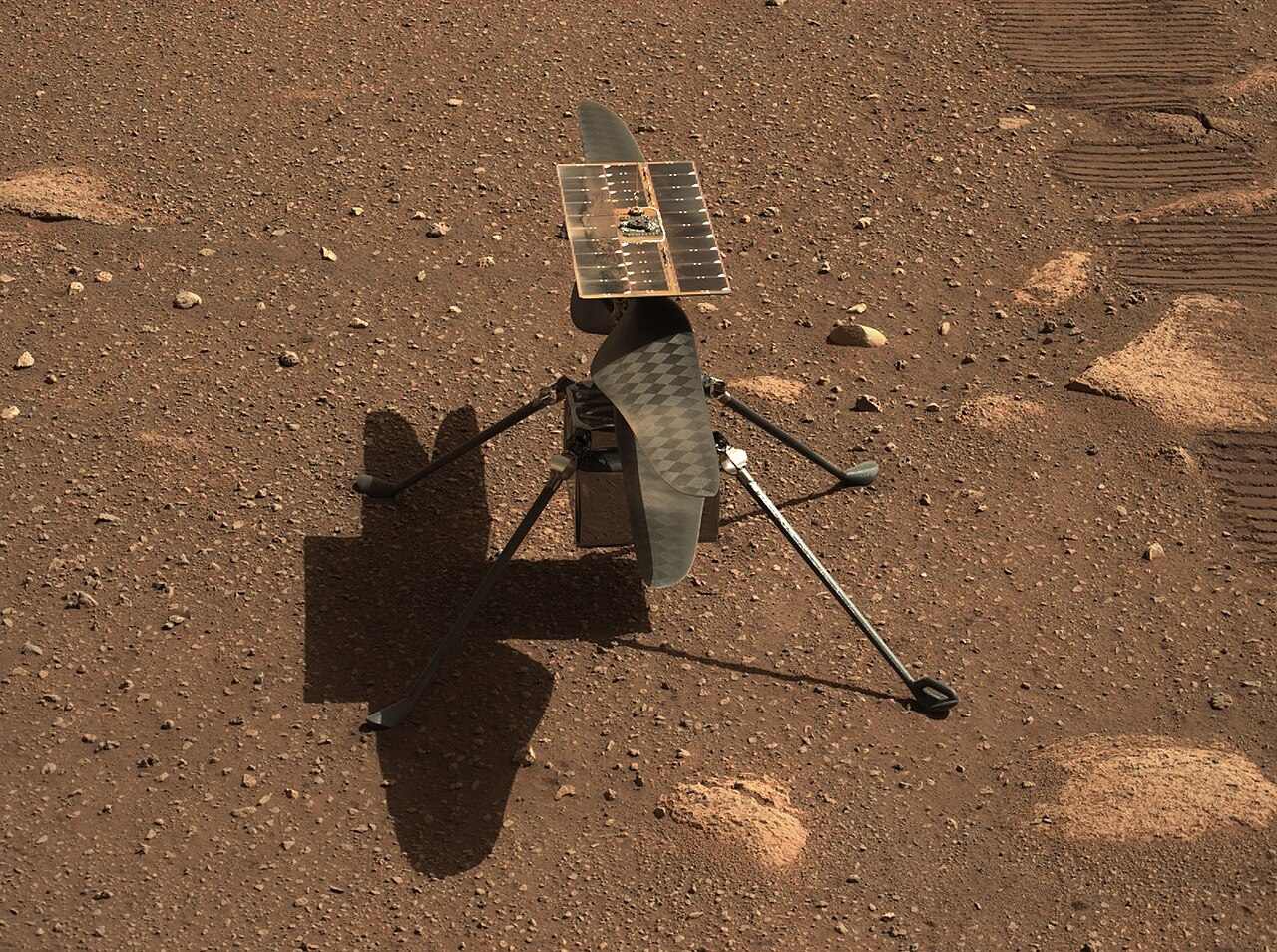
The A321XLR first flew on 15 June 2022 and entered service with Iberia in November 2024. Its extended range allowed a single-aisle aircraft to operate some long routes without making it equivalent to a widebody for every mission. On 19 April 2021, NASA's Ingenuity helicopter achieved the first powered, controlled flight on another planet, on Mars. This experiment involved a lightweight aircraft in an extremely thin atmosphere, not passenger transport. On 28 January 2025, the XB-1 demonstrator exceeded Mach 1: this test result did not represent the return of a commercial supersonic airline service or establish the economics of such an operation.
The energy transition encompasses several distinct approaches. Sustainable aviation fuels can be used within approved technical frameworks, but their overall balance depends on feedstocks and production. Electricity imposes weight and range constraints; hydrogen raises storage and infrastructure questions in particular. In February 2025, Airbus postponed its ZEROe project, highlighting difficulties in the wider ecosystem. The site's 2024–2026 milestone groups eVTOL aircraft and sustainable fuels: demonstrations, certification procedures and regular operations must not be confused. The decarbonisation feature distinguishes these technologies from the political objectives and commercial announcements surrounding them. Technical feasibility and availability at an appropriate scale are different questions that require different evidence.
People
The pandemic highlighted personnel whose work is rarely associated with images of flight. Airport agents, cleaning teams, baggage handlers, controllers and technicians contributed both to continuity of operations and their resumption. Maintaining qualifications required training, checks and practice; it did not follow automatically from seniority. After departures and career changes, recruitment alone could not immediately restore collective experience. The maintenance feature explains why a workshop also depends on authorisations, documentation and supervision. Scheduling and fatigue remained safety issues as well as social questions. Aircraft availability was therefore inseparable from the availability of people with the right experience, permissions and working conditions.
Engineers, test pilots and certification specialists translated new projects into verifiable evidence. In a different context, this collective activity continued debates over automation associated with Bernard Ziegler. It required understanding what an operator sees when a system encounters degraded conditions. The presence of women in technical and command positions remained a question of recruitment and access to careers, not an accomplished transformation. Ingenuity's teams illustrated another dimension of this history: autonomous flight on Mars depended on meticulous preparation on Earth, programming and data analysis, far from the image of the solitary pilot. The achievement belonged to an organisation as well as an aircraft.
Industry and airlines
In December 2021, Airbus delivered the last A380. On 31 January 2023, Boeing handed Atlas Air the last 747 built, a freighter. These industrial closures did not mean the immediate disappearance of aircraft from service. Maintenance, components and training continued programme histories after assembly lines ended. On 28 May 2023, the COMAC C919 made its first commercial flight between Shanghai and Beijing. Certified by the Chinese authority, it demonstrated a national industrial ambition while incorporating equipment supplied by international companies. Entry into service did not automatically constitute permission to operate under every jurisdiction, or remove the need for continuing operational support.
In October 2025, cumulative deliveries of the A320 family overtook those of the 737. This milestone concerned successively modernised families, not two models unchanged since launch. Production schedules remained dependent on engines, components and suppliers' capacity. In Europe, ReFuelEU Aviation made minimum sustainable-fuel supply obligations applicable from 2025. This was a supply rule, not evidence that all flights were becoming climate-neutral. EASA, national authorities and operators acted at different levels; environmental regulation and safety certification did not replace one another. An approved fuel still had to meet operational requirements, while the environmental value of its production required a separate assessment over its life cycle.
Military aviation
Russia's full-scale invasion of Ukraine in 2022 returned control of airspace to the centre of warfare in Europe. Surface-to-air missiles, fighters, drones and electronic warfare formed a system in which no aircraft could be understood in isolation. Drones served reconnaissance and attack roles across categories with very different dimensions and costs. Their use did not eliminate constraints imposed by weather, communications, jamming and support. Losses and countermeasures made definitive conclusions about a technology described as decisive on the basis of one engagement particularly fragile. Operational experience showed interaction between weapons and defences rather than an uncomplicated replacement of older systems by newer ones.
The Rafale remained an example of a multirole aircraft embedded in a wider refuelling, intelligence and command system. Fleet availability depended as much on maintenance and stocks as on nominal performance. Evacuations and military transport also demonstrated the importance of logistical aircraft. Some industrial skills circulated between civilian and military uses, but operating rules, objectives and responsibilities remained distinct. Developing autonomous systems intensified questions of human supervision and decision-making. Describing their presence in operations could neither establish their future effects nor resolve the legal and ethical debates they generated. The military history of aviation still required attention to institutions and decisions, not just to equipment.
Legacy
The word ‘transition’ describes observable transformations here, not an outcome already guaranteed. Renewing a fleet, changing a fuel and reorganising travel are not equivalent operations. Combustion emissions do not encompass all aviation's climate effects; conversely, announcing a technology does not measure its actual contribution. The propulsion feature places research within the longer history of engines. Recent aircraft still predominantly rely on gas turbines, even when their materials, controls and digital systems differ profoundly from those of early generations. Technical continuity therefore accompanies changes in policy and language. Understanding this distinction prevents the historical narrative from confusing the existence of research with the transformation of the whole transport system.
This essay's scope ends in October 2026. It turns no announced schedule into an accomplished event and prejudges neither subsequent certifications, deliveries nor entries into service. Documented facts primarily show the need to distinguish experimentation, industrialisation and operation. Confidence in flight depends on investigations, oversight and information sharing as much as innovation. Reading the period through the safety feature leads to a provisional but concrete assessment: crises made visible the people, rules and supply chains supporting every departure. The history remains open without its account needing to become a forecast. A dated endpoint defines the limits of the narrative, not a claim that every programme has reached completion.
Milestones in this era
March 2019
Worldwide grounding of the Boeing 737 MAX
2020
Traffic collapses with the Covid-19 pandemic
19 April 2021
Ingenuity flies on Mars
December 2021
Last A380 delivered
15 June 2022
First flight of the A321XLR
31 January 2023
Last Boeing 747 delivered
28 May 2023
First commercial flight of the COMAC C919
2024–2026
2024–2026: eVTOLs in certification and the scale-up of SAF
November 2024
The A321XLR enters service
28 January 2025
The Boom XB-1 breaks the sound barrier
February 2025
Airbus pushes back its ZEROe programme
October 2025
The A320 family overtakes the 737 in total deliveries
Sources
- EASA — The Agency
- EASA — Regulations
- NASA Science — Ingenuity Mars Helicopter
- Commission européenne — ReFuelEU Aviation
- BEA — Bureau d'Enquêtes et d'Analyses
- Airbus — Our history
- Boeing — History
- Boom Supersonic — XB-1
Related reading
Feature
Towards low-carbon aviationFeature
Aviation safetyAircraft
Airbus A321XLRAircraft
COMAC C919Era
Globalisation and the digital age (1990–2019)