Feature
Aircraft maintenance, from mechanic to Part-66 technician
From pioneer workshops to continuing airworthiness: the evolution of the trade, maintenance programmes and the European Part-M, Part-145, Part-66, Part-147 and Part-CAMO framework.
5 min read
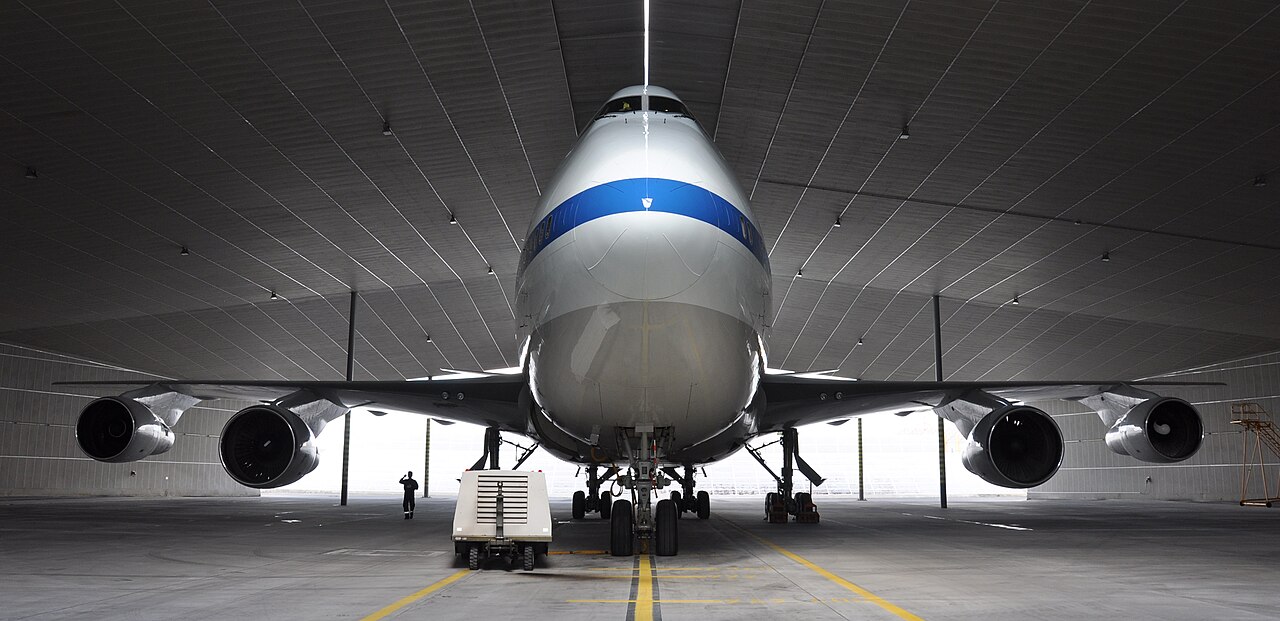
A trade born in workshops
In 1903, Charlie Taylor built the Flyer engine for the Wright brothers. This example shows how closely construction, development and maintenance were then connected. Mechanics understood materials, assemblies and engine operation, often working directly alongside the pilot. It would nevertheless be misleading to imagine a uniform profession from aviation's beginnings. Practices depended on manufacturers, military services and operators. Workshop experience played an essential part, while procedures, qualifications and responsibilities gradually became more structured as aviation developed. The early mechanic's work cannot simply be described using the licensing categories established much later.
With the airlines of the interwar period, maintenance became a regular transport function. Workshops, stocks of spare parts and technical records supported aircraft used on scheduled routes. Commercial availability could not be separated from the condition of engines, controls and structures. Work was divided between interventions near departure and more extensive tasks in workshops. This organisation transformed manual expertise without eliminating it: measuring wear, recognising an abnormal condition and recording what had been done became complementary activities needed to sustain operations. An aircraft's technical history increasingly mattered alongside its visible condition at a particular moment.
Airworthiness and technical memory
The Chicago Convention, signed on 7 December 1944, provides an international framework for airworthiness certificates and personnel licensing. ICAO annexes develop standards in these fields; states establish their oversight arrangements. Airworthiness is not limited to the condition established when an aircraft is built. It must be maintained during operation through maintenance, defect rectification and compliance with limitations. This continuity requires knowledge of the aircraft's actual configuration, its modifications and the history of installed components. The records therefore connect the approved design with the particular aircraft that is being operated and maintained.
Documentation is consequently both a working tool and evidence. Technicians use data applicable to the aircraft version and intended task, incorporating the necessary revisions. The ATA 100 classification helped organise technical information by systems and chapters, making it easier to locate material across documents. Standardisation does not make procedures for two aircraft models interchangeable. Records identify completed work, the references used and defects still open. A component that looks similar is not necessarily eligible for installation: its identity, condition and documentation must be checked. Traceability links a physical intervention to the requirements governing that intervention.
From calendars to task logic
A maintenance programme brings together tasks and intervals suited to the aircraft and its use. Intervals may be expressed in calendar time, flying hours or cycles, depending on the phenomenon being monitored. Take-offs and pressurisation cycles do not affect a structure in the same way as the passage of time alone. MSG-3 analysis, first published in 1980, provides a structured method for determining scheduled tasks from functions, failures and their consequences. It is neither a professional licence nor permission to remove inspections freely from the requirements that apply to an aircraft.
Scheduled maintenance exists alongside rectification of defects reported in service. Research following the 1954 Comet accidents demonstrated the importance of fatigue in pressurised structures. Other mechanisms, such as corrosion, require their own detection and prevention methods. Non-destructive testing allows certain areas to be examined without destroying the component, but demands suitable qualifications and procedures. Reliability data may lead to a programme being reviewed within the authorised framework; they do not replace mandatory obligations, particularly airworthiness directives and life limits. Different sources of information must therefore be combined rather than treated as alternative grounds for compliance.
From the JAA to European regulations
The JAA worked to harmonise national requirements through the JARs. This cooperation preceded the EASA system, established by the 2002 basic regulation. It should not be confused with a Union authority possessing all present-day powers from the outset. Commission Regulation 2042/2003, adopted on 20 November 2003, subsequently brought together a European continuing airworthiness framework: Part-M, Part-145, Part-66 and Part-147. Transitional provisions and implementation arrangements explain why adoption did not mean the instantaneous conversion of every organisation and licence. The legal instrument's date must be distinguished from the practical stages by which particular requirements became applicable.
Regulation 1321/2014, adopted on 26 November 2014, recast this framework; it did not create the four parts for the first time. Part-M addresses continuing airworthiness requirements, while Part-145 governs the maintenance organisations concerned. Part-66 concerns certifying staff licences and Part-147 the corresponding approved training organisations. These texts were subsequently amended. Establishing an obligation at a particular date requires consultation of the applicable version and its transitional provisions, rather than deriving an entire chronology from the number of the regulation used today. Historical accuracy depends on preserving these distinctions between adoption, consolidation and application.
Licensing, training and release to service
A Part-66 licence demonstrates the knowledge and experience required for its categories and privileges. Categories are not equivalent: they correspond to different fields and certification privileges. Depending on the case, type ratings and practical training supplement basic training. The competent authority issues the licence; a Part-147 school does not itself confer a universal right to certify every aircraft. Its approval covers a defined scope of training and examinations. The licence, its endorsed qualifications and experience must therefore be considered together, rather than treating completion of a course as the final step for every kind of certification work.
Within a Part-145 organisation, the certification authorisation issued by the organisation is distinct from the personal licence. It depends, among other things, on verified competence and the scope of authorised work. The certificate of release to service certifies work within the framework of the applicable rules; it does not promise an absolute absence of future failures. Not everyone performing a task necessarily signs this certificate. Execution, inspection and certification sit within an organisation equipped with suitable personnel, tooling, data and facilities. A signature replaces none of those resources but carries a defined responsibility within the maintenance process.
Managing continuity and supporting work
Continuing airworthiness management coordinates matters including the maintenance programme, due dates, directives and records. It is distinct from physically performing maintenance, even where functions belong to the same industrial group. CAMOs existed under Part-M Subpart G before Part-CAMO was created. Regulation 2019/1383, adopted on 8 July 2019, introduced this new part and safety management requirements among other changes. The main corresponding provisions became applicable on 24 March 2020, with transitional arrangements: CAMO therefore does not describe an activity that only began in 2019. Organisational history and the title of a later regulatory annex must remain distinct.
Human factors connect this framework to actual working conditions: fatigue, interruptions, difficult access, lighting and shift handovers. Checking procedures, tool control and records of task progress reduce opportunities for omission. Reporting an error or difficulty supports safety beyond the immediate intervention. The certified technician thus remains a hands-on professional, but exercises judgement within a network of data, qualifications and traceable responsibilities. Regulatory development has not replaced manual expertise; it has organised the conditions in which its results can be verified and recognised. Practical skill and organisational discipline remain complementary, not competing, foundations of the work.
Sources
- OACI / ICAO — History of ICAO and the Chicago Convention
- EASA — The Agency
- EASA — Regulations
- Smithsonian National Air and Space Museum — Collections
- EASA — Continuing Airworthiness
- EASA — Commission Implementing Regulation (EU) 2019/1383
Related reading
Feature
Aviation safetyGlossary
Part-66Glossary
Part-147Glossary
Part-145Glossary
CAMO