Feature
Towards low-carbon aviation
Efficiency, SAF and ReFuelEU, hydrogen after the ZEROe delay, electric flight: achievements, rules and limits, without forecasts.
5 min read
Counting emissions before naming solutions
Aviation decarbonisation is not measured by the number of projects announced. It requires distinguishing fuel consumed, carbon dioxide emitted in flight and emissions from the entire production chain. An aircraft using less fuel per seat can belong to a sector whose total emissions rise as traffic grows. Indicators per passenger also depend on occupancy and distance. Comparing results therefore requires an explicit boundary, a common period and a description of assumptions, rather than a collection of commercial percentages. These distinctions are essential when assessing both established improvements and experimental technologies.
CO₂ does not cover the entire climate issue. Nitrogen oxides, particles and condensation trails also matter, with effects depending in part on atmospheric conditions. Reducing fossil carbon does not automatically eliminate these effects. This account of the technologies, situated in October 2026, retains established achievements and rules; it does not turn public targets or industrial announcements into results. The transition can therefore be examined through several separate accounts: energy, climate, resource availability and operating conditions. None of those accounts can simply stand in for all the others when judging an aircraft.
Efficiency: real gains, a balance to define
High-bypass turbofans accelerate a large mass of air and improve propulsive efficiency at airliner speeds. Advances in materials and turbines also improve thermal efficiency. Airframe weight, aerodynamic efficiency and onboard systems contribute to the overall balance. The composites used in the Boeing 787 and Airbus A350 illustrate this effort to reduce weight, without themselves constituting a measure of environmental benefit. Manufacturing, repairs and end-of-life treatment remain separate elements of the assessment. A material choice cannot be judged solely by the fuel consumption recorded during a flight.
Winglets and improved wing sections reduce certain components of drag. Better flight planning, suitable approaches and reduced holding can avoid unnecessary fuel burn, subject to safety and traffic constraints. On regional routes, ATR aircraft illustrate the importance of comparing aircraft on equal missions. No individual efficiency gain alone proves an absolute reduction in emissions. The propulsion and maintenance features complete this picture: nominal efficiency and the actual condition of equipment are not interchangeable. The result also depends on how an aircraft is operated throughout its working life.
SAF: changing the pathway, not abolishing combustion
SAF encompasses fuels from different pathways, including residual oils and fats, biomass and synthesis. Use in existing aircraft depends on technical specifications and blending limits specific to approved pathways. Compatibility with an engine does not constitute a sustainability certification. That requires checking the origin of materials, processes and traceability. Synthetic fuels notably require energy to produce hydrogen and to transform a carbon source into hydrocarbons usable in aviation. Their relationship to existing aircraft therefore does not remove the need to examine the industrial processes that make them possible.
A hydrocarbon SAF still emits CO₂ at the exhaust. Its possible climate benefit is assessed over its life cycle against a fossil reference: collection or cultivation, processing, transport and use. The outcome varies with the resources and energy employed; a single reduction percentage does not describe every pathway. Land-use changes, competing uses and available volumes are decisive. Production remains limited compared with aviation consumption. A delivery or demonstration flight therefore proves neither general availability nor large-scale substitution. Accounting for fuel characteristics and accounting for the resources behind them are related but separate tasks.
ReFuelEU: an obligation in application
The European ReFuelEU Aviation regulation, adopted in 2023, has required a minimum SAF share of 2% since 1 January 2025 in fuel supplied at Union airports within its scope. This figure describes a regulatory obligation, not a measured emissions reduction already achieved. The text defines eligible fuels and connects their sustainability to the applicable European rules. It distinguishes the responsibilities of suppliers, aircraft operators and airport managing bodies. The legal scope matters: this is not a mandate applying indiscriminately to every flight worldwide or to every individual aircraft fuel tank.
The regulation also addresses carrying fuel to avoid refuelling locally, a practice known as tankering. The annual refuelling obligation seeks to limit this carriage of extra weight and circumvention of the requirements. Reporting and control mechanisms accompany the scheme. Assessing its effects requires separating declared volumes, pathway characteristics and calculated emissions. The existence of the mandate does not alone demonstrate a fall in the total climate impact. No later regulatory step is presented here as an achieved result, and no future industrial availability is assumed. Compliance and environmental outcomes remain distinct questions.
Hydrogen: the ZEROe delay
Hydrogen can feed a turbine through combustion or a fuel cell supplying electricity to motors. These architectures do not produce the same in-flight emissions: combustion can notably form nitrogen oxides. In both cases, the origin of the hydrogen and the energy required to produce it count in the balance. Liquid storage requires cryogenic temperatures, insulation and bulky tanks. Complete system weight, airframe integration, ground distribution and safety procedures are interconnected problems, not minor accessories. The absence of carbon in the fuel molecule does not establish the footprint of the entire system.
Airbus presented ZEROe in September 2020. In February 2025, the manufacturer announced a programme delay and called into question the then-stated 2035 service-entry date. That year is mentioned here as a discarded historical target, not a forecast. Airbus cited insufficient progress in enabling conditions, including the hydrogen production and distribution ecosystem. In March 2025, it presented a revised roadmap and a fuel-cell-based concept. This continuation of research is neither the industrial launch of a certified aircraft nor a demonstration of a decarbonised energy chain. No replacement commercial timetable is assumed here.
Electric flight: demonstrations and physical limits
An electric motor can offer high efficiency, but its electricity must be carried or produced onboard. Batteries impose substantial weight for the energy stored; unlike consumed fuel, that weight does not disappear in flight. Reserves, cooling, ageing and protection against thermal incidents count in the design. In June 2020, EASA certified the Pipistrel Velis Electro, a small two-seater used notably for training. This achievement establishes a certified application of electric propulsion, not its immediate applicability to a large-capacity or long-range airliner. Aircraft size and mission remain central to interpreting the achievement.
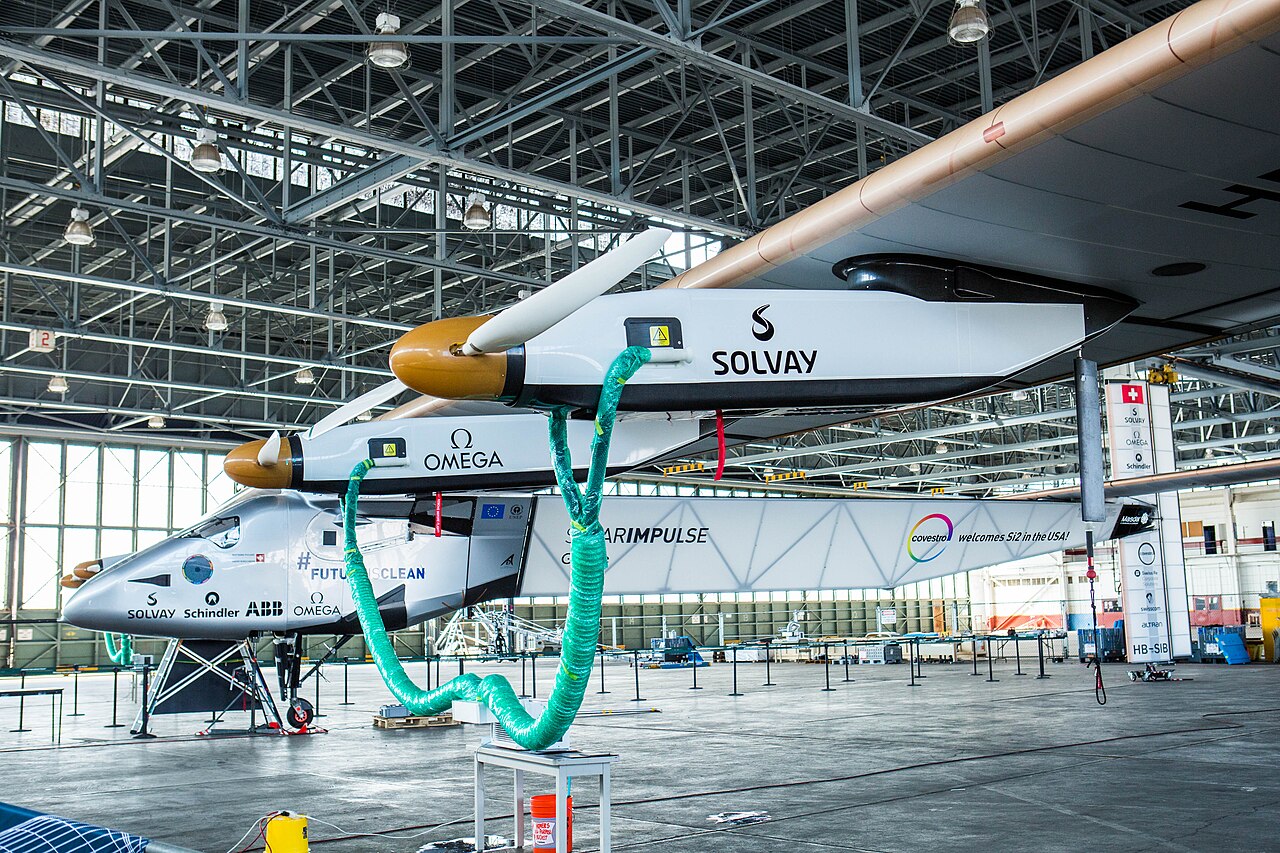
The round-the-world journey of Solar Impulse 2, completed in stages in July 2016, demonstrated another combination: photovoltaic cells, batteries, low weight and careful energy management. It did not represent a transport service comparable to an airliner. Hybrid architectures combine several sources and add equipment of their own. For all these pathways, certification, electricity production and material resources are part of the balance. As with supersonic flight, distinguishing a successful experiment, a certified aircraft and an operable transport system avoids turning a technical step into a promise of a broader outcome.
Sources
- Commission européenne — ReFuelEU Aviation
- EASA — The Agency
- Solar Impulse Foundation — Solar Impulse Foundation
- IATA — Sustainable aviation fuels
- Union européenne / European Union — Regulation (EU) 2023/2405 — ReFuelEU Aviation
- Airbus — Airbus showcases hydrogen aircraft technologies during its 2025 Airbus Summit
- Reuters — Airbus postpones development of new hydrogen aircraft — 7 February 2025