1897–1937
Amelia Earhart
The first woman to fly solo across the Atlantic in 1932, Amelia Earhart combined long-distance flying with advocacy for women’s place in aviation.
3 min read
Life
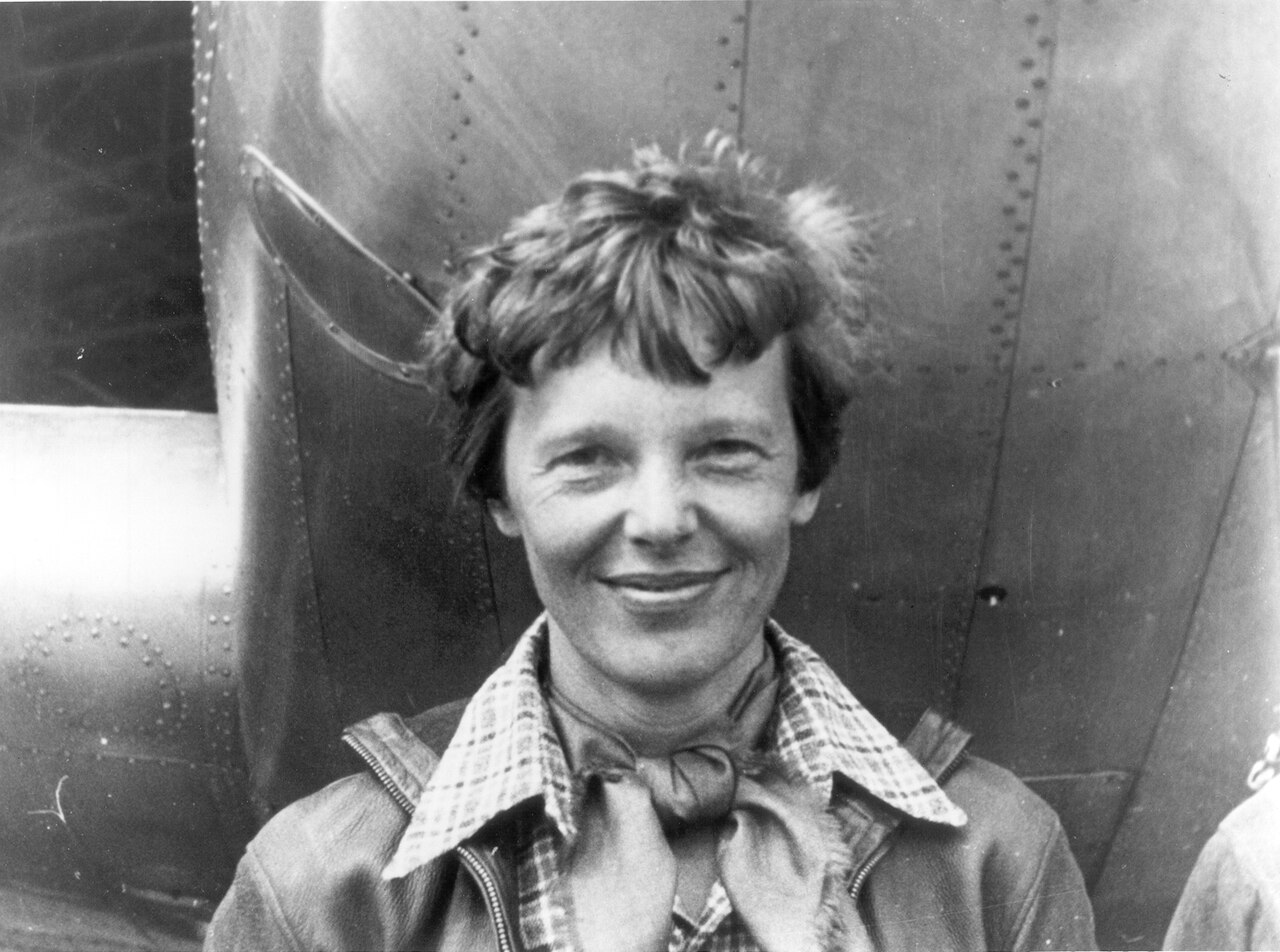
Amelia Earhart was born in Atchison, Kansas, and grew up as her family moved between different homes. During the First World War she worked as a nurse’s aide in Toronto, caring for wounded soldiers. A first flight in California in 1920 turned her towards aviation. She took lessons with Neta Snook and bought a small aeroplane. Learning to fly required time and money, with no immediate prospect of a secure career. In the interwar years, becoming a pilot remained an unusual choice for a woman, even though earlier female aviators had already shown that it was possible.
Her Atlantic crossing in 1928 brought her to the attention of people far beyond aviation circles. She travelled as a passenger with Wilmer Stultz and Louis Gordon, and did not claim the journey as a personal feat of piloting. That distinction is central to understanding her next ambition: to make the crossing herself. Publisher George Palmer Putnam helped organise her public career, and they married in 1931. Books, lectures and articles accompanied her flights. Celebrity provided a means of financing further projects, but also exposed her to the expectations of an audience that increasingly associated her name with spectacular challenges.
Achievements
On 20–21 May 1932 Earhart flew from Newfoundland to Northern Ireland in a Lockheed Vega, becoming the first woman to cross the Atlantic alone by aeroplane. Bad weather and technical problems marked the journey; she landed near Londonderry rather than continuing to Paris. Five years after Charles Lindbergh, she demonstrated that a woman could take sole responsibility for the demands of a long ocean crossing. This was neither the first flight across the ocean nor the establishment of a scheduled service. Its significance rests on a clearly defined achievement within the history of individual long-distance flying.
Further flights extended her work, including a solo journey from Hawaii to California in 1935. Earhart also helped found the Ninety-Nines in 1929 and became the association of women pilots’ first president. She argued for women’s access to training and occupations that social conventions seldom encouraged them to pursue. The feature on women and aviation explores this collective dimension, which accounts focused on records can overlook. Like Hélène Boucher in France, Earhart had to turn the visibility of her achievements into practical opportunities to fly, although her work through an association gave that effort a wider reach.
Legacy
In 1937 she attempted a flight around the world in a twin-engined Lockheed Electra, with Fred Noonan as navigator. After many stages they left Lae, New Guinea, for the tiny Pacific island of Howland on 2 July. They never arrived. Radio messages record their difficulty in locating the island, but searches failed to find either the aircraft or its occupants. The available evidence does not establish their precise fate with certainty. To present a proposed crash at sea, survival on another island or capture as a proven event would substitute an unsupported conclusion for historical investigation of the surviving evidence.
Her disappearance has come to dominate public remembrance, sometimes obscuring a career that is otherwise well documented. Preserved aircraft, her writings and association archives allow attention to return to established activities: preparation, flying, lecturing and advocacy for women pilots. The Spirit of St. Louis recalls the background of individual Atlantic crossings to which her 1932 flight belongs, without implying that the aircraft or routes were identical. Her legacy rests less on a mystery awaiting a solution than on the combination of recognised flying achievements and a public voice addressing the opportunities available to women in a changing society.
Sources
- Encyclopædia Britannica — Amelia Earhart
- Smithsonian National Air and Space Museum — Collections