1917–2000
Jacqueline Auriol
Test pilot and speed record holder Jacqueline Auriol helped shape the development of French jet aviation.
2 min read
Life
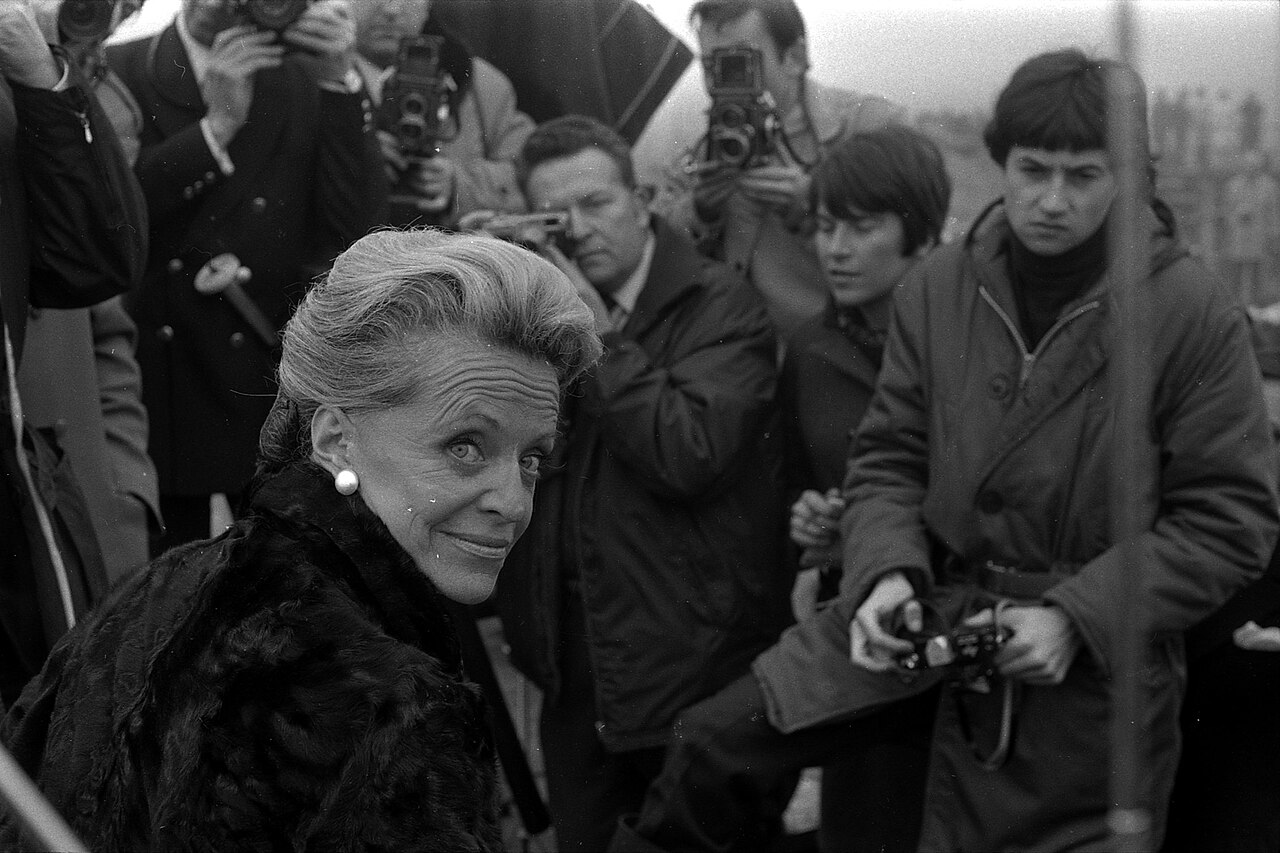
Born Jacqueline Douet in Challans, in the Vendée, Jacqueline Auriol did not initially plan a career in aviation. She was interested in the arts and married Paul Auriol, son of the future French president Vincent Auriol. She learnt to fly after the Second World War, gaining her private pilot's licence in 1948. Flying gradually became a profession rather than a pastime associated with her social position. Her career took shape as the jet age was changing aircraft performance and the working practices expected of pilots.
In 1949 she suffered severe facial injuries in a seaplane accident while travelling as a passenger. Surgery and recovery interrupted her training but did not end her ambitions. She returned to flying, gained further qualifications and continued her training on faster aircraft. This return required more than personal determination: she had to regain medical fitness, meet demanding technical standards and earn the confidence of the teams responsible for the aircraft she would fly. Her recovery and professional development therefore remained closely connected.
She became involved with the French flight test establishment and trained at the École du personnel navigant d'essais et de réception. In 1954 she became the first French woman to qualify as a test pilot. This qualification set her career apart from that of an aviator concerned only with competition. Testing an aircraft meant following a programme, describing its behaviour accurately and working alongside engineers. Auriol was entering an established technical profession in which women still accounted for very few of those employed.
Achievements
In 1951 Auriol set a women's speed record in a Vampire. Further records followed in French aircraft, in an international contest particularly associated with the achievements of the American Jacqueline Cochran. Categories and courses matter here: a closed-circuit record is not the same as a maximum speed reached during a flight. Nevertheless, these attempts made the rapid progress of jet engines visible, along with the skill needed to operate aircraft whose capabilities and limitations changed from one programme to the next.
In August 1953 she crossed the sound barrier in a Mystère II, becoming the first European woman to do so. She later flew the Mirage III, continuing her sequence of records during the 1960s. These aircraft came from the industry built by Marcel Dassault, but her achievements should not be treated merely as publicity for a manufacturer. They also depended on flight preparation, ground checks and the work of the organisations responsible for verifying and officially recognising the results of each attempt.
Legacy
Jacqueline Auriol died in Paris in 2000. Her memoirs helped preserve her experience of flying and preparing for flight tests. Her story brings together recovery after an accident, professional qualification and achievements made in public view. Within the history of women in aviation, it shows that access to the cockpit was not enough: access to training and technical responsibility mattered too. Her career also illuminates the relationship between headline-making records and the organised practice of flight testing. It forms part of the history of supersonic flight, without being confined either to military aircraft or to accounts of individual daring.
Sources
- Bibliothèque nationale de France — Auriol, Jacqueline (1917-2000)
- Dassault Aviation — L'aviation : une histoire de femmes…
- Musée de l'Air et de l'Espace — Collections
Related reading
Feature
Women in aviationFeature
Supersonic flight, from the Bell X-1 to the Boom XB-1Aircraft
Dassault Mirage IIIPioneer
Marcel Dassault