1892–1986
Marcel Dassault
Born Marcel Bloch, the engineer and industrialist built a company combining military aircraft with business aviation.
2 min read
Life
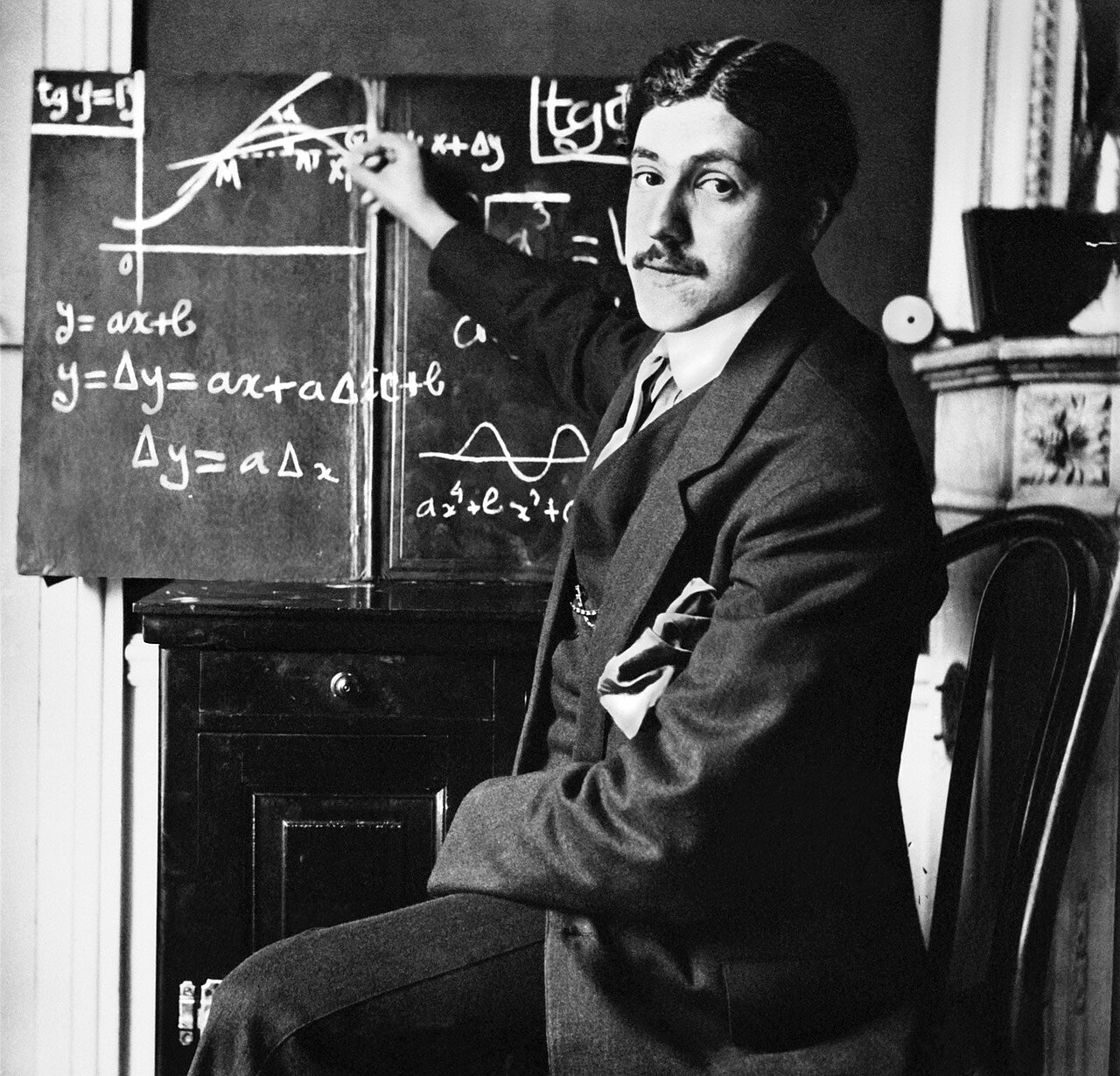
Marcel Dassault was born Marcel Bloch in Paris. Trained in aeronautical engineering before the First World War, he belonged to a generation for whom the aircraft was becoming both an industrial product and a military instrument. In 1916 he developed the Éclair propeller, used on French fighters among other aircraft. He then worked with Henry Potez on the SEA IV. These early projects taught him how design offices, series production and government orders fitted together, relationships that would remain central to his subsequent career in aviation.
After a period outside aircraft manufacturing, Bloch returned to the industry around 1930. His company designed transports, bombers and fighters. Nationalisation in 1936 reorganised French aircraft production and brought his factories into a state-owned company, without ending his design activities. His business history was therefore not simply one of uninterrupted private expansion. It was shaped by government restructuring, rearmament and the difficulties of preparing for war. The changing relationship between the state and individual manufacturers remained an important part of the setting in which he worked.
During the Occupation, Bloch suffered antisemitic persecution and refused to work for the German aircraft industry. Imprisoned and then deported to Buchenwald in 1944, he survived and returned to France in 1945. He subsequently adopted the name Dassault, derived from his brother Paul's Resistance name. Industrial recovery took place in a country undergoing reconstruction, where military orders were crucial to rebuilding production. He also became a parliamentarian and developed publishing interests, while retaining his involvement in the management and direction of the aircraft business.
Achievements
The Ouragan, which first flew in 1949, established his company's place in the jet age. The Mystère series continued that development, followed by the Mirage III, which combined a delta wing with supersonic performance. Export sales gave these programmes an international reach and supported France's pursuit of industrial independence. Marcel Dassault set priorities and selected projects, but the aircraft emerged from the collective work of engineers, engine manufacturers, factory workers and test pilots. Among the pilots, Jacqueline Auriol undertook record flights in the company's aircraft.
The company did not concentrate exclusively on combat aircraft. The Mystère 20, later known as the Falcon 20, first flew in 1963 and established a lasting business aviation activity. Diversification required different commercial relationships and close attention to the needs of civil operators. It complemented military programmes rather than replacing them. Across these two markets, Dassault maintained an organisation in which aerodynamic design, manufacturing and flight testing were closely connected, against the background of the wider post-war expansion of aviation and air travel.
Legacy
Marcel Dassault died in 1986, before the first flight of the Rafale A demonstrator. The Rafale therefore belongs to the continuing history of his company, not to a project he personally brought into operational service. His legacy lies in an industrial model combining military programmes, exports and business jets. It must also be understood in relation to government support and the contribution of successive teams. The survival of a commercial name does not imply that either the technology or the institutions supporting aircraft production remained unchanged over time.
Sources
- Dassault Aviation — The Dassault adventure
- Encyclopædia Britannica — Marcel Dassault
- Musée de l'Air et de l'Espace — Collections