Manufacturer
Sud Aviation
Created in 1957 by merging SNCASE and SNCASO, Sud Aviation built the Caravelle, developed helicopters and led French participation in Concorde before the 1970 merger.
4 min read
Origins and nationalisations
Sud Aviation emerged from reorganisations of the French aircraft industry in the interwar period. In 1936–1937, nationalisation of major aircraft companies led to regional state-owned corporations. In the south-east, SNCASE combined activities including those of Lioré et Olivier, Potez and Chantiers aéronavals Étienne Romano. In the south-west, SNCASO brought together other factories and design offices.
These national companies retained distinct teams, sites and design traditions. They worked under wartime constraints and later contributed to the reconstruction of the aircraft industry after 1945. By the early 1950s, the state sought to rationalise the structure and combine industrial capabilities. The regional companies thus contributed to a changing national industry, whose programmes turned towards jet aircraft, helicopters and post-war civil requirements.
Sud Aviation and the Caravelle
In 1957, SNCASE and SNCASO merged to form Sud Aviation, a state-owned company headquartered in Paris. The new organisation inherited personnel and facilities distributed across several sites. It became one of France’s major aircraft manufacturers, working on transport aircraft, military types and helicopters.
The Caravelle was the best-known civil programme of the early years. Designed with a pressurised cabin and engines mounted at the rear of the fuselage, it first flew in 1955, before Sud Aviation was formed, under SNCASE management. It entered commercial service in 1959. The twinjet Caravelle was operated by European and international airlines. Its configuration contributed to French experience in jet airliners, a field in which the Comet had pioneered commercial operation.
Concorde and helicopters
Sud Aviation joined the British Aircraft Corporation in developing Concorde, a Franco-British supersonic transport programme. The intergovernmental agreement was signed in 1962, with work divided between the partners. The French prototype made its first flight at Toulouse in March 1969. In 1970, Aérospatiale took over French responsibility for the programme. The Concorde remains a distinctive case of industrial cooperation and civil supersonic transport.
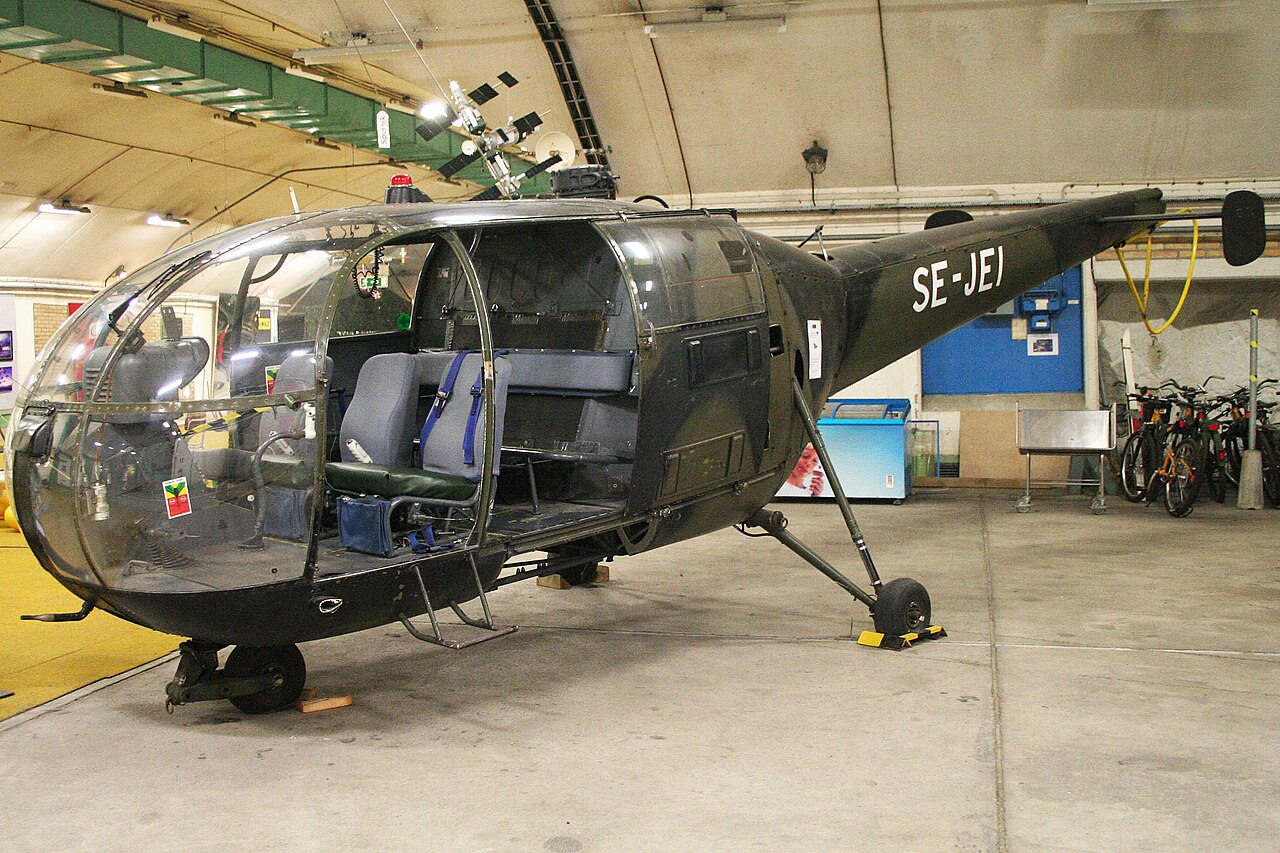
The company also developed helicopters, a field drawing on capabilities inherited from its predecessors. The Alouette II, the first production helicopter powered by a gas turbine, made its first flight in 1955 under SNCASE. The Alouette III, the Super Frelon and then the Puma followed; several programmes were carried out with Westland under Anglo-French agreements concluded in the late 1960s, which also covered the Gazelle and the Lynx. These aircraft served civil and military roles, from transport and rescue to observation and naval operations. The activity relied on rotary-wing designs and industrial experience distinct from that of airliners.
From inherited programmes to European cooperation
First-flight dates help distinguish the achievements of the founding companies from those of Sud Aviation. Both the Caravelle and the Alouette II flew in 1955: neither therefore originated in a company established two years later. Sud Aviation continued their development and production. The Alouette III flew in 1959, followed by the Super Frelon in 1962. This succession brought very different transport aircraft into the same organisation, without making their uses or their design teams identical.
The Puma belonged to the next generation. It made its first flight in 1965, while Sud Aviation still existed. Its development and cooperation with Westland therefore preceded the creation of Aérospatiale. The Anglo-French helicopter agreements did not merge the manufacturers: they organised collaboration between partners retaining their own structures. Military transport, naval missions and civil applications required different aircraft and equipment within this business. These distinctions matter when tracing programmes across the later corporate merger.
Concorde involved another form of cooperation, based on the agreement between the French and British governments in 1962. The French first flight in March 1969 took place at Toulouse, which brought together assembly and testing facilities. Sud Aviation’s participation therefore concerned development and early testing, rather than subsequent commercial operation. The programme connects the manufacturer’s history with that of supersonic transport, but its continuation would depend on the organisations succeeding the original industrial partners on both sides of the Channel.
The 1970 merger and legacy
On 1 January 1970, Sud Aviation was combined with Nord Aviation and the Société pour l’étude et la réalisation d’engins balistiques, or SEREB. The Société nationale industrielle aérospatiale, known as Aérospatiale, brought together aircraft, helicopters, missiles and space activities. Sud Aviation ceased to exist separately, but its programmes and industrial facilities did not disappear. The merger extended the scope beyond civil aircraft alone and incorporated the capabilities of three companies within a broader aerospace organisation.
The Caravelle and Concorde occupy different places in this jet transport legacy: the former entered service during Sud Aviation’s existence, the latter after its disappearance. Helicopters also continued the work of the regional state-owned companies. This continuity, from nationalisation to the later European combinations, depended on the transfer of teams, sites and programmes rather than the preservation of the company’s name. Corporate succession thus needs to be distinguished from the individual histories of the aircraft themselves.
The transfer of programmes explains why several industrial names can appear in the history of the same aircraft. Identifying its manufacturer requires attention to the period concerned: initial design, first flight, production or support during service.
Notable aircraft
Other models
- Alouette II (1955)
- Alouette III (1959)
- Super Frelon (1962)
- Puma (first flight 1965)
- Concorde (with BAC, 1969)
Sources
- Airbus — Our history
- Airbus — Our story: the evolution of Airbus
- Airbus — Our product: history
Related reading
Manufacturer
AérospatialeManufacturer
Nord AviationAircraft
Sud Aviation CaravelleAircraft
Concorde