Manufacturer
Eurocopter / Airbus Helicopters
Eurocopter was created in 1992 by the merger of the helicopter activities of Aérospatiale and DASA (formerly MBB), on a 70%/30% basis; the company became Airbus Helicopters on 2 January 2014.
4 min read
French and German origins
Eurocopter was created in 1992 by the merger of the helicopter activities of Aérospatiale and DASA (formerly MBB), on a 70%/30% basis. The combination brought together design offices, production facilities and product ranges already operated in several countries. It was therefore not the beginning of helicopter manufacturing in either France or Germany. Both partners had experience acquired over previous decades and were involved in cooperative programmes. The new company placed these activities within a common organisation while retaining industrial locations on both sides of the Rhine and responsibilities towards operators of aircraft that were already in service around the world.
On the French side, the lineage ran through SNCASE and Sud Aviation, followed by Aérospatiale from 1970. Marignane was a centre of this activity and became Eurocopter’s headquarters. On the German side, work by Bölkow and subsequently MBB contributed another tradition of design and manufacture. MBB’s incorporation into DASA preceded the creation of the Franco-German helicopter group. Understanding this genealogy requires a distinction between the parent companies and their helicopter divisions: Eurocopter did not result from a merger of all the aviation, space and military activities of the two groups, but from their combination specifically in the field of rotary-wing aircraft.
Alouette, Puma and Dauphin
The Alouette II made its first flight in 1955 under SNCASE responsibility. Its turbine engine marked a stage in the production of light helicopters. The Alouette III extended the family with different capabilities. These aircraft were used in civil and military roles, including rescue and liaison duties. They formed part of Eurocopter’s industrial inheritance, but their design long preceded the company established in 1992. Keeping a fleet in service creates requirements for spare parts, documentation and maintenance that can continue long after production has ended. A manufacturer’s history therefore includes support for existing aircraft as well as the launch of new models and the development of replacement designs.
The Puma and Super Puma formed another branch of this inheritance. These transport helicopters were used for personnel movements, military operations and missions at sea, among other tasks. The Super Puma developed from the Puma but was not simply a change of commercial name. The Dauphin family occupied a different segment, with civil and military variants. It was associated with the Fenestron, a shrouded anti-torque rotor also found on other aircraft in the French range. These families brought different customers and uses into the combined company, from offshore transport to rescue, without every version possessing the same equipment, performance characteristics or operational approvals.
German heritage and renewal
The Bo 105 was one of the aircraft inherited from the German side. This light twin-engined helicopter first flew in 1967 and was distinguished by its rotor system without conventional hinges. It served transport, rescue and military missions depending on the version. German experience also included the BK117, developed with Kawasaki in Japan. These programmes show that international cooperation did not begin with Eurocopter. They provided technical and industrial foundations for later developments while operators continued to use aircraft already delivered. The Franco-German combination therefore joined product lines that each had their own partners and chronological development, rather than bringing previously isolated national activities into contact for the first time.
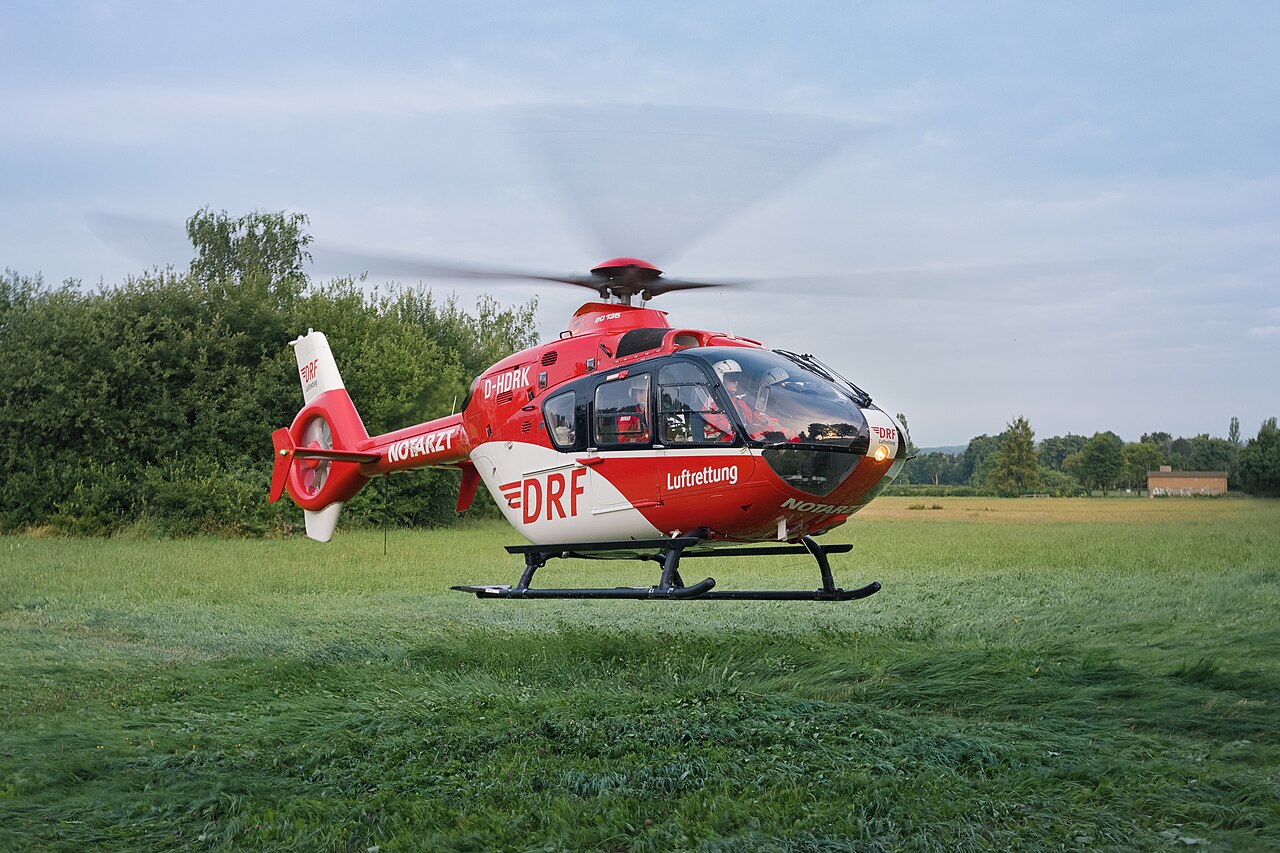
After 1992, Eurocopter renewed its range with aircraft such as the EC135 and EC145. New designations accompanied the development of a common offering without removing the technical lineages of the aircraft involved. Light helicopters served medical services, police, transport and training, among other roles. Larger models addressed different requirements for capacity and range. This diversity means the range should not be treated as a single aircraft simply enlarged or reduced. Engines, rotors, cabins and equipment varied between families. Commercial names could change during a model’s life while manufacturing responsibilities and support continued, sometimes across several generations of corporate organisation and product presentation.
Tiger and NH90 in cooperation
The Tiger was a combat helicopter developed within a Franco-German framework. Its first flight took place in 1991, before Eurocopter was created. The programme illustrates continuity between the predecessor companies’ partnerships and the responsibilities of the new organisation. The NH90 had a different structure: it was developed through NHIndustries, an organisation bringing together several European partners. Eurocopter participated alongside Agusta and Fokker. The NH90 made its first flight in 1995 and led to tactical transport and naval versions. It would therefore be inaccurate to describe it as an aircraft designed and manufactured by Eurocopter alone, or to assume that its industrial organisation was identical to that of the Tiger.
EADS and then Airbus Helicopters
In 2000, Eurocopter became a subsidiary of EADS, formed by combining Aérospatiale-Matra, DASA and CASA. Helicopter activities were thus integrated into a group that also manufactured aircraft and space systems. On 2 January 2014, Eurocopter adopted the name Airbus Helicopters as part of the wider group’s reorganisation and renaming. Its headquarters remained at Marignane, with industrial activities also located at Donauwörth in Germany. Today, Airbus Helicopters is the helicopter business of Airbus. Its history combines inherited programmes, the development of new models and support for civil and military fleets. The name has changed, but the Franco-German lineage remains necessary to understand both the aircraft families and the industrial sites.
Notable aircraft
Other models
- Alouette II / III
- Puma / Super Puma
- Dauphin
- Bo 105
- NH90
- Tigre / Tiger
Sources
- Airbus — Our history
- Airbus — The Art of Rotorcraft — 100 Years of Pioneering Spirit
- Airbus Helicopters — Welcome on board: Airbus Helicopters takes off!
Related reading
Manufacturer
AérospatialeManufacturer
DASA / MBBManufacturer
EADSManufacturer
AirbusManufacturer
Sud Aviation