Manufacturer
MBB and DASA
MBB and then DASA combined German aviation and space businesses, contributed to Airbus and joined EADS in 2000.
4 min read
Origins: German consolidation
Messerschmitt-Bölkow-Blohm, generally known by the initials MBB, took shape in the late 1960s through successive combinations. Messerschmitt and Bölkow joined forces, followed by the aircraft activities of Hamburger Flugzeugbau, associated with Blohm & Voss. The name therefore brought together several German industrial traditions. The company worked on aircraft, helicopters, missiles and space equipment. Its history cannot be reduced to a single aircraft type: it rested on several product families and establishments with different capabilities, inherited from the businesses that had been combined within the new industrial organisation.
These mergers formed part of the reconstruction of the West German aviation industry after the Second World War. Activities resumed through national orders and international cooperation. Manufacturers participated in programmes whose costs, military requirements and markets often extended beyond the scope of a single company. MBB became one of the industrial groups of this period. Its inherited capabilities included structural design, aircraft systems, rotorcraft and space technology, although these businesses did not all follow the same commercial organisation. Different products continued to involve different customers, public authorities and industrial partners.
The German contribution to Airbus
The German contribution to Airbus ran through Deutsche Airbus, which represented German industrial interests in the consortium. MBB played an important role, alongside other companies subsequently brought together. The A300 programme rested on a division of work among European partners: German establishments were responsible particularly for fuselage sections and their outfitting. This organisation combined national manufacturing with final assembly in France. It required exchanges of design information, coordinated tooling and the transport of large assemblies between factories, with the partners working to common requirements for the completed aircraft.
Cooperation continued on subsequent programmes, including the A320 family. German sites participated in airframe production and cabin outfitting; Hamburg also became a final assembly location for the single-aisle family. These industrial contributions must be distinguished from ownership of the consortium, which changed through successive mergers. MBB and then DASA represented stages in that development, before German interests were transferred to EADS. Continuity of the factories therefore did not imply that the companies controlling them remained unchanged. Industrial work could continue while the corporate structure above it was being reorganised.
Helicopters and military aircraft
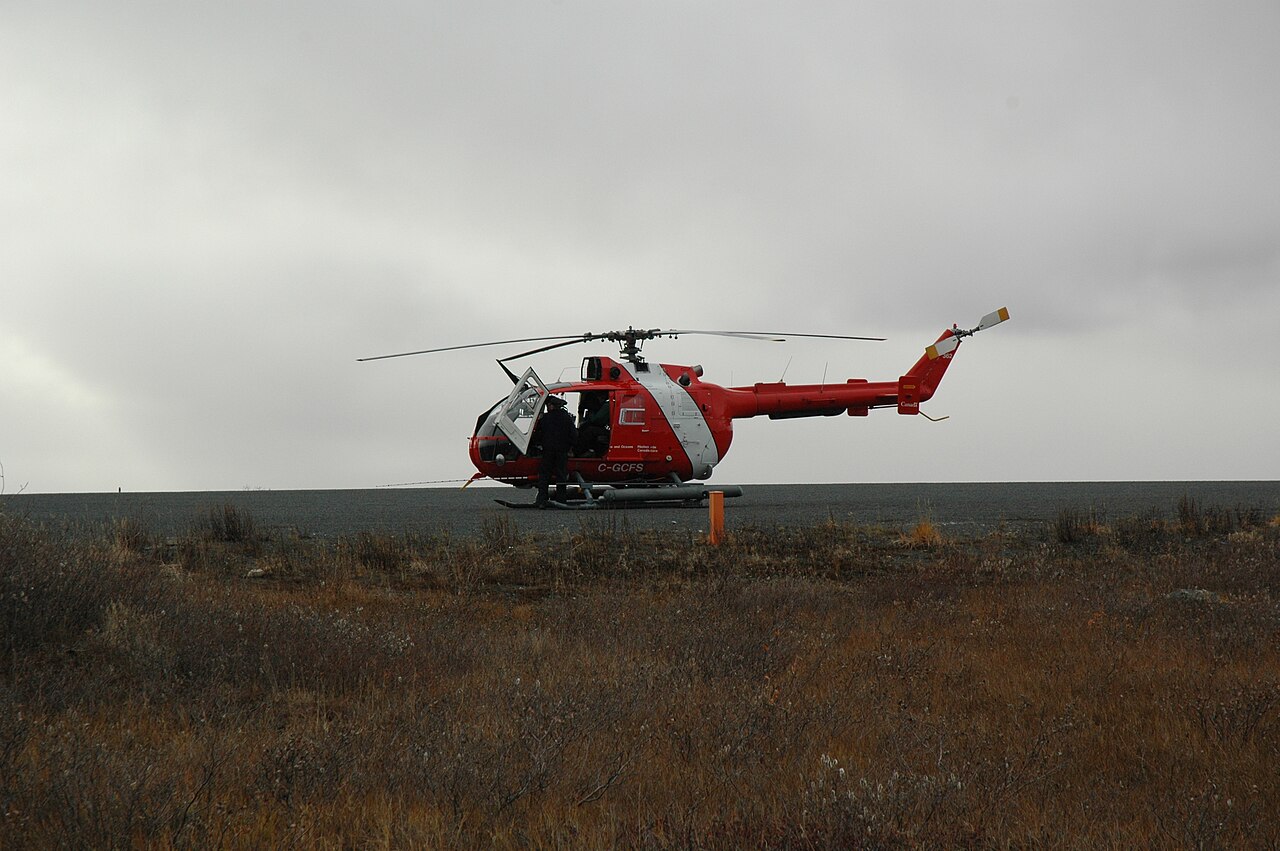
The Bo 105 was one of the characteristic programmes of the Bölkow and MBB lineage. This light twin-engine helicopter first flew in 1967, before the full MBB name was adopted. Its rotor without conventional hinges and its composite blades were among its technical features. Produced for civil and military users, it served in transport, rescue and specialised military missions. The programme illustrates an industrial branch distinct from commercial airliners, with its own testing methods, equipment and relationships with operators. Its origins also show why an aircraft’s first flight may precede the corporate name commonly associated with it.
MBB also participated in the Tornado through Panavia, a cooperative venture between German, British and Italian industry. This variable-geometry combat aircraft was developed to meet the partner countries’ requirements; its first flight took place in 1974. The British contribution came through companies whose lineage led to British Aerospace. Work sharing covered airframes and systems, while the engines were the responsibility of a separate consortium. German participation continued under DASA, including support for aircraft in service and development of their equipment. The programme therefore outlasted several changes in the names and ownership of its industrial participants.
From MBB to DASA
In 1989, MBB was incorporated into Deutsche Aerospace, a group established under Daimler-Benz control. The combination brought together several German aerospace businesses, including those of Dornier and MTU. DASA became the usual abbreviation for this organisation. It described a broader collection of businesses than MBB, although MBB’s programmes and teams occupied an important place within it. Commercial aircraft, military aircraft, helicopters, engines and space operations were then gathered within one group organisation. The merger changed the ownership framework without turning these different products into a single industrial programme.
During the 1990s, Deutsche Aerospace adopted the name Daimler-Benz Aerospace. In 1998, following the combination of Daimler-Benz and Chrysler, it became DaimlerChrysler Aerospace; the DASA abbreviation was retained. These name changes should be distinguished from cooperation organised around individual businesses. In 1992, German helicopter operations were combined with those of Aérospatiale in Eurocopter. The Bo 105 lineage therefore continued within a Franco-German company before EADS was created. Other programmes remained within consortia whose partners were not all controlled by Daimler, so the group’s corporate boundaries did not coincide with every programme’s industrial organisation.
Contribution to EADS and continuing legacies
On 10 July 2000, DASA’s principal activities joined EADS alongside those of Aérospatiale-Matra and CASA. MTU was not included in this combination. The German contribution comprised, notably, interests in Airbus, military aircraft and space operations. Integration now placed within a single group several partners that had already worked together on civil and military programmes. DASA thus ceased to form an independent industrial grouping comparable to that of the Daimler-Benz years, while its factories and engineering establishments continued operating within the new structures and pursuing their existing programme responsibilities.
Development and production of the A380 belonged mainly to the EADS and subsequent Airbus periods: the aircraft should not be presented as a completed MBB achievement. Its industrial lineage nevertheless included German capabilities passed on through DASA. The names MBB and DASA make it possible to trace this chain of combinations, from national cooperation to the European group. They also illuminate the industrial origins of the commercial aircraft duopoly, while recalling that this history encompasses helicopters, combat aircraft and space operations as well as the production of commercial passenger airliners.
Notable aircraft
Other models
- Bo 105
- Tornado (Panavia)
- Eurofighter Typhoon
Sources
- Airbus — Our history
- Encyclopædia Britannica — Daimler-Benz Aerospace AG
- Airbus — Our journey — Airbus heritage
Related reading
Manufacturer
EADSManufacturer
AirbusManufacturer
Eurocopter / Airbus HelicoptersManufacturer
British Aerospace / BAE SystemsAircraft
Airbus A300