Manufacturer
EADS (Airbus Group, Airbus SE)
Created in 2000, EADS combined European aviation, defence and space businesses before becoming Airbus Group and then Airbus SE.
4 min read
Origins and European consolidation
EADS, short for European Aeronautic Defence and Space Company, was created on 10 July 2000 by combining the activities of Aérospatiale-Matra, DASA and CASA. The merger brought together French, German and Spanish businesses already involved in several cooperative ventures. It combined commercial and military aircraft, helicopters, missiles and space activities. The group therefore did not begin with new programmes: it inherited design offices, factories and shareholdings established over previous decades, together with their existing production commitments and their relationships with industrial partners.
The parent company was incorporated under Dutch law, while its industrial operations remained distributed across several European countries. Initially, its organisation rested on balances between the French and German partners, with a distinct position for the Spanish shareholder. Shareholder agreements and managers drawn from the founding groups accompanied this structure. The creation of EADS therefore turned cooperation between national companies into relationships within a single group, without eliminating historic industrial locations or multinational programmes. Existing aircraft and equipment continued to be developed and produced through these inherited networks.
Airbus: from consortium to integrated company
The principal civil business was Airbus, whose partners had launched the A300 through a European consortium. In 2001, the operations were brought together in Airbus SAS: EADS held 80%, while BAE Systems owned the remaining 20%. The British lineage ran through British Aerospace, which became part of BAE Systems in 1999. The new company combined functions previously distributed among the partners, while retaining a production system based on specialised sites and the transport of large aircraft sections between factories in different countries.
In 2006, EADS bought BAE Systems’ holding and became the sole owner of Airbus. This development distinguished the manufacturer’s ownership from the geography of its operations: British factories continued, notably, to manufacture wings. The A300, still being produced during the group’s early years, and the A320 family were among the inherited programmes. Their industrial supply chains involved several countries, while sales, operator support and aircraft development came under the integrated manufacturer. The change of ownership did not mean transferring every production activity to the countries of the original EADS partners.
Major programmes and activities
The A380 occupied an important place in the early years of EADS. This very large double-deck airliner made its first flight in 2005. In 2006, Airbus announced delivery delays associated particularly with electrical wiring installation and industrial coordination. Production and delivery schedules were revised. The first aircraft entered commercial service with Singapore Airlines in 2007. These events concerned both the development of a new aircraft and the organisation of manufacturing across several establishments, with large sections produced separately before reaching the final assembly line.
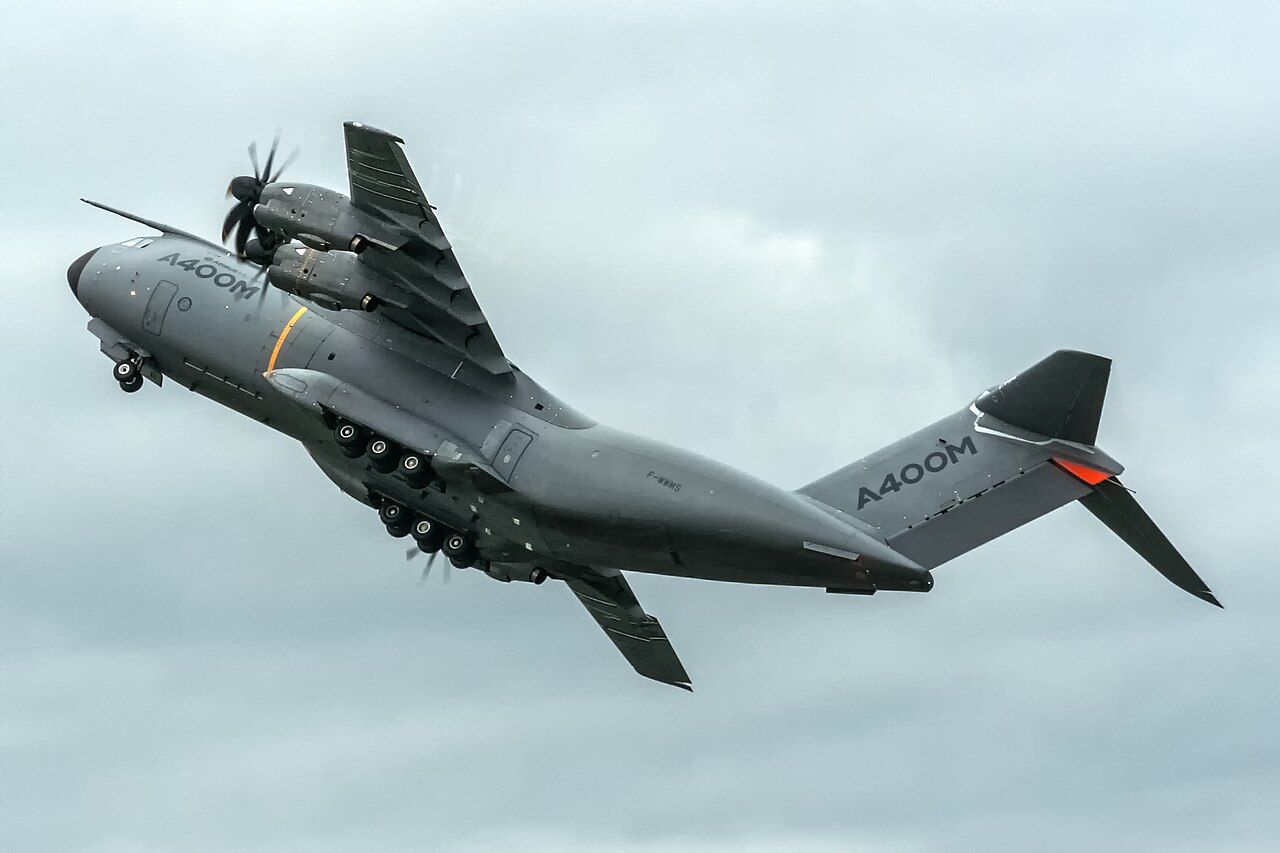
The group also included Eurocopter, created by combining French and German helicopter operations in 1992, and Astrium for space activities. Military aircraft operations included transport programmes and participation in Eurofighter. In missiles, EADS was a shareholder in MBDA, a joint venture established in 2001 with BAE Systems and Finmeccanica: this was not a wholly owned subsidiary. Development of the A350 also belonged to the EADS period, before its entry into service under the Airbus Group name. These businesses served civil customers, armed forces and institutional space programmes.
Changes in governance
When the group was created, management included two chief executive officers and two chairmen of the board, reflecting a Franco-German balance. This dual arrangement ended in 2007, with a single chairman and a single chief executive. That step should be distinguished from the reform announced at the end of 2012 and implemented in 2013. The second reorganisation concerned, in particular, shareholder agreements, the composition of the board and relations between the state shareholders and the company’s governing bodies. They were separate stages in the evolution of the same group.
The 2012–2013 reform accompanied the withdrawal of the historic industrial shareholders Daimler and Lagardère. France, Germany and Spain remained shareholders under a new arrangement. Governance rules and the rights associated with shareholdings were revised. These changes did not establish a new aircraft manufacturer: they altered the framework of control of an existing group. They should also be distinguished from decisions concerning individual aircraft programmes, even though those decisions were taken within the same company. The industrial businesses continued operating while the arrangements governing ownership and board appointments changed.
From EADS to Airbus
In 2014, EADS adopted the name Airbus Group. Reorganisation brought defence and space activities together within Airbus Defence and Space, while Eurocopter became Airbus Helicopters. The commercial aircraft manufacturer’s name was thus extended to the entire group. In 2015 it became a European company, Airbus Group SE. In 2017, after merging with its subsidiary Airbus, it took the name Airbus SE. These changes of name continued the integration begun in 2000; they did not erase the national origins of factories or the joint ventures in which the group participated. The successive names describe stages in the organisation of a continuing aerospace business.
The name EADS therefore identifies a particular period in European aerospace consolidation. Its history encompasses full ownership of Airbus, the continuation of military and space programmes, and several changes in governance. It belongs within the history of the commercial aircraft duopoly, without being confined to that market: helicopters, defence and space retained their own programmes, customers and cooperative arrangements. Understanding the group requires keeping these different activities in view rather than treating its history solely as that of a commercial airliner manufacturer.
Notable aircraft
Other models
- A400M
- Eurofighter Typhoon
- Ariane 5
Sources
- Airbus — Our history
- Airbus — Share price and information — company name history
- Encyclopædia Britannica — EADS
Related reading
Manufacturer
AirbusManufacturer
DASA / MBBManufacturer
Aérospatiale-MatraManufacturer
CASAManufacturer
Eurocopter / Airbus HelicoptersFeature
Boeing and Airbus: the making of a duopoly