Manufacturer
Latécoère
Founded around the Montaudran workshops, the French aerospace company Latécoère contributed to commercial aviation and airmail, notably through its flying boats.
4 min read
Origins
Pierre-Georges Latécoère, an engineer and industrialist from Toulouse, committed his factories to aircraft production during the First World War. The Forges et Ateliers de Construction Latécoère were established at Montaudran in 1917. The company built military aircraft, including reconnaissance and observation machines, as wartime demand accelerated the organisation of French aviation manufacturing. Toulouse thus became a lasting centre of aircraft production. This local history is connected with the Toulouse feature and the career of Pierre-Georges Latécoère.
After the armistice, the industrialist redirected resources towards air transport. He recognised the potential of airmail routes linking France with North Africa and, eventually, South America. The airline established as Lignes aériennes Latécoère in 1918 operated the first stages and relied on a network of airfields and stops then being developed. The transport company was separate from the manufacturing business, but both formed part of the same effort to establish regular commercial aviation. These routes belong to the history of interwar aviation.
Growth
The airmail operation gradually expanded south and west. In 1921 the company became the Compagnie générale d’entreprises aéronautiques (CGEA), before its network and activities were incorporated into the Compagnie générale aéropostale in 1927. The changes in corporate name reflected the development of the service, with longer routes and an organisation combining air links, stopovers and land transport. Pilots and mechanics faced weather, navigation and maintenance constraints that made regular operations difficult. The company thereby contributed to the operational experience of the Aéropostale.
Latécoère’s industrial business continued to design and build aircraft, adapting them to carry mail and passengers. The Laté 28 became emblematic of this period, serving postal operations as well as some commercial routes. Its design had to accommodate long distances, payload requirements and the operating conditions of the routes. The company’s experience with structures and equipment integration informed later, larger programmes. Its aircraft illustrate the transition between landplanes and the flying boat, useful when airport infrastructure remained limited.
Major programmes
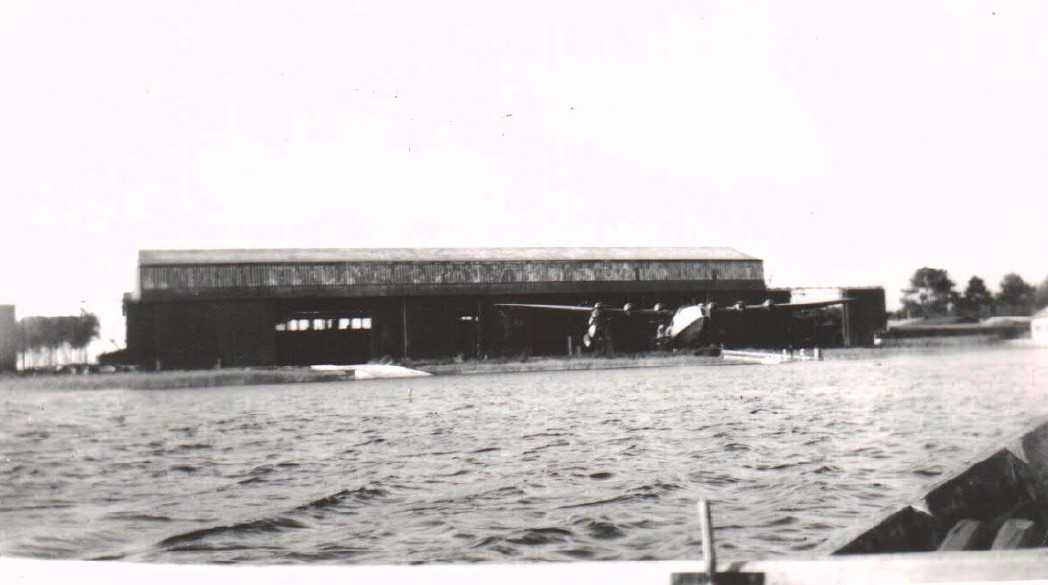
During the 1930s the company developed a series of transport flying boats. The Laté 300 and then the Laté 521 were designed for long-distance maritime routes. The Laté 521, named Lieutenant de vaisseau Paris, combined substantial capacity and range in a flying-boat design. These aircraft belonged to an era when ocean crossings often relied on seaplanes, whose ability to alight on water reduced dependence on suitable runways. Operations required careful preparation, specialised crews and sustained maintenance. They form part of the history of large transport flying boats and the wider golden age of aviation.
The Laté 28 is also associated with the early transatlantic air service of Aéropostale and pilots such as Jean Mermoz. Latécoère aircraft did not constitute a uniform family: continental routes, sea crossings and passenger transport called for different configurations. Airframe construction, cabin layout and systems integration represented complementary skills. In this period, the manufacturer and the airline remained institutionally distinct activities, even though their operational needs were closely related. The Latécoère 28 is the principal model represented by the site’s aircraft entry.
Mergers and acquisitions
The airline business evolved separately from the industrial company. After the creation of CGEA, Aéropostale took shape in 1927 by bringing together route operations and continued to operate the airmail network. Financial difficulties later led to Aéropostale’s takeover by Air France when the latter was created in 1933. This succession does not mean that the Latécoère manufacturer was absorbed by the airline: they followed separate paths, often confused because of their founder and historical links. The organisation of airline networks remained central to this story.
Latécoère escaped the 1936–1937 nationalisations; the Montaudran factory was sold to Breguet in 1939, and the company was nationalised only from 1945 to 1948. Latécoère nevertheless retained a distinct industrial trajectory through subsequent reorganisations, and its name remained associated with structural manufacturing. After the Second World War, the company contributed to civil and military programmes as a subcontractor and supplier. Changes in French industry, corporate consolidations and the growing role of major airframe manufacturers gradually reshaped the position of regional builders. This development belongs to the broader history of French aerospace restructuring.
Today
Latécoère is now an aerospace supplier based in Toulouse, rather than a manufacturer of complete large aircraft. Its activities include aerostructures and wiring systems for aircraft. Continuity between the historic workshops and the present-day company lies in industrial expertise, while product ranges and markets have changed substantially. Structural manufacturing and the integration of electrical networks serve the design, production and maintenance requirements of modern aircraft. These activities form part of international supply chains and the wider demands of aircraft maintenance.
Latécoère’s legacy is also found in the history of airmail routes and the aircraft designed for them. The Laté 28 recalls the role of landplanes in early scheduled routes, while the Laté 300 and 521 flying boats demonstrate the importance of maritime crossings before suitable airports became widespread. The memory of Montaudran, archival records and preserved aircraft help document this development, although only some historic machines survive. The airline routes also shaped a collective memory of French aviation. The company’s history thus links regional industry, postal transport and contemporary technical expertise.
Notable aircraft
Other models
- Latécoère 300 (1931)
- Latécoère 521 (1935)
- Latécoère 631 (1942)
Sources
- Encyclopædia Britannica — History of flight
- Encyclopædia Britannica — Latécoère
- Latécoère — Latécoère Group — History
Related reading
Aircraft
Latécoère 28Feature
Toulouse, aerospace capitalFeature
The Aéropostale (1918–1933)Pioneer
Pierre-Georges Latécoère