Manufacturer
American light aviation: Cessna and Piper
Cessna and Piper are two American manufacturers whose aircraft have played a major role in the development of light and general aviation.
5 min read
Origins
The history of American light aviation is tied to a network of manufacturers, flying clubs, schools and operators. Two names have had a lasting place in it: Cessna, established by Clyde Cessna in Wichita, Kansas, in 1927, and Piper, whose origins reach back to the Taylor Brothers Aircraft Company. Their paths were not identical, but their aircraft addressed demand for relatively straightforward planes that could use many airfields and serve both training and private travel.
Clyde Cessna had built and flown aircraft before founding his company. It operated in a region where aviation industry was developing and where rail access and mechanical expertise supported manufacturing. The company survived the economic difficulties of the 1930s and underwent changes of control. In 1934, its acquisition by Dwane Wallace, Cessna’s nephew, helped restart its business. The design of light, single-engine high-wing aircraft became one of the recognizable features of its range.
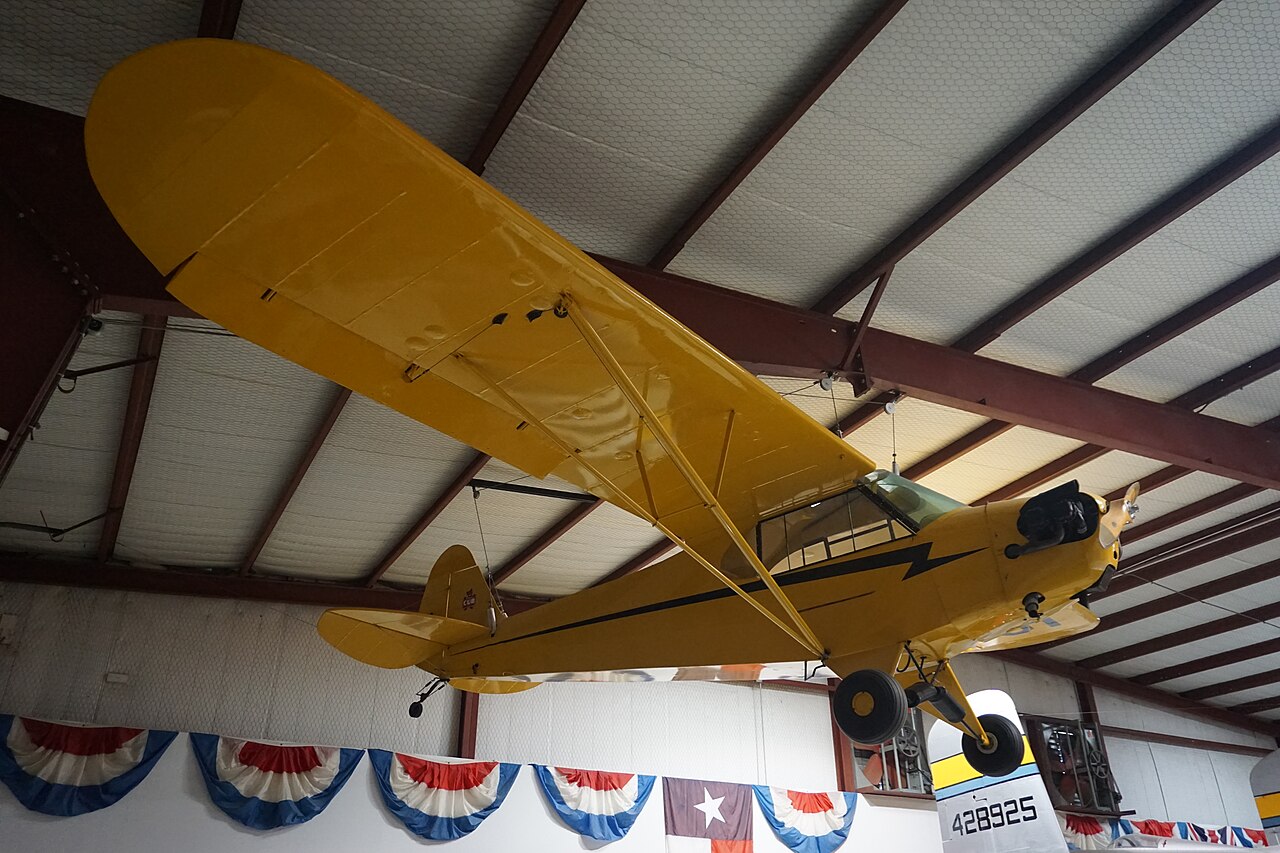
The Taylor company, meanwhile, was founded by Clarence Gilbert Taylor and his brother Gordon. After financial difficulties, William T. Piper invested in it and gradually took control. In 1937 it adopted the name Piper Aircraft. The Piper J-3 Cub, part of a family of training and leisure aircraft, became particularly well known before and during the Second World War. Both companies therefore served an aviation market in which learning to fly and civil use were central.
Growth
After the war, demand for private aircraft and training planes increased in the United States. Mass production remained sensitive to economic cycles, but the spread of pilot licences, local airfields and flying clubs helped form a market distinct from that of airlines. Cessna and Piper offered piston singles in several configurations, basic trainers and more powerful aircraft for travel. Ease of operation and access to maintenance networks mattered as much as published performance.
The Cessna 172, introduced in 1956, became a widely used training and touring aircraft. Its high-wing layout, fixed landing gear and approachable handling made it common in flight schools and private fleets. The model changed through successive versions, including updated engines, avionics and equipment. It illustrates the continuity of a basic airframe without implying that every series or individual aircraft is identical.
Piper developed aircraft ranging from the utilitarian Cub to more elaborate touring planes. The PA-28 Cherokee, introduced in the 1960s, generated several training and private-transport versions. Its low-wing airframe contrasted with the high-wing singles associated with several competitors. Other families, including the Navajo twins and Malibu singles, enabled the company to serve different uses and budgets. Trade names sometimes covered substantial variants; they should not be mistaken for a single technical standard.
Major programmes
These manufacturers did not follow the pattern of major military or airliner programmes. Their central challenge was to develop lasting families and adapt them to certification requirements, engine changes and operators’ needs. Models such as the Cessna 172 and Piper Cherokee combined relatively conventional airframes with incremental equipment improvements. In general aviation, manuals, training, spare parts and maintenance shape an aircraft’s practical use as much as its original design.
Cessna diversified with utility aircraft, turbine-powered planes and business jets. The Caravan, a single-engine turboprop, was designed for utility and regional transport missions, while the Citation series established the company in the business-jet market. These activities extend beyond light aviation in the narrow sense, but drew on industrial and commercial experience built in general aviation. Piper also moved toward faster, better-equipped aircraft without abandoning trainers and touring singles.
Safety and certification requirements transformed the sector. Electrical systems, navigation instruments and later flight displays evolved alongside training and maintenance rules. Manufacturers had to account for upgrade costs and component availability for fleets often operated over several decades. The history of these aircraft is therefore also recorded in modifications and service bulletins applicable to generations of airframes.
Mergers and acquisitions
The corporate structure of both businesses changed several times. Cessna became part of General Dynamics in 1985. In 1992, Textron acquired Cessna from General Dynamics. The move placed the brand in a diversified group while retaining major design and manufacturing operations in Wichita. In 2014, Textron brought its aviation businesses together as Textron Aviation, which includes Cessna and Beechcraft. Cessna is consequently a brand and product range within a group, not an independently listed company.
Piper followed a separate financial history. After periods of private ownership and financial difficulty, the company was acquired in 2009 by Imprimis, a company owned by the government of Brunei, which has owned it ever since. It remains based in Vero Beach, Florida, where it assembles aircraft. Its history illustrates the vulnerability of small and medium-sized manufacturers to demand fluctuations, certification costs and the need to finance new-model development.
The corporate changes have not erased the distinction between the brands. Cessna benefits from the resources of a diversified aerospace group and shares functions with other Textron Aviation businesses. Piper retains its own corporate identity and a range centred on piston singles and twins. In both cases, the manufacturer’s name remains associated with aircraft made over long periods, sometimes with production interruptions and resumptions.
Today
Cessna continues to be marketed by Textron Aviation. The Cessna 172 remains a familiar aircraft in general aviation and training, while other ranges serve utility and business roles. Cockpits, engines and safety equipment continue to evolve within applicable certification frameworks. Older aircraft remain in service, but their condition and configuration differ; maintenance depends on airworthiness rules and each airframe’s individual history.
Piper Aircraft continues to operate in Vero Beach. Its range includes aircraft for training, travel and private operations, with several certified models updated over time. As throughout general aviation, used aircraft make up a substantial share of the fleet and give older designs long operational lives. Parts availability, technical documentation and the retention of maintenance skills are therefore continuing concerns.
The shared legacy of Cessna and Piper is measured less by a single technology than by their place in flight training and access to piloting. Their aircraft introduced generations of pilots to operations from small airfields and local flying. They form part of civil aviation history worldwide, while their use remains governed by national certification, maintenance and operating rules. Preserved examples and aircraft still flying demonstrate this continuity, but do not provide a uniform measure of past production.
Notable aircraft
Other models
- Cessna 172
- Cessna 182
- Cessna 208 Caravan
- Piper J-3 Cub
- Piper PA-28 Cherokee
- Piper PA-46 Malibu
Sources
- Encyclopædia Britannica — History of flight
- Encyclopædia Britannica — Cessna
- Encyclopædia Britannica — Piper Aircraft
Related reading
Era
The pioneers (1783–1914)Feature
Aircraft maintenance, from mechanic to Part-66 technicianManufacturer
Boeing