Manufacturer
Junkers
Junkers was a German manufacturer associated with metal airframes, transport aircraft and several military programmes.
3 min read
Origins
Hugo Junkers, a German engineer born in 1859, established an engineering company in Dessau, initially focused in part on heating appliances. He also taught and researched engines and thermodynamics. His interest in aviation developed in the early twentieth century. In 1910 he filed a patent concerning a thick, unsupported wing, a principle that informed his aeronautical research. The company therefore stood at the intersection of mechanical engineering, metallurgy and a nascent industry still dominated by wood-and-fabric airframes.
During the First World War, Junkers advocated the use of metal in aircraft structures. The J 1, tested from 1915, was an all-metal monoplane demonstrator built of steel. It is often described as the first all-metal aircraft to fly. Weight and manufacturing difficulties constrained its performance, but the project established valuable technical experience. At Dessau, the company developed assembly and forming methods later adapted, with other materials and configurations, for subsequent aircraft. This direction distinguished the firm within wartime German aviation.
Growth
After the armistice, restrictions on German aviation made continued military work difficult. Junkers redirected its efforts towards civil aircraft and overseas markets. The F 13, designed at the end of the war and flown in 1919, was an all-metal monoplane intended to carry passengers. Its enclosed cabin and duralumin construction made it advanced for its time. Examples were sold or operated outside Germany, sometimes assembled abroad to circumvent restrictions and reach new markets.
The company also built transport and specialised aircraft while maintaining a range of industrial activities. Foreign subsidiaries and production agreements provided outlets in a changing political environment. Junkers faced financial difficulties, but official interest in rebuilding German aviation increasingly influenced its decisions. Civil aircraft also provided design, operational and serial-production experience. They established the company’s standing in transport aviation, later associated above all with the Ju 52, an emblematic interwar aircraft.
Major programmes
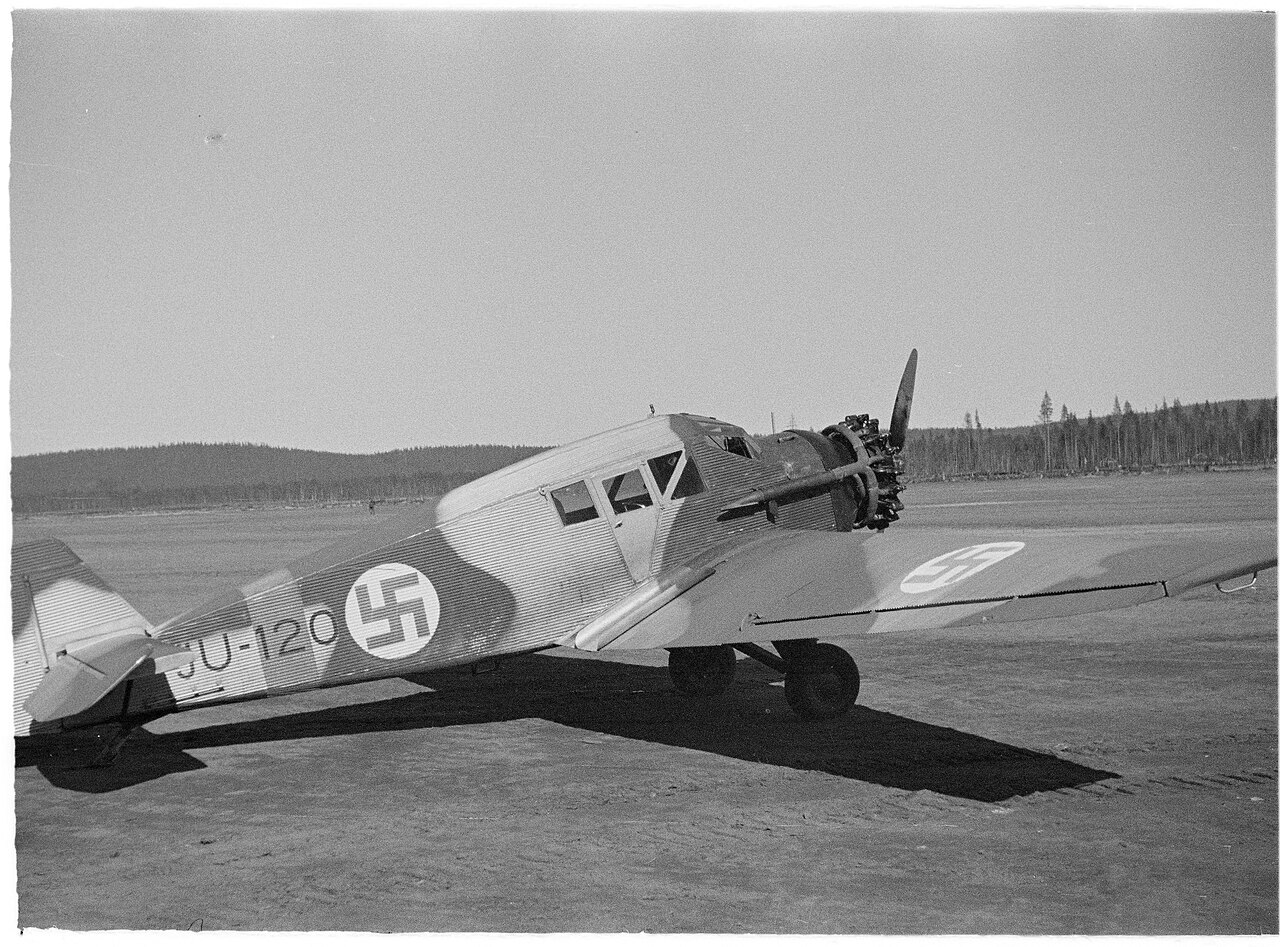
The Ju 52 first appeared as a single-engined transport; its three-engined version became the best known. Its corrugated metal structure was robust and distinctive, suited to varied operating conditions. Lufthansa used it on commercial routes from 1932, and foreign airlines also acquired examples. The aircraft was later employed extensively by the Luftwaffe as a transport and support aircraft. Its history shows how a model designed for civil use could be adapted to military roles in the political climate of the 1930s and wartime.
During German rearmament, Junkers factories also produced combat aircraft. The Ju 87 dive bomber was associated with the early campaigns of the Second World War, but became vulnerable when facing stronger air defences. The pre-war Ju 88 was a versatile aircraft used as a bomber, reconnaissance aircraft and in other roles. These programmes belonged to an industry mobilised for war and should be distinguished from the company’s civil beginnings. Junkers also developed engines and airframes, participating in an integrated industrial system.
Mergers and acquisitions
The Nazi regime’s rise transformed Junkers’ governance. In 1933 Hugo Junkers was forced to surrender his interests and lost control of his companies after resisting the regime’s political demands. He was placed under surveillance and died in 1935. The Reich took over the aviation assets between 1933 and 1935; in 1936 they became Junkers Flugzeug- und Motorenwerke (JFM), now geared to rearmament. The founder’s fate illustrates the subordination of businesses to a totalitarian state and its military production policy.
Later restructurings brought Junkers’ activities together with those of other German companies, including within aircraft and engine groups. The Dessau facilities were heavily damaged by wartime bombing and later occupied by Soviet forces. After 1945, some equipment and specialists were relocated or reassigned. The brand did not regain its pre-war independence. Its legal and industrial history therefore involved successive transfers rather than a straightforward continuation of Hugo Junkers’ original enterprise.
Today
Junkers no longer exists as an independent manufacturer. After the war, Dessau lay in the Soviet zone and later in the German Democratic Republic; aviation activity resumed under new organisations, without direct institutional continuity with the historic company. Surviving Junkers aircraft are held in museums and collections, while some Ju 52s continued flying long after their commercial careers ended. Their preservation offers material evidence of metal airframe construction and interwar transport aviation.
Hugo Junkers’ legacy includes work on wings, engines and metal structures, as well as a history shaped by political appropriation of his company and wartime production. Civil aircraft such as the F 13 and Ju 52 mark an important stage in commercial aviation; the Ju 87 and Ju 88 recall the mobilisation of industry under the Nazi regime. Placing them in context helps distinguish technical innovation, civil uses and participation in war. This history survives in archives, collections and preserved aircraft.
Notable aircraft
Other models
- J 1 (1915)
- F 13 (1919)
- Ju 87 Stuka
- Ju 88
Sources
- Encyclopædia Britannica — Hugo Junkers
- Encyclopædia Britannica — Junkers Ju 52
Related reading
Aircraft
Junkers Ju 52Manufacturer
AirbusEra
The Great War and the interwar years (1914–1939)