Manufacturer
Breguet
Founded by Louis Breguet, the Breguet firm shaped French aviation through its experiments, military aircraft and transport designs.
4 min read
Origins
Louis Breguet, an engineer from an industrial family, took an early interest in mechanics and the emerging field of aviation. In 1907 he presented a rotary-wing machine often described as a gyroplane. It briefly lifted off with a pilot aboard, but assistants had to hold it steady: it was a pioneering experiment rather than an operational helicopter. Breguet’s work belongs to the era of early powered-flight attempts, alongside innovators such as the Wright brothers.
The company subsequently developed fixed-wing aircraft, drawing on construction methods suited to a young industry. Its early machines helped establish the engineer’s reputation as a designer and entrepreneur. The growth of military aviation during the First World War changed requirements: aircraft had to combine payload, strength and flying qualities. This demand led to more organised production and close cooperation with the French authorities.
Growth
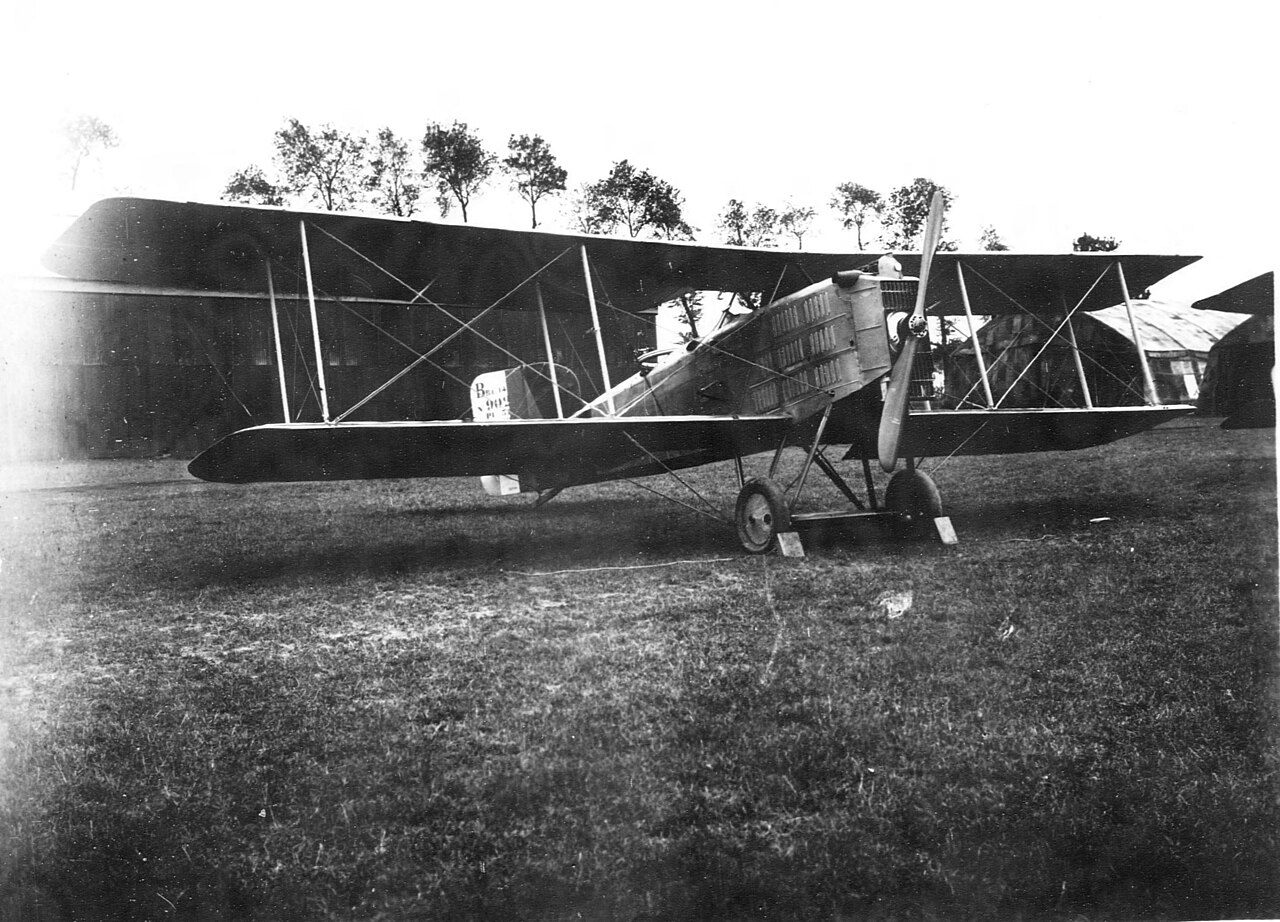
Designed during the war, the Breguet 14 served as a reconnaissance aircraft and bomber. Its metal construction, notably a duralumin fuselage, differed from many contemporary wood-and-fabric designs. The type was produced in substantial numbers for the French military and remained in service after the armistice, including in civil and postal roles. It became a notable French aircraft of the interwar period. Its importance rested not on one isolated breakthrough but on a combination of durability, capacity and adaptability.
After the war, Breguet designed aircraft for military and civil uses. The Breguet 19, a reconnaissance and bombing aircraft, developed into several versions and took part in long-distance flights. These journeys attracted public interest in aviation, while also testing range and reliability. The company remained active in a sector shaped by cycles in government procurement and economic constraints. Diversification preserved design capabilities without removing dependence on military markets.
The firm also had to respond to rapid changes in aviation doctrine. Advances in engines, propellers and manufacturing methods required constant technical attention. Breguet drew on accumulated airframe-design experience and the ability to adapt a model to different missions. The export of some aircraft increased their visibility, while creating requirements for production, support and spare parts.
Major programmes
After the Second World War, the firm worked on transport aircraft and military designs. The Deux-Ponts, also known as the Breguet 763, was a civil double-deck transport intended to carry many passengers on medium-haul routes. Air France operated it on routes where its capacity was useful, but the arrival of faster, pressurised aircraft shortened its career. The programme reflected France’s effort to develop transport aircraft after the war, amid a changing aviation landscape shaped by the arrival of jets.
The Breguet Atlantic was developed for maritime patrol and anti-submarine warfare through European cooperation. It first flew in 1961, entered service in December 1965 and equipped several air forces. Its mission required substantial endurance, sensors and a specialised onboard organisation. Breguet also worked on business aircraft, prototypes and military types as programme complexity and cost increased. The company contributed to several sectors without becoming a high-volume generalist manufacturer on the scale of the integrated groups that emerged later.
Mergers and acquisitions
Industrial concentration became a major issue in post-war France. Breguet retained its own identity for several decades, while taking part in cooperation and fulfilling national orders. In 1971 Dassault acquired Breguet, and the two companies were brought together as Dassault-Breguet. The transaction combined capabilities and activities as the industry sought to finance more complex programmes and strengthen its export position. It ended Breguet’s existence as an independent manufacturer.
Integration did not immediately erase the Breguet name from aircraft designed earlier, nor the continuity of teams and expertise. The name was gradually displaced in new programmes by Dassault Aviation. The merger formed part of a broader wave of French consolidation that also produced national companies and integrated groups. These changes should be distinguished from developments in airlines or aircraft operators. They reflected the rising cost of research, testing and aircraft production.
Today
Breguet no longer exists as an independent manufacturer. Its legacy remains in preserved aircraft, technical archives and accounts of French aviation. The Breguet 14 recalls the spread of metal construction; the Deux-Ponts represents a particular response to post-war transport needs; and the Atlantic remains associated with maritime patrol. Aircraft preserved in public and private collections document design choices that cannot be reduced to performance alone. They also illuminate maintenance, service life and the conservation of historic aircraft.
The firm’s history is closely connected with Louis Breguet, whose work ranged from experiments with rotary wings to series aircraft production. It shows how an engineer’s workshop developed into an industrial company and was later absorbed into a larger group. The 1971 merger with Dassault is the final institutional milestone, but earlier achievements continue to be studied in museums and by historians. Breguet’s trajectory illustrates the links between technical innovation, government procurement and industrial consolidation in European aviation.
Notable aircraft
Other models
- Breguet 14 (1916)
- Breguet 19 (1922)
- Breguet Deux-Ponts (1949)
- Breguet Atlantic (1961)
Sources
- Encyclopædia Britannica — History of flight
- Encyclopædia Britannica — Breguet
- Musée de l’Air et de l’Espace — Breguet 14
Related reading
Manufacturer
Dassault AviationPioneer
Louis BlériotEra
The Great War and the interwar years (1914–1939)