Manufacturer
Fokker
Founded by Anthony Fokker, the Dutch company built military and civil aircraft before its bankruptcy in 1996.
4 min read
Origins
Anthony Fokker, a Dutch pilot and aircraft builder, established an aviation company at Johannisthal near Berlin in 1912. He was then working in the German Empire, where the aircraft industry was expanding rapidly. The firm built monoplanes before the First World War redirected production towards military needs. Fokker gained a reputation as an inventive designer and entrepreneur able to adapt aircraft quickly to front-line requirements. His career belongs to the history of aviation pioneers and the interwar industry.
During the war, Fokker fighters became known for their performance and design innovations. The Dr.I, a triplane associated with Manfred von Richthofen, is recognisable by its outline but was produced in limited numbers. The D.VII, a biplane fighter, is regarded as one of the most effective German fighters of the war’s final period. The armistice required aircraft to be surrendered, but the company and its founder were already preparing to return to the Netherlands.
Growth
In 1919 Anthony Fokker moved his operations to the Netherlands. The transfer took place under difficult conditions, with equipment and parts transported across borders in secret. The company resumed manufacturing in its founder’s home country and turned towards civil aviation while continuing to supply military aircraft. The F.VII, a three-engined transport available in several configurations, supported this diversification. Its robustness and capacity suited emerging airlines as well as long-distance expeditions.
Fokker aircraft operated in several countries and contributed to the establishment of scheduled commercial routes. Their mixed construction, with mainly metal fuselages and wooden wing structures on many early civil models, reflected transitional practices. Exports broadened the company’s reach but also made its business dependent on political decisions, government orders and international competition. Fokker became a recognised name, although that reputation did not guarantee lasting financial stability.
Early military successes should not obscure the continuity of civil and industrial work. Aircraft development involves flight testing, structural changes and supplier coordination, activities that continue long after a prototype is introduced. Fokker also had to maintain relationships with authorities and airlines, whose requirements could differ. This tension between technical capability and commercial viability accompanied the company throughout its existence.
Major programmes
After the Second World War, the company had to rebuild its facilities and restore its commercial position. It focused on regional transports. The F27 Friendship, a turboprop designed for short- and medium-distance routes, achieved wide use from the late 1950s. It was also built under licence in the United States as the Fairchild F-27. The programme’s success rested on matching regional network distances and infrastructure, as well as a design suited to economical operations on those routes. It illustrates the importance of the turboprop before regional jets became widespread.
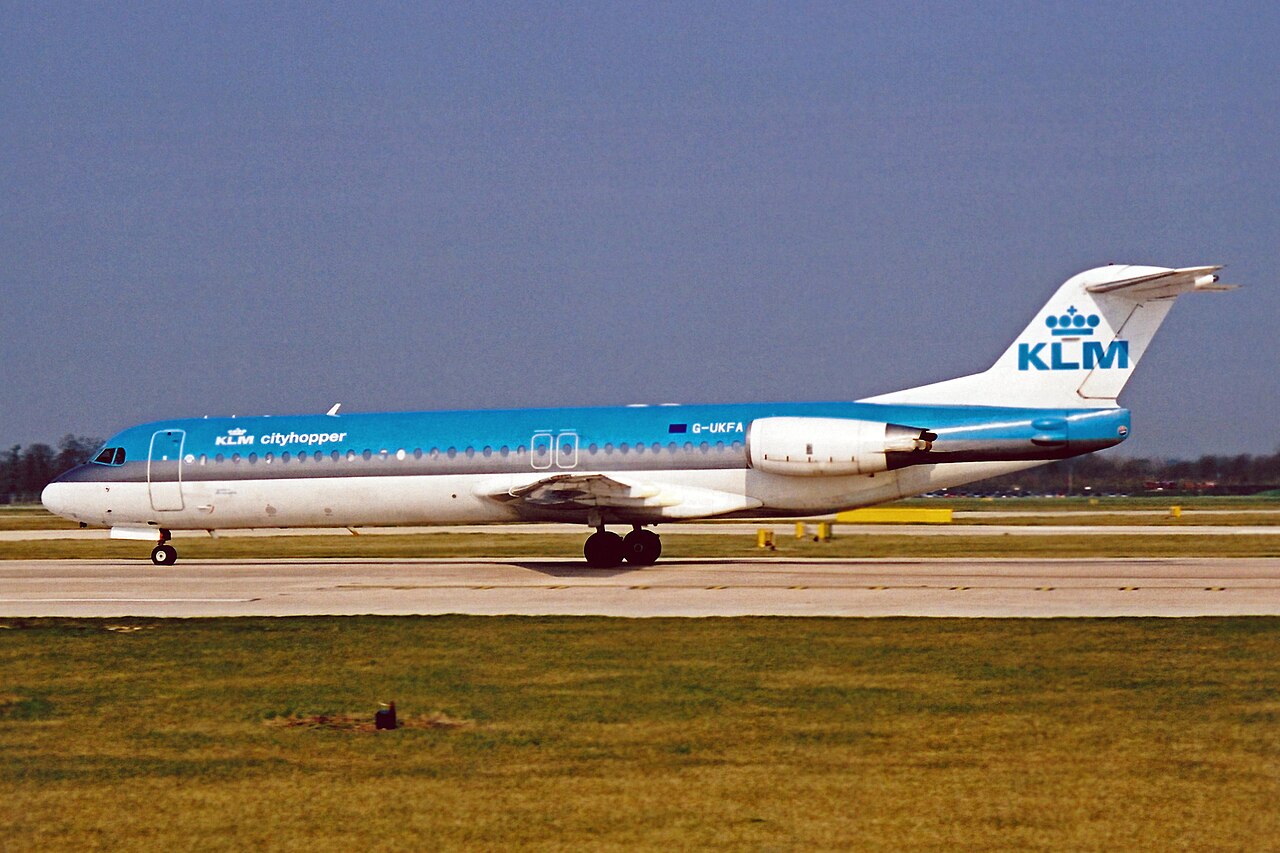
Fokker continued this specialisation with the F28 Fellowship, a regional twinjet that entered service in the late 1960s. In subsequent decades, the Fokker 50 family extended the F27’s legacy with an updated design, while the Fokker 70 and 100 addressed the regional jet market. The larger Fokker 100 targeted airlines operating high-frequency routes. These programmes involved international cooperation and suppliers. They showed the company’s ability to offer aircraft in several market segments, but also the high cost of developing new generations.
Mergers and acquisitions
Developing regional aircraft was expensive, and Fokker depended on a cyclical market strongly influenced by airlines and public support. Cooperation with VFW led to VFW-Fokker, but corporate structures changed again and Fokker regained a Dutch industrial identity. The company worked with European partners and received support from the Dutch state. This assistance accompanied the programmes but did not remove difficulties associated with costs, sales and competition from larger manufacturers. The company struggled to maintain a profitable product range through changes in demand.
By the early 1990s losses were mounting, and attempts to find a partner did not resolve the difficulties. Fokker filed for bankruptcy in 1996 and aircraft production ended. Its activities were subsequently divided among several entities, and the Fokker name was revived for services, maintenance and components. The outcome reflected the vulnerability of medium-sized manufacturers facing high development costs and global competition. Bankruptcy did not mean that aircraft already in service disappeared immediately; operators continued to fly and maintain them.
Today
Fokker is no longer an independent manufacturer of complete aircraft, but its name and some activities survived the bankruptcy. Companies formed through restructuring have provided maintenance, repair, support and component manufacturing services. Fokker aircraft remain part of the history of regional aviation, although fleets have declined as airframes age and economic conditions change. Parts availability, maintenance costs and airworthiness rules affect their operating lives. Maintenance is therefore an essential part of the brand’s operational legacy.
Fokker’s history spans distinct periods: Anthony Fokker’s workshop in Germany, the return to the Netherlands, wartime fighters and regional transports. It illustrates the transition from a manufacturer reliant on military orders to a specialised civil aircraft producer, and then the financing difficulties of a medium-sized company. Preserved aircraft, archives and machines still supported by operators testify to this history. The company’s trajectory sheds light on changes in the globalised aerospace industry and the place of suppliers after a manufacturer disappears.
Notable aircraft
Other models
- Fokker Dr.I (1917)
- Fokker D.VII (1918)
- Fokker F.VII (1924)
- Fokker F27 Friendship (1955)
- Fokker 100 (1986)
Sources
- Encyclopædia Britannica — History of flight
- Encyclopædia Britannica — Fokker
- Fokker Services Group — Fokker history